Why Keep Doing Physio After ACL Surgery When You’ve Been “Discharged”?
Video masterclass
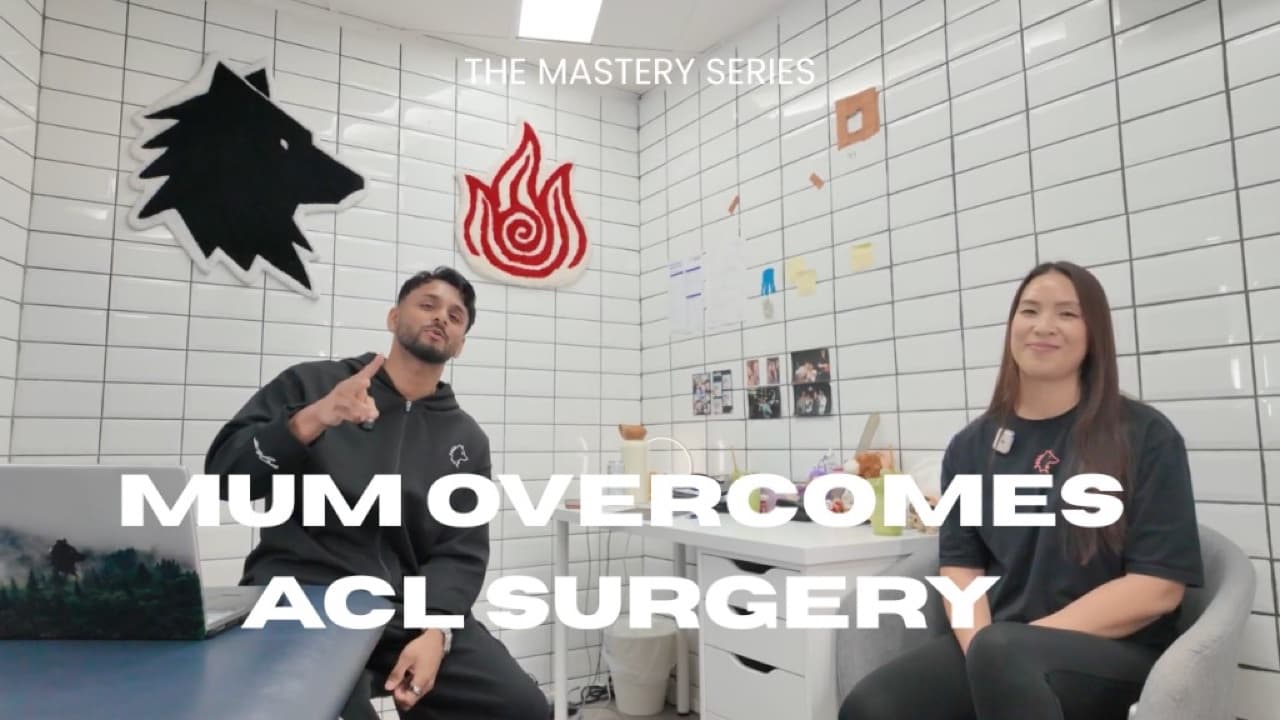
Mum Overcomes ACL Surgery
Linda tore her ACL and meniscus on a tornado kick. Mum of three. Two years later she’s training again — and she can sprint for a forgotten bandana. Her story. Watch the full session below — then open the video page for notes, timestamps, and related guides.
Mastery program
The ACL Comeback Program
A structured 28-day knee rehab program designed for people stuck in the "almost better" phase after ACL or meniscus injury. Rebuild strength, restore confidence, and bridge the gap between feeling okay and being fully back.
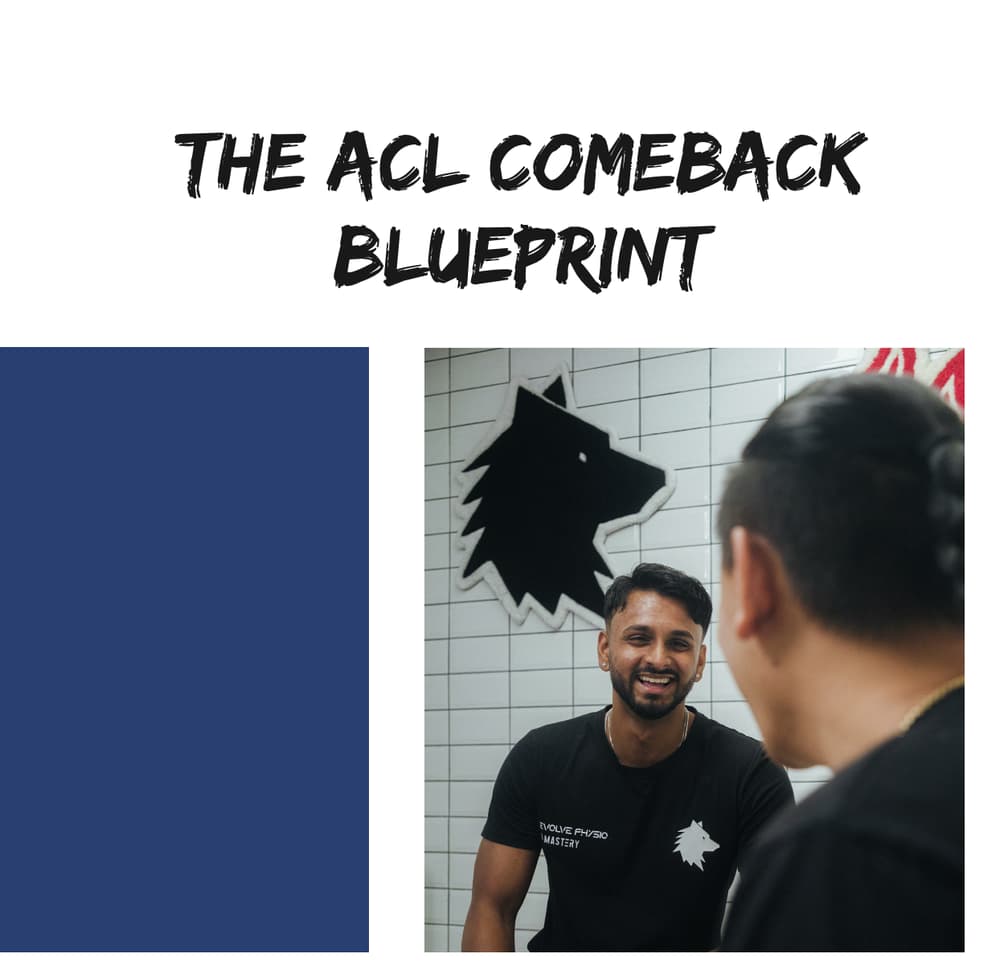
We usually discharge people here. She stayed.
Two years after surgery is typically when a lot of our ACL clients get discharged. Linda opted in and kept working with us. I asked why.
Maintenance. She’d come this far. A check-in every few months to make sure everything’s still on track, not going backwards, not hurting something else.
For her: don’t lose it. For us: keep improving the areas that are still a little behind, and keep testing so we see weakness or tightness before it becomes a story. That’s the maintenance program, said out loud in Mum Overcomes ACL Surgery. Watch on YouTube.
Want a structured program, not just an article?
This guide gives you the framework. The ACL Comeback Program ($50) is our 28-day lower-limb strength block for the “almost better” phase — when you can walk and do daily life but need progressive loading before you trust running again. Pair it with the free Knee Pain Mastery Guide for day-to-day exercises.
What we still test when you “feel fine”
- Single-leg calf and squat capacity versus the other side
- A landing you can stick without a flinch
- A brake or a change of direction if that’s in your week
- The floor positions you actually use — kneel, sit, get up with a child in your arms
- Anything new that has started complaining because the knee is no longer the loudest problem
If those are boringly even, we space the reviews out. If jumping is still the sentence you skip, we don’t call that discharged and done. We call it the next block.
Discharge is not the same as finished
A discharge letter means you no longer need weekly hands-on care. It does not mean the knee has finished adapting, or that jumping is no longer scary, or that a dance-comp week won’t expose a hole. Linda still flags jumping as a work in progress. That’s a reason to stay in the system, not a reason to pretend the file is closed.
If you were discharged and you’ve quietly dropped the single-leg work, start here: the five exercises and return-to-sport testing.
Online Rehab Academy
Book a free discovery call
Want this protocol mapped to your injury, scan and timeline? Our Online Rehab Academy pairs video-guided rehab with remote coaching from our clinical team — the same standards as in-clinic care, from home.
How to use a review if you’re “fine”
- Bring the week you actually live (kids, mats, overtime), not the week you had in mind at month six
- Ask what still lags, not whether you’re allowed to be proud
- Retest something you can repeat in six months
- Leave with a maintenance dose you will do — not a new 14-exercise PDF
Related: coming back to yourself · Linda’s full story.
Buy The ACL Comeback Program or book a free discovery call
The ACL Comeback Program is our paid 28-day lower-limb strength and confidence block ($50). We use it for ACL and meniscus rehabs — and for athletes stuck in the “almost better” phase after knee sprain, giving-way, or a long layoff from running and court sport. It is built for the whole lower limb, not only post-op ACL.
Purchase The ACL Comeback Program →
Want a plan mapped to your scan, sport and timeline without coming in first? Book a free discovery call for our Online Rehab Academy →
Free progressive home loading: Knee Pain Mastery Guide. In Cabramatta / South West Sydney? Book an in-clinic physio assessment.
Frequently Asked Questions
How long do people stay in ACL physio?
Many are discharged around the two-year mark if sport is back and testing is honest. Some leave at 9–12 months and hope. Linda opted to stay for maintenance — not because she was failing, because she’d come this far.
What is a maintenance program?
Check-ins every few months. We keep improving the bits that still lag, and we re-test so tightness or weakness in other areas doesn’t become the next injury. For her it’s “don’t go backwards.” For us it’s still getting better.
Can I just gym on my own after discharge?
You can. Plenty do. The risk is the graft side quietly becoming the passenger again, or a new area (calf, hip, back) taking the load. A review is cheaper than a second reconstruction.
Is this only for athletes?
Linda’s “sport” includes three kids and dance-mum travel. Maintenance is for anyone whose life still asks the knee hard questions.
What should I ask for at a two-year review?
Strength side-to-side, hop or landing quality, a deceleration or change-of-direction look if that’s your life, and the floor positions you actually use. Don’t only ask “is it fine?”
Where is this in the video?
Chapter 8 — /video-library/v/mum-overcomes-acl-surgery.