ACL Return-to-Sport Testing: When Is It Actually Safe to Play Again?
The biggest mistake in ACL rehab
Returning to sport too early. It sounds obvious, but the research shows just how costly it is. Hege Grindem and colleagues followed 106 patients after ACL reconstruction and found that those cleared on time alone had an almost four-fold higher re-injury rate than those cleared based on passing objective tests. In the same study, every month that return-to-sport was delayed up to 9 months reduced the re-injury rate by roughly half.
Translation: a 9-month calendar rule is useful, but passing criterion-based tests is what actually keeps you on the field.
What the return-to-sport conversation really asks
Three questions:
- Is the graft biologically ready? (Time-based — usually at least 9 months for a hamstring or quadriceps graft, sometimes slightly less for patellar tendon grafts.)
- Is the knee physically ready? (Strength, symmetry, hop performance, movement control.)
- Are you psychologically ready? (Confidence, fear of re-injury, willingness to trust the knee.)
A "yes" to all three is what we're aiming for. Here's how we test each.
1. Strength testing
Quadriceps strength is the single strongest predictor of good long-term outcomes after ACL reconstruction. We test it with isokinetic dynamometry when available, or carefully standardised isometric / 1-repetition maximum testing in clinic. Our target: operated-side quadriceps strength ≥90% of the non-operated side. Hamstring strength is tested similarly.
Why this matters: persistent quadriceps weakness is linked to altered landing mechanics and higher re-rupture rates. It is the single most commonly missed milestone in community ACL rehab.
2. Hop-test battery
Four tests, operated leg vs non-operated leg:
- Single hop for distance
- Triple hop for distance
- Crossover triple hop
- Timed 6-metre hop
Each is expressed as a Limb Symmetry Index (LSI = operated / non-operated × 100%). We want ≥90% on all four. Hopping is low-tech, high-signal: it exposes asymmetries that sub-maximal gym work hides.
3. Movement quality under load
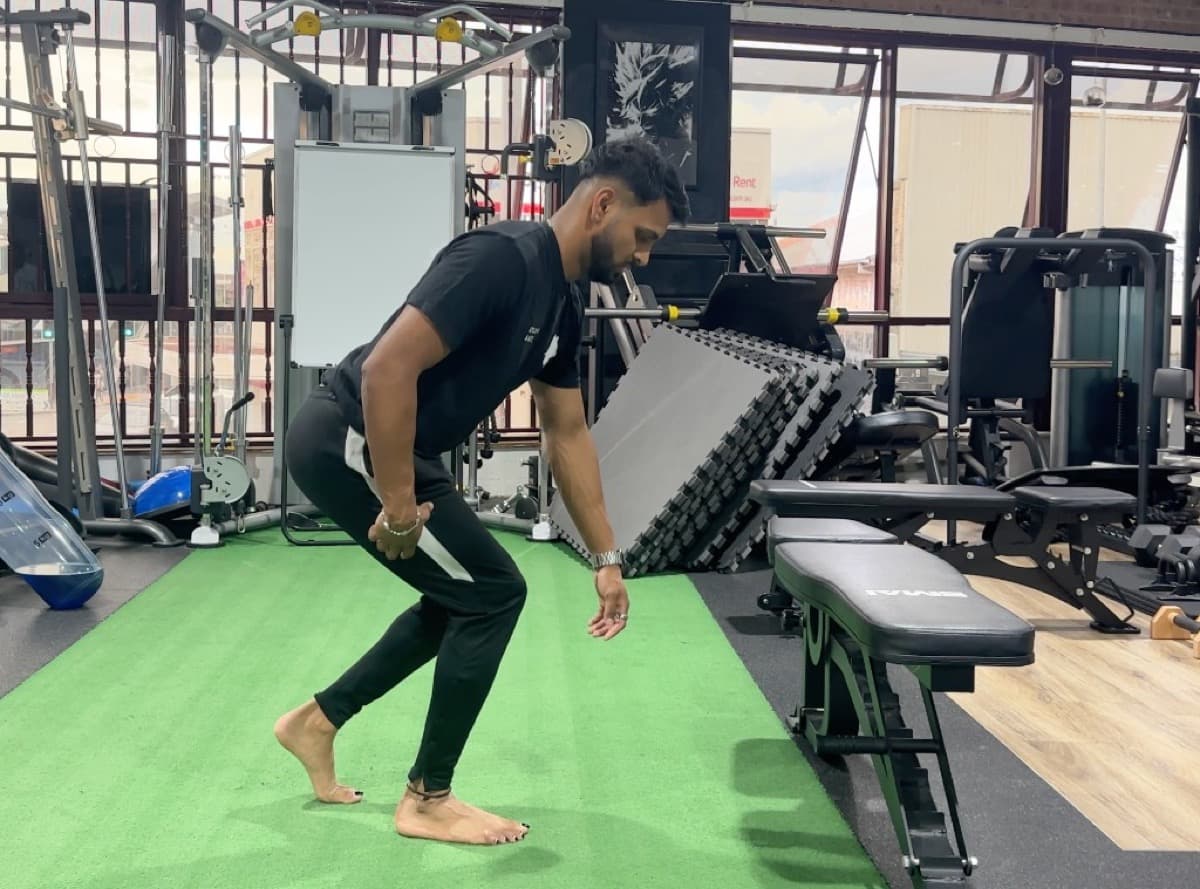
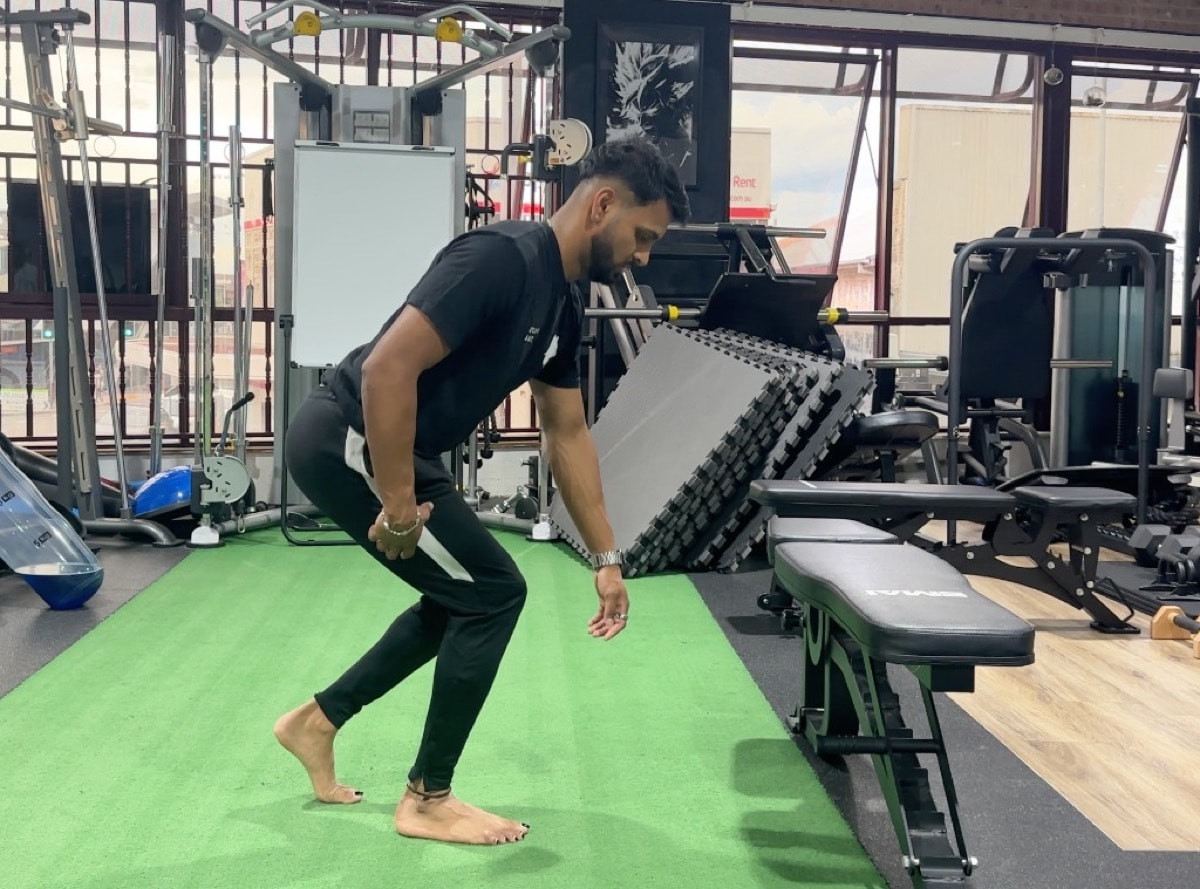
Beyond symmetry, how you land matters. We film drop-jumps and single-leg landings and look for:
- Knee-valgus collapse on landing (knee falling inward)
- Poor hip control during single-leg squat or Y-balance test
- Trunk lean or stiff ankles compensating for a weak knee
These faults predict re-injury independently of strength. They're fixable with 8–12 weeks of targeted neuromuscular work.
4. Psychological readiness
The ACL-Return to Sport after Injury scale (ACL-RSI) is a short, validated questionnaire assessing confidence, emotion and risk appraisal around returning to sport. Studies by Webster and colleagues show that lower ACL-RSI scores are associated with significantly higher re-injury rates and lower rates of actually returning to pre-injury sport — independently of physical readiness. We score every client on the ACL-RSI at 6, 9 and 12 months.
Sport-specific testing
Once the criteria above are met, we layer on sport-specific drills — change of direction, sprint-deceleration-pivot, on-field sessions with the team, contact drills, and graded match time. Returning straight to a full competitive 80-minute match without this progression is asking for trouble.
Putting it together
Our minimum clearance criteria at Evolve Physio:
- ≥9 months since surgery (subject to graft type and surgeon advice)
- Quadriceps strength LSI ≥90%
- Four-hop battery LSI ≥90%
- Good landing mechanics on video analysis
- ACL-RSI score in the appropriate range
- Completion of a sport-specific on-field progression
This is deliberately rigorous. Re-injury is common, costly, and overwhelmingly preventable with good testing.
Rehab matters more than surgery
Whether you had a hamstring graft, patellar tendon graft, quadriceps tendon graft, or chose non-surgical management, the single biggest determinant of how your knee holds up is the quality of the rehab. Our post-surgery rehab guide covers the broader rehab picture.
Programs: free knee + paid ACL
Use the Knee Pain Mastery Guide (free) as your home base while we build capacity in clinic, and the paid ACL Comeback Program if you are stuck in the late phase of rehab. All programs.
Book an ACL testing session
If you're approaching the 6-, 9- or 12-month mark and you want to know whether you're actually ready for sport — or you're coming off an ACL reconstruction elsewhere and want a second opinion — book an ACL return-to-sport assessment. We see clients across Liverpool, Cabramatta, Fairfield, Bankstown and Southwest Sydney.
References: Grindem et al. 2016 "Simple decision rules can reduce reinjury risk by 84% after ACL reconstruction" (Br J Sports Med); Webster & Feller 2018 (Am J Sports Med); Kyritsis et al. 2016 "Likelihood of ACL graft rupture" (Br J Sports Med); Ardern et al. 2016 "2016 Consensus statement on return to sport" (Br J Sports Med).
Frequently Asked Questions
Isn't 6 months post-op enough to return to sport?
No — and the evidence on this is very clear. A landmark 2016 study by Grindem and colleagues showed that for every month return-to-sport was delayed up to 9 months, re-injury rates dropped by about 51%. Patients who passed criterion-based testing had dramatically lower re-injury rates than those cleared on time alone.
What actually matters more — time since surgery or passing tests?
Both. Time lets the graft mature biologically; testing confirms you've rebuilt the strength, control and psychological readiness needed. The safest return-to-sport decisions combine adequate time (≥9 months), passing a hop-test battery at Limb Symmetry Index (LSI) >90%, full quadriceps strength, and good ACL-RSI scores.
What's a hop-test battery?
A standardised group of four single-leg hop tests — single hop for distance, triple hop, crossover hop, and timed 6-metre hop. Performance on the operated side is compared with the non-operated side and expressed as a Limb Symmetry Index. We aim for >90% on all four.
What if I fail the return-to-sport tests?
You don't 'fail' — you identify what still needs work. Usually that's quadriceps strength, single-leg landing control, or psychological readiness. We'll do an 8–12 week targeted block and re-test.
Does return-to-sport testing apply if I didn't have surgery?
Yes — arguably more so. Return-to-pivoting-sport testing is the gold standard whether you had surgery or chose non-operative management. See our companion post on <a href='/blog/non-surgical-acl-management'>non-surgical ACL management</a>.