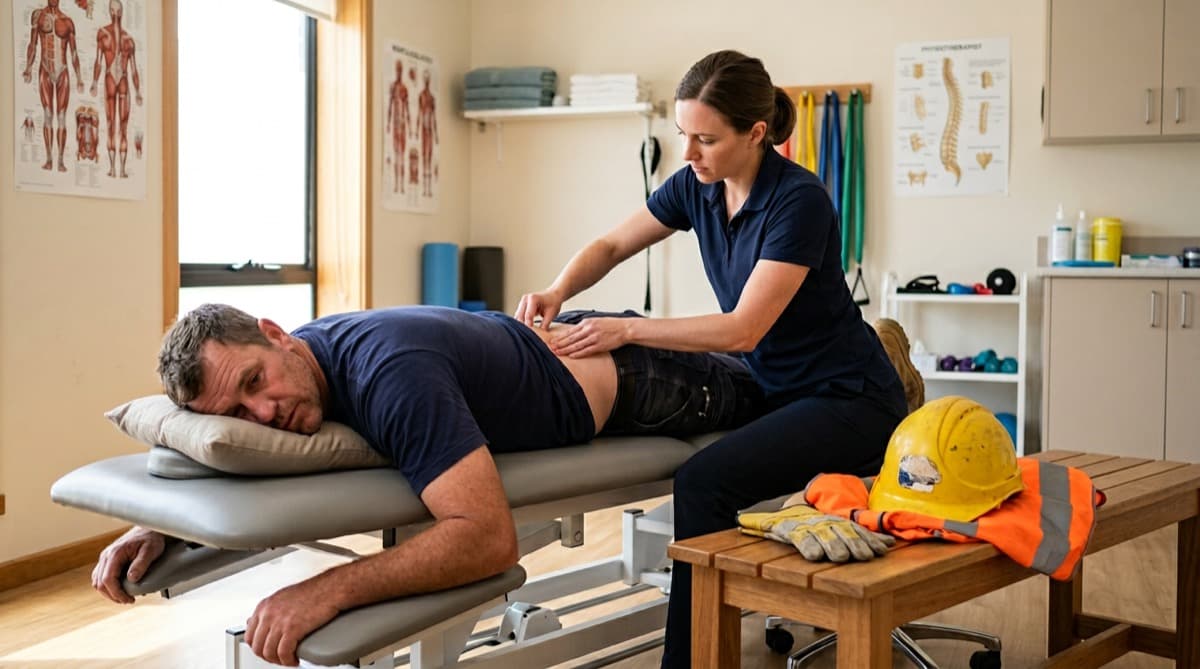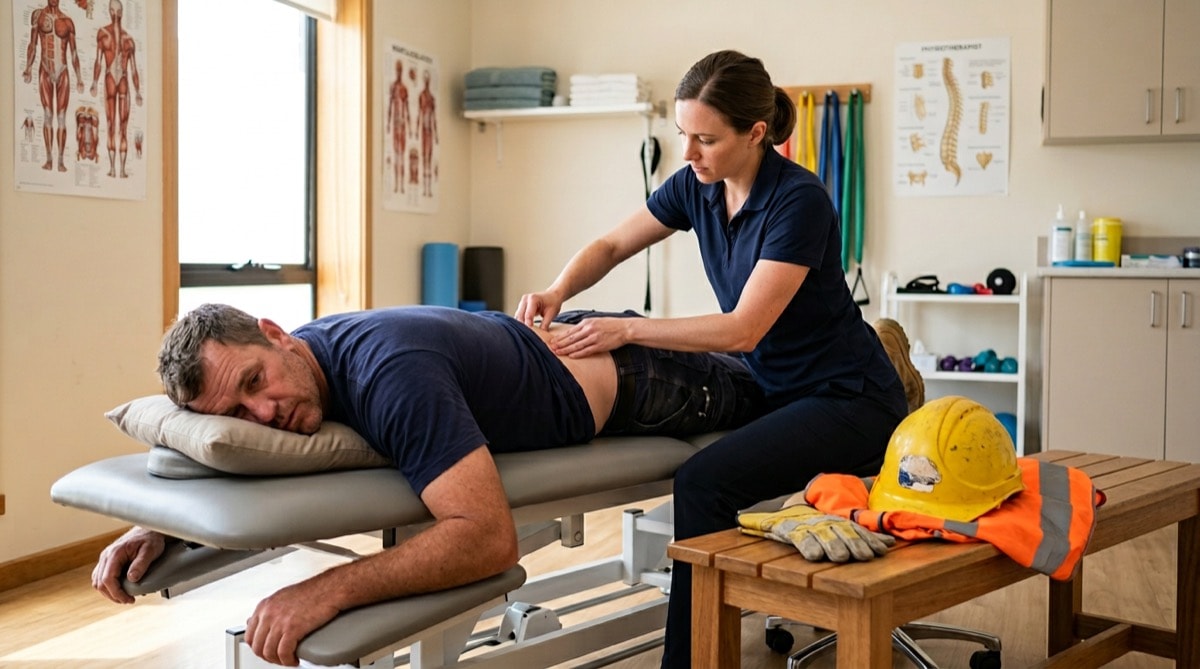
WorkCover Physio in Liverpool & Cabramatta: What Happens After a Workplace Injury
Injured at work? Here's what actually happens
Lifting injuries, slips, falls, crush injuries, repetitive strain — workplace injuries are a huge part of our Liverpool and Cabramatta caseload. The Western and Southwest Sydney corridor has some of the highest concentrations of construction, warehousing, manufacturing, childcare and aged-care employment in the country, and every one of those industries has meaningful injury risk.
SafeWork NSW data consistently shows that musculoskeletal injuries — especially to the back, shoulders and knees — account for the largest share of serious workers compensation claims in the state. The good news: with the right pathway, most people recover well and return to meaningful work. The bad news: a small minority drift into long-term disability because the early phase was mishandled. This post exists to help you stay in the first group.
Step 1 — Report the injury
Tell your employer as soon as practical. Fill in the accident / incident register. This creates the paper trail that supports your claim. In NSW you generally have up to six months to claim, but earlier is always better.
Step 2 — See your GP for a Certificate of Capacity
Your GP issues a Certificate of Capacity documenting your injury, expected recovery time, and work restrictions (e.g. "no lifting >10kg for 2 weeks"). This certificate is what triggers wage replacement and sets the clock on your claim.
Step 3 — The insurer opens your claim
Your employer notifies their workers compensation insurer (icare for most NSW businesses, or a specialised scheme agent). Under SIRA regulation the insurer has 7 days to make a liability decision. In most cases, provisional liability is accepted, which pays for reasonable and necessary medical treatment — including physio — while your full claim is being considered.
Step 4 — Start physio early
This is where we come in. Research into WorkCover outcomes in Australia consistently shows that early, active physiotherapy — not passive heat or ultrasound — is the strongest predictor of returning to work on schedule. We structure treatment around three goals:
- Reduce pain and restore movement. Hands-on therapy, graded exercise, and education.
- Rebuild work capacity. Task-specific loading (lifting, carrying, overhead work, sitting tolerance) that mirrors your actual job demands.
- Return-to-work planning. We liaise directly with your employer, GP and insurer to negotiate suitable duties and a graduated return.
Step 5 — Allied Health Recovery Requests
Beyond the first eight sessions, SIRA requires your physio to submit an Allied Health Recovery Request (AHRR) to the insurer. This is a treatment plan with measurable functional goals — for example, "tolerate 8 hours of general labouring including intermittent lifting of 20kg within 6 weeks." Without clear goals, treatment can drift — and drifting treatment is what insurers stop funding. We write every AHRR around concrete return-to-work targets.
What does a good return-to-work program look like?
Return to work is a graded process, not a binary one. A typical graduated plan might be:
- Weeks 1–2: 4 hours/day, light duties only, no lifting over 5kg
- Weeks 3–4: 6 hours/day, progressively increased lifting to 10kg, limited overhead
- Weeks 5–6: Full 8-hour days, full duties with residual lifting limits as medically appropriate
- Weeks 7+: Full pre-injury duties
We'll build this in consultation with your workplace, adjusting based on physical progress, pain behaviour, and the demands of your specific role. For tradies, this often includes on-site or gym-based simulation of ladder work, scaffolding, kneeling, crawling, and overhead tasks.
If you've had a car accident on the way to work
That's typically a CTP (Compulsory Third Party) motor vehicle claim rather than workers comp — different insurer, different rules. See our post on CTP car accident physio for that pathway.
Common injuries we see in Southwest Sydney tradies and warehouse workers
- Lumbar disc injuries and acute low back pain — see our lower back pain guide
- Shoulder rotator cuff strains from overhead work — see our rotator cuff guide
- Knee meniscal injuries from kneeling and twisting
- Wrist, elbow and hand tendinopathies from repetitive tool use
- Ankle sprains from scaffolding, ladders, and uneven ground
Want to understand the system before you start?
We've written a dedicated program for injured workers who want a clear, step-by-step walkthrough of the NSW workers compensation system — claims, Certificates of Capacity, your entitlements, return-to-work planning, and what to expect at each stage. Check out The Workers Compensation Mastery Guide — it pairs perfectly with clinical treatment and gives you the clarity most people wish they'd had from day one.
Book your WorkCover physio assessment
If you've been injured at work anywhere in Liverpool, Cabramatta, Fairfield, Canley Heights, Bankstown or Southwest Sydney, don't wait for your claim to be "fully approved." Provisional liability and self-funded options mean you can usually start treatment the same week. Book a WorkCover physio assessment and we'll handle the paperwork with your insurer while you focus on recovery. If you want to get on top of the paperwork side yourself, our Workers Compensation Mastery Guide walks you through it.
References: State Insurance Regulatory Authority (SIRA); SafeWork NSW; NSW Workers Compensation Clinical Framework for the Delivery of Health Services.
Frequently Asked Questions
How quickly should I see a physio after a workplace injury?
Ideally within the first week. Early intervention is strongly linked with faster return-to-work and lower risk of the injury becoming chronic. You don't need your claim to be fully approved before starting — WorkCover in NSW has a provisional liability provision that generally covers the first 12 weeks of treatment.
Do I need a GP referral to start WorkCover physio?
You don't technically need a referral to see a physio, but you do need a Certificate of Capacity from your GP to start the claim and document your work restrictions. Most people see their GP first, then see the physio. We can also liaise directly with your GP if you've already booked with us.
What costs do I pay out of pocket?
For approved workers compensation claims in NSW, no gap or co-payment for physiotherapy services within the SIRA-approved fee schedule. If your claim is denied you may be responsible for costs incurred — we'll always confirm your claim status before continuing treatment.
Will I need a pre-approval form for physio?
Sessions 1–8 are typically covered under initial treatment. From session 9 onwards the physio submits an Allied Health Recovery Request (AHRR) to the insurer with a treatment plan and functional goals. We manage that paperwork for you.
Can I choose my own physio, or does my employer pick?
You have the right to choose your own treating allied health provider in NSW. Employers or insurers cannot force you to use a particular physio. That said, your insurer will want your physio to be SIRA-aligned and following the Clinical Framework — which we are.