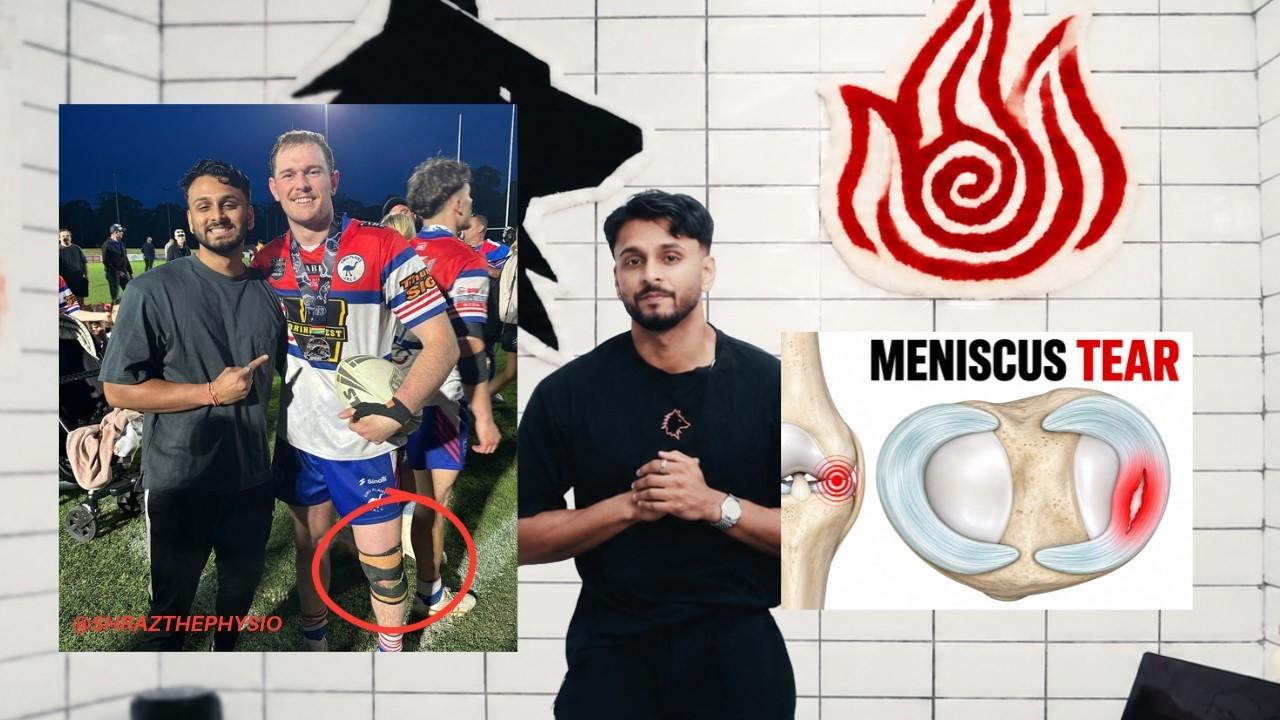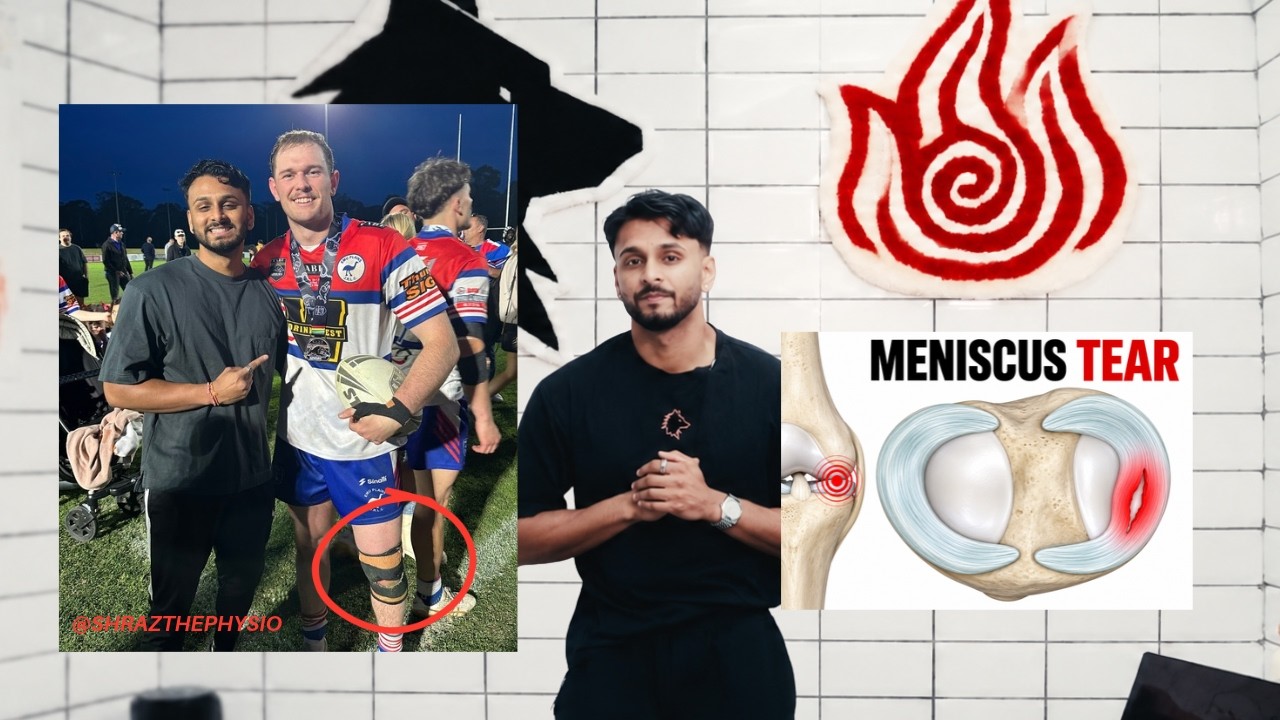
Meniscus Tear: Knee Locking or Catching Is an Automatic No
Video masterclass
Why I Let Him Play Rugby With a Torn Meniscus
Torn meniscus and the grand final? Three pillars — physical, trust, is it worth it — plus Ian’s MOTM story. Not a self-clearance. Watch + discovery call. Watch the full session below — then open the video page for notes, timestamps, and related guides.
Mastery program
The ACL Comeback Program
A structured 28-day knee rehab program designed for people stuck in the "almost better" phase after ACL or meniscus injury. Rebuild strength, restore confidence, and bridge the gap between feeling okay and being fully back.
This is the shortest post in the cluster on purpose
In Why I Let Him Play Rugby With a Torn Meniscus I put locking, catching and clicking in one sentence: automatic disqualification. You will not play. You get an orthopaedic review. Watch on YouTube.
The opening of the video is the same idea in clinical language: mechanical locking, repeatedly giving way, increased swelling, loss of knee extension or worsening symptoms should immediately change the conversation.
Want a structured program, not just an article?
This guide gives you the framework. The ACL Comeback Program ($50) is our 28-day lower-limb strength block for the “almost better” phase — when you can walk and do daily life but need progressive loading before you trust running again. Pair it with the free Knee Pain Mastery Guide for day-to-day exercises.
Why Ian’s story does not apply if this is you
The rest of the cluster — physical checklist, traffic light, Ian’s grand final — assumes the knee is not mechanically blocking. If yours is, stop reading the “how we let him play” posts as a loophole. They are not.
For the broader surgery-versus-physio question, including true locking: meniscus tear — surgery, physio, or wait. For symptom modulation when the joint is behaving: meniscus taping.
Online Rehab Academy
Book a free discovery call
Want this protocol mapped to your injury, scan and timeline? Our Online Rehab Academy pairs video-guided rehab with remote coaching from our clinical team — the same standards as in-clinic care, from home.
Do not negotiate with a jammed joint
People try. They always try. “It unlocks if I wriggle it.” That is not a return-to-sport strategy. Hub: three pillars.
Buy The ACL Comeback Program or book a free discovery call
The ACL Comeback Program is our paid 28-day lower-limb strength and confidence block ($50). We use it for ACL and meniscus rehabs — and for athletes stuck in the “almost better” phase after knee sprain, giving-way, or a long layoff from running and court sport. It is built for the whole lower limb, not only post-op ACL.
Purchase The ACL Comeback Program →
Want a plan mapped to your scan, sport and timeline without coming in first? Book a free discovery call for our Online Rehab Academy →
Free progressive home loading: Knee Pain Mastery Guide. In Cabramatta / South West Sydney? Book an in-clinic physio assessment.
Frequently Asked Questions
What counts as locking?
The knee mechanically jams — often can’t fully straighten — and you can’t ‘stretch it out’ with willpower. Catching and true mechanical clicking in this context sit in the same bucket as a no for sport.
My knee clicks. Am I banned from everything?
Painless, long-standing, non-mechanical noise is not the same as a knee that catches and stops you. The video is talking about locking, catching, clicking as mechanical symptoms that end the return-to-play conversation and start an orthopaedic one. Get it assessed rather than guessing from a blog.
Can tape fix locking?
No. Tape and a brace were Ian’s rules *after* he had already passed the physical pillar with no locking. Mechanical block is a surgical question, not a rigid-tape question. See our meniscus taping video for symptom modulation when the joint is otherwise behaving.
Is this the same as giving-way?
Related, different. Repeated giving-way, increased swelling, loss of extension or worsening symptoms also stop the conversation in the opening of the video. Locking is the one I called an automatic disqualification on the physical list.
Does a locked knee always mean surgery?
A locked knee that will not straighten is one of the clearest surgical flags — often a displaced bucket-handle. That decision sits with you, your physio and an orthopaedic surgeon. Our surgery-vs-physio guide covers the fork.
Where is this in the video?
Opening red flags ~1:12, locking as automatic DQ ~3:48.