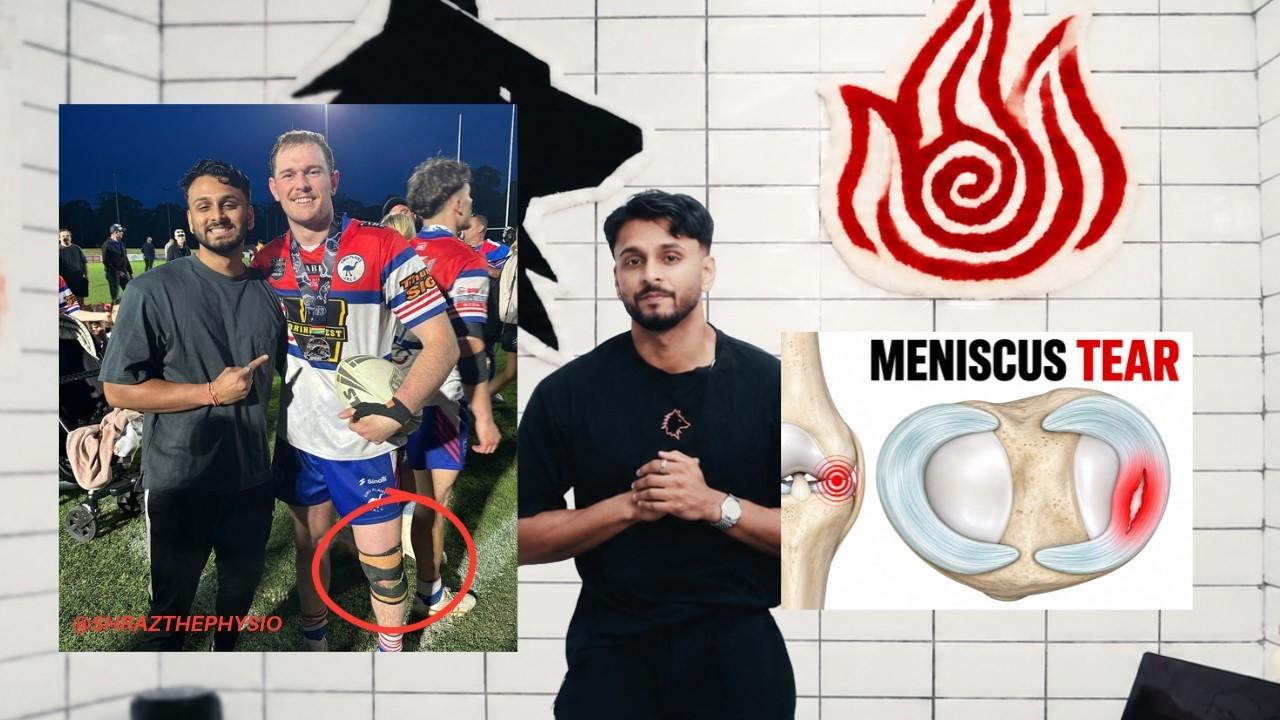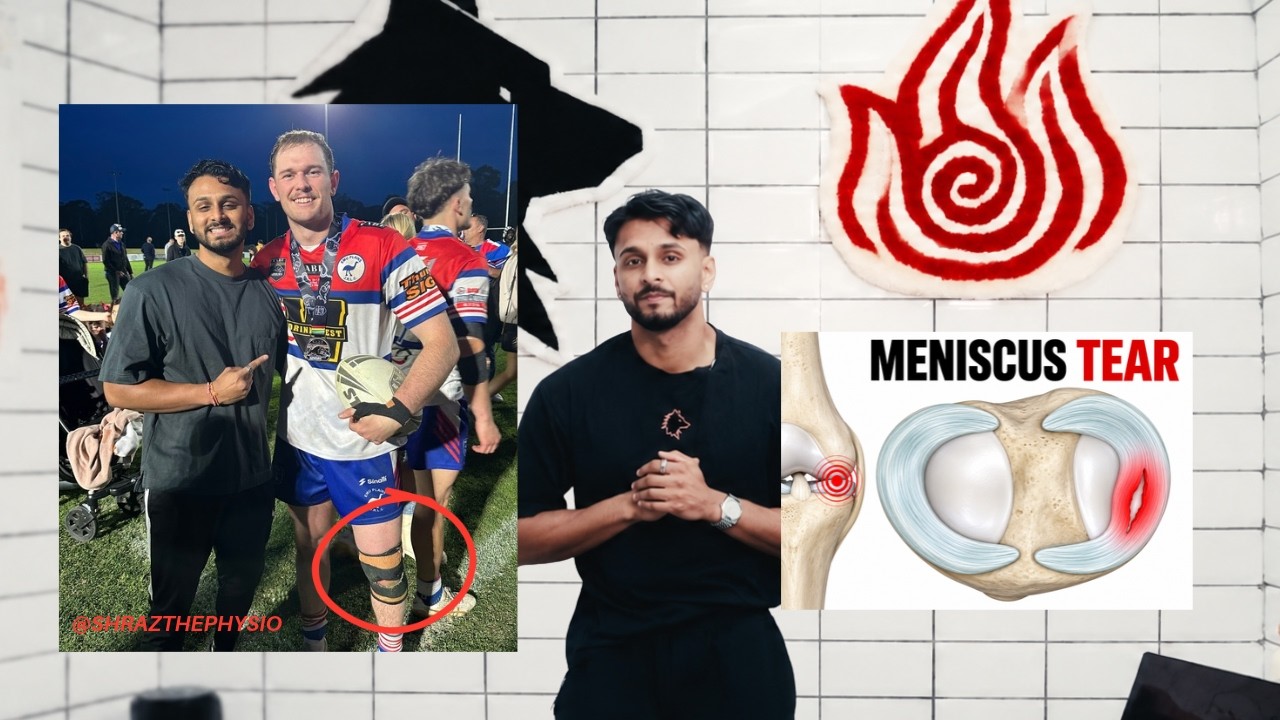
Ian Played a Grand Final on a Torn Meniscus — Then Went to Surgery
Video masterclass
Why I Let Him Play Rugby With a Torn Meniscus
Torn meniscus and the grand final? Three pillars — physical, trust, is it worth it — plus Ian’s MOTM story. Not a self-clearance. Watch + discovery call. Watch the full session below — then open the video page for notes, timestamps, and related guides.
Mastery program
The ACL Comeback Program
A structured 28-day knee rehab program designed for people stuck in the "almost better" phase after ACL or meniscus injury. Rebuild strength, restore confidence, and bridge the gap between feeling okay and being fully back.
He asked three times. I still didn’t promise
A couple of years ago Ian tore his meniscus a few weeks before the grand final. He really, really, really wanted to play — I’m relaying his words, not stacking the drama. In Why I Let Him Play Rugby With a Torn Meniscus I told him: we’ve got four weeks. Get it strong. Get it stable. See how you feel. The week of the game, we decide. Watch on YouTube.
He missed the last round of the season. Missed the quarterfinals. Missed the semis. Week’s break into the grand final. That was the deal — not “strap it and see on Saturday.”
Want a structured program, not just an article?
This guide gives you the framework. The ACL Comeback Program ($50) is our 28-day lower-limb strength block for the “almost better” phase — when you can walk and do daily life but need progressive loading before you trust running again. Pair it with the free Knee Pain Mastery Guide for day-to-day exercises.
He passed. Then he played under rules
Pillar one: he passed the tests. Pillar two: he really wanted to go back. Pillar three: he knew the risk and it was his decision. So we let him play the final — with the traffic light, minutes, no sprint, tape.
20 minutes first half. Most of the second. Two tries in the last ten minutes on a torn meniscus. The last try gave them the lead. They won the grand final. Man of the match.
A couple of days later he went in for surgery. Then we rehabbed everything after. Incredible. Also not a template you photocopy onto your own MRI.
Online Rehab Academy
Book a free discovery call
Want this protocol mapped to your injury, scan and timeline? Our Online Rehab Academy pairs video-guided rehab with remote coaching from our clinical team — the same standards as in-clinic care, from home.
Please do not take the highlight as a protocol
It does not always end like that. There are times players play and end up with a much worse injury. The work is: figure the risk-reward, then mitigate. If you want the framework without the story-shape: three pillars. If you want surgery-versus-physio rather than one-game: the decision guide.
Buy The ACL Comeback Program or book a free discovery call
The ACL Comeback Program is our paid 28-day lower-limb strength and confidence block ($50). We use it for ACL and meniscus rehabs — and for athletes stuck in the “almost better” phase after knee sprain, giving-way, or a long layoff from running and court sport. It is built for the whole lower limb, not only post-op ACL.
Purchase The ACL Comeback Program →
Want a plan mapped to your scan, sport and timeline without coming in first? Book a free discovery call for our Online Rehab Academy →
Free progressive home loading: Knee Pain Mastery Guide. In Cabramatta / South West Sydney? Book an in-clinic physio assessment.
Frequently Asked Questions
Who is Ian?
A client from a couple of years ago. Torn meniscus a few weeks before a rugby grand final. He asked to play — really, three times. We didn’t promise. Four weeks of work, then a decision the week of the game.
Did he play the whole final?
No. 20 minutes of the first half and most of the second, on the traffic-light, no-sprint, cautious-COD, tape/brace rules.
What happened in the game?
Two tries in the last ten minutes. The last one gave them the lead. They won. He was man of the match. On a torn meniscus.
He still had surgery?
A couple of days later, yes. Then we rehabbed everything post-op. Playing the final was not ‘the meniscus is fine now.’ It was a calculated, time-boxed risk with a plan after.
Should I expect the same ending?
No. I say in the video it does not always end like that. Players play and come out with a worse injury. We figure the risk-reward and we try to get the risk as low as we can. Sometimes the answer is not yet.
Where is the story in the video?
Opening ~0:22, return to Ian ~13:32, result ~14:34.