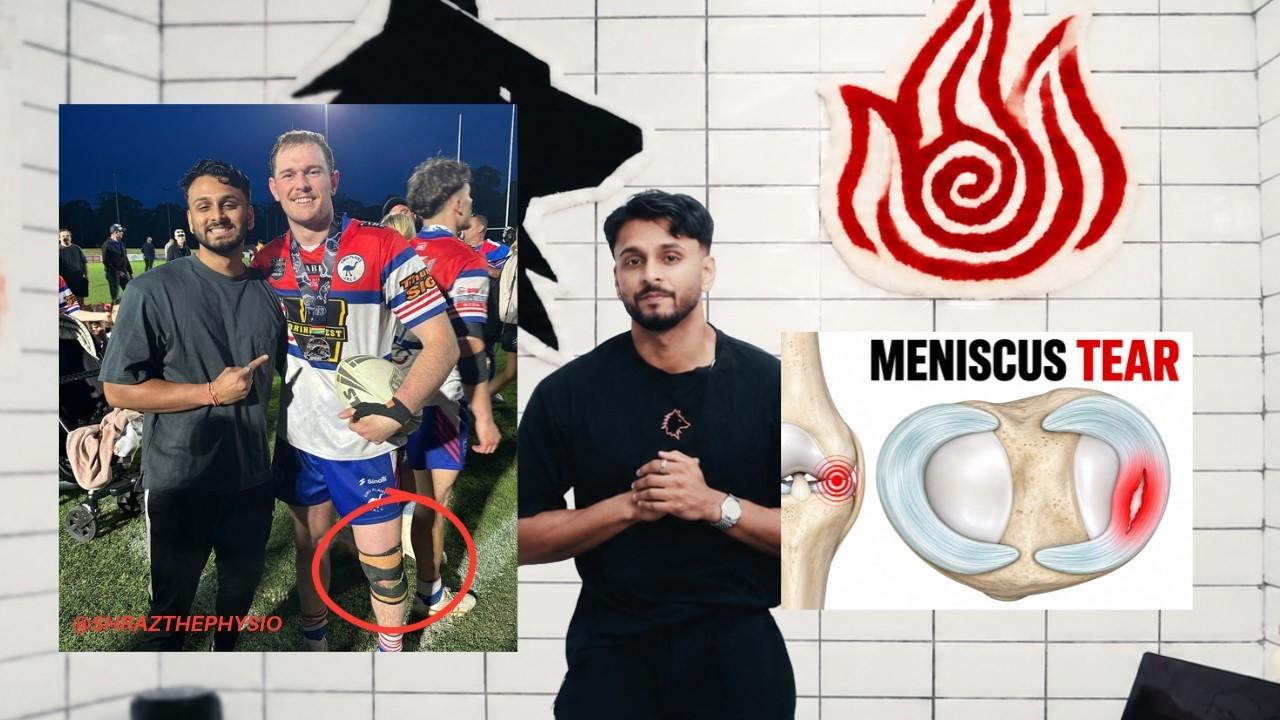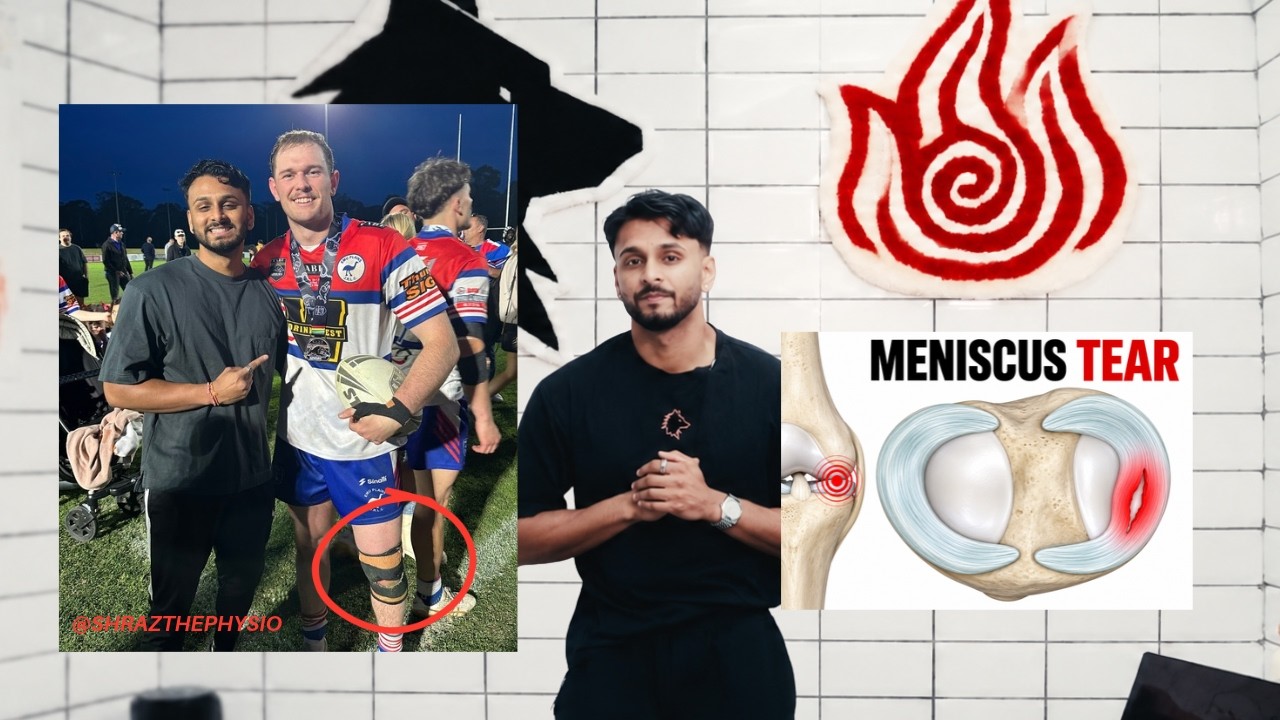
Meniscus Pain Rules: Rest at 0, Ceiling at 4, Gone in 24 Hours
Video masterclass
Why I Let Him Play Rugby With a Torn Meniscus
Torn meniscus and the grand final? Three pillars — physical, trust, is it worth it — plus Ian’s MOTM story. Not a self-clearance. Watch + discovery call. Watch the full session below — then open the video page for notes, timestamps, and related guides.
Mastery program
The ACL Comeback Program
A structured 28-day knee rehab program designed for people stuck in the "almost better" phase after ACL or meniscus injury. Rebuild strength, restore confidence, and bridge the gap between feeling okay and being fully back.
A bit of pain is allowed. A lot of pain is not a personality trait
In Why I Let Him Play Rugby With a Torn Meniscus I say something that still surprises people: being completely pain-free is not a necessary part of return. You can have a little bit of pain and still return to sport. It depends on everything else. Watch on YouTube.
The rules we actually use:
- Resting pain: 0/10.
- Ceiling: 3–4/10. Four is the ceiling. It should never exceed that.
- 24-hour window: morning session, gone by evening. Night session, gone by morning.
Want a structured program, not just an article?
This guide gives you the framework. The ACL Comeback Program ($50) is our 28-day lower-limb strength block for the “almost better” phase — when you can walk and do daily life but need progressive loading before you trust running again. Pair it with the free Knee Pain Mastery Guide for day-to-day exercises.
Good pain is in the muscle. Bad pain is in the joint
Steve asked what we consider good pain and bad pain. Good pain is the exercise pain — DOMS — primarily around the muscles. Quad, calf, hamstring. Typically the same on both sides. Bad pain is sharp, shooting, in the joint, in the ligament, deep. Type and location. Sharp, dull, achy — and is it muscle or joint?
If the “pain” is only the quad after a strength block and the joint is quiet the next morning, that is information. If the joint is shouting and the other side feels nothing, that is different information. Do not average them into “I trained hard.”
Online Rehab Academy
Book a free discovery call
Want this protocol mapped to your injury, scan and timeline? Our Online Rehab Academy pairs video-guided rehab with remote coaching from our clinical team — the same standards as in-clinic care, from home.
Game day uses the same numbers, stricter
Ian’s in-game traffic light is the same scale with consequences: 0 stay on, 1–4 caution, over 4 you’re done. Physical checklist around this: the full screen. Hub: three pillars.
Buy The ACL Comeback Program or book a free discovery call
The ACL Comeback Program is our paid 28-day lower-limb strength and confidence block ($50). We use it for ACL and meniscus rehabs — and for athletes stuck in the “almost better” phase after knee sprain, giving-way, or a long layoff from running and court sport. It is built for the whole lower limb, not only post-op ACL.
Purchase The ACL Comeback Program →
Want a plan mapped to your scan, sport and timeline without coming in first? Book a free discovery call for our Online Rehab Academy →
Free progressive home loading: Knee Pain Mastery Guide. In Cabramatta / South West Sydney? Book an in-clinic physio assessment.
Frequently Asked Questions
Do I need zero pain to play?
No. Completely pain-free is not the gate. Resting pain should be zero. During and after work, 3–4/10 is the ceiling. Over four, you are out of the conversation for that session or that game.
What is the 24-hour window?
If you train in the morning, the extra pain should be gone by evening. If you train at night, gone by morning. Pain that is still sitting there the next day is load you did not tolerate — not “just a bit of stiffness.”
What is good pain vs bad pain?
Steve asked this in the video. Good pain is exercise pain — DOMS — mainly in the muscle (quad, calf, hamstring) and typically similar both sides. Bad pain is sharp, shooting, in the joint or ligament, deep in the joint.
What about swelling?
We watch swelling after training and after physio the same way we watch pain. A knee that puffs up is a vote against the load you just did, even if you ‘pushed through’ the session.
Is amber 1–4 still allowed on game day?
In the traffic-light rules Ian used, 0 is green stay-on, 1–3 or even 4 is amber proceed-with-caution depending on the sport, and over 4 is red — stop, slow, and if it persists you’re off. That is in-game management, not a training target.
Where is this in the video?
Pain rules from about 2:00, 24-hour window from 3:07, good vs bad pain from 4:32.