Running, Cutting, Bending: How Your Brain Learns to Call Movement Dangerous
Video masterclass
The Scattered Mind of an Athlete Cannot Find Peace
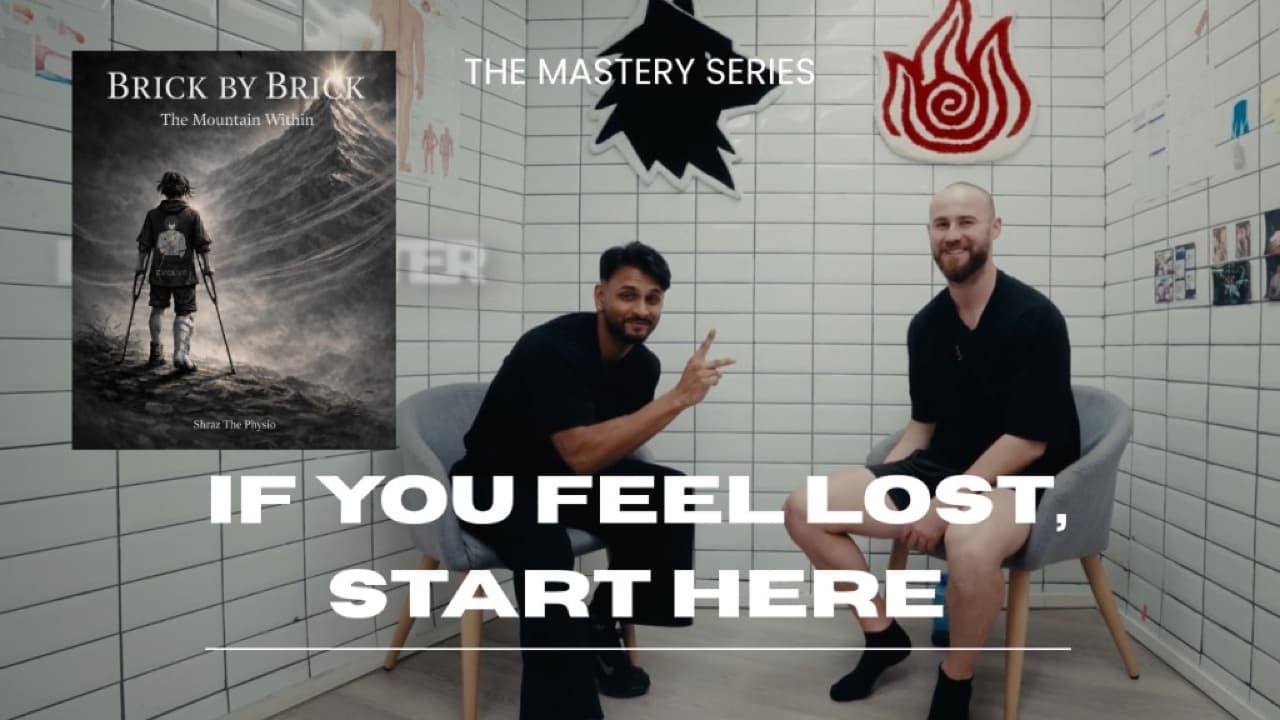
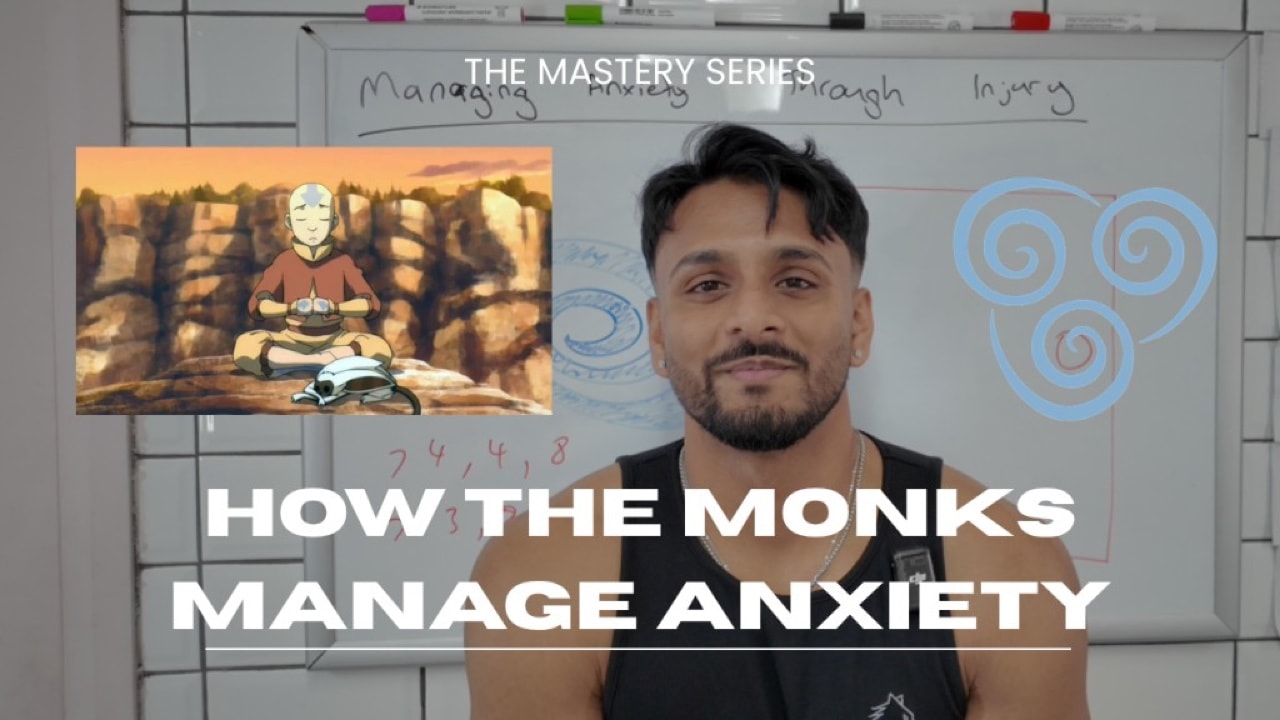
The scattered mind of an athlete cannot find peace. Why injury anxiety happens, a breathing drill to calm it, then the exposure ladder to return to sport. Watch the full session below — then open the video page for notes, timestamps, and related guides.
The brain learns associations
Quite typically after an injury the brain learns association: this movement led to that pain, so this movement is dangerous. In The scattered mind of an athlete we list the ones that come up in clinic almost every week.
- Running — the brain reads running as dangerous, so people stop running.
- Cutting — “what if I tear my ACL again?” so change of direction gets avoided.
- Bending — bending equals pain, so the back stays stiff and guarded.
- Gym and exercise — training equals the risk of failing again.
- A flare-up — read as proof you’re starting back at ground one.
Avoidance spreads wider than the movement
A big part of injury is that some people develop trauma responses, and it’s usually tied to the movement that caused the pain. Say you tore your ACL during a run, or you landed a little awkwardly. From then on, people become avoidant of three things:
- The sport itself.
- The movement that did it.
- Even the environment where it happened.
Your brain is now associating all of those things with danger. So when you get exposed to that environment, that situation or that movement, your heart rate climbs, your breathing gets fast, and the anxiety arrives before you’ve done anything at all.
That reaction is the nervous system talking
It’s saying: we shouldn’t be in this position, we shouldn’t be doing this movement, we can’t be on this ground, we can’t be playing right now. It isn’t sabotage. It’s protection built from memory.
Which means the job isn’t to force through it. The job is to show your brain and body that you’re okay — things are fine, we’re safe. That happens in a sequence, not in one brave session.
How to start unwinding it
- Write the specific association: “running on grass” is different to “running”.
- Bring the arousal down first — see the breathing and door drill.
- Break the feared skill into rungs with the exposure ladder, then climb it.
Related reading
Why anxiety happens after injury · Fear of re-injury after ACL surgery · Getting back to running when it scares you
Book a physio assessment at Evolve Physio & Mastery — Cabramatta & South West Sydney.
Frequently Asked Questions
Which movements do people most often become scared of?
In clinic the common ones are running, cutting or changing direction, bending, and returning to the gym. A flare-up also becomes its own fear, because people read it as being back at square one.
Can an injury cause something like PTSD?
Some people do develop trauma responses after injury, and it’s typically tied to the exact movement that caused the pain. If you tore your ACL landing awkwardly, you can become avoidant of that movement, that sport, and even that environment.
Where is this in the video?
The learned-association segment runs from about 3:07 to 5:17 of the talk (https://youtu.be/Wn2tbSOQTmQ).