Rushing Rehab Because People Depend on You (And Why It Costs You Months)
Video masterclass
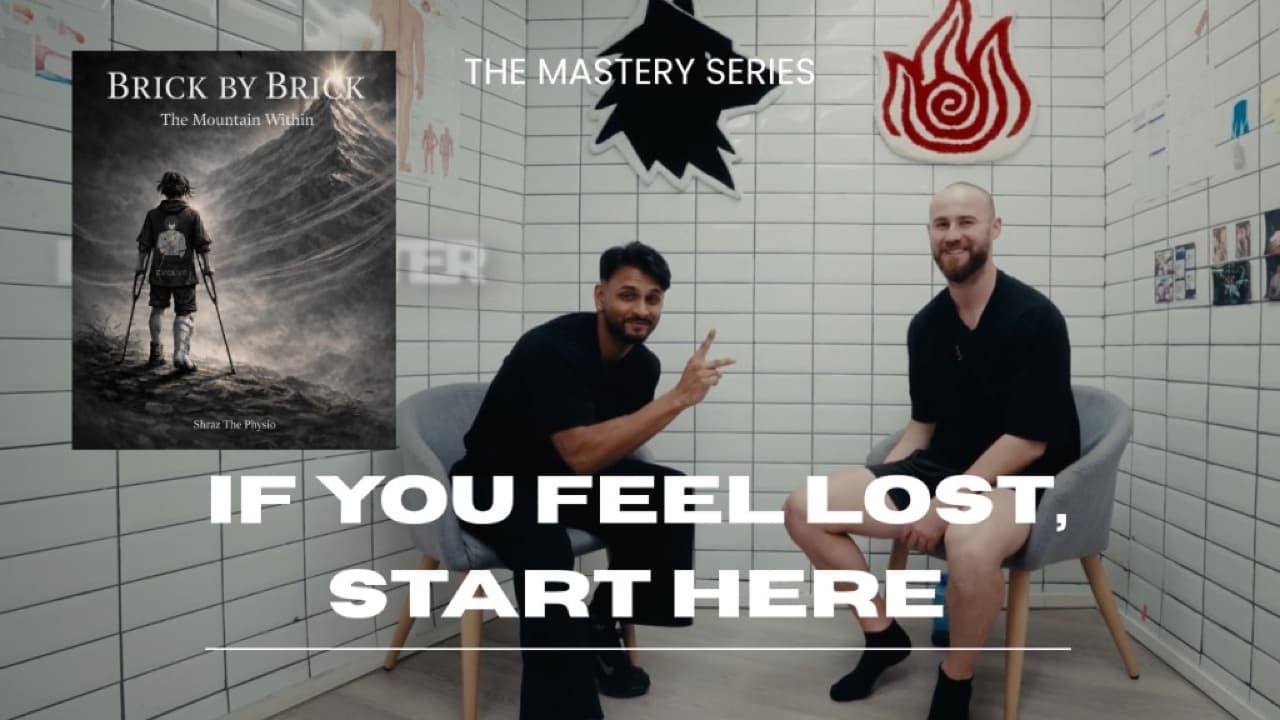
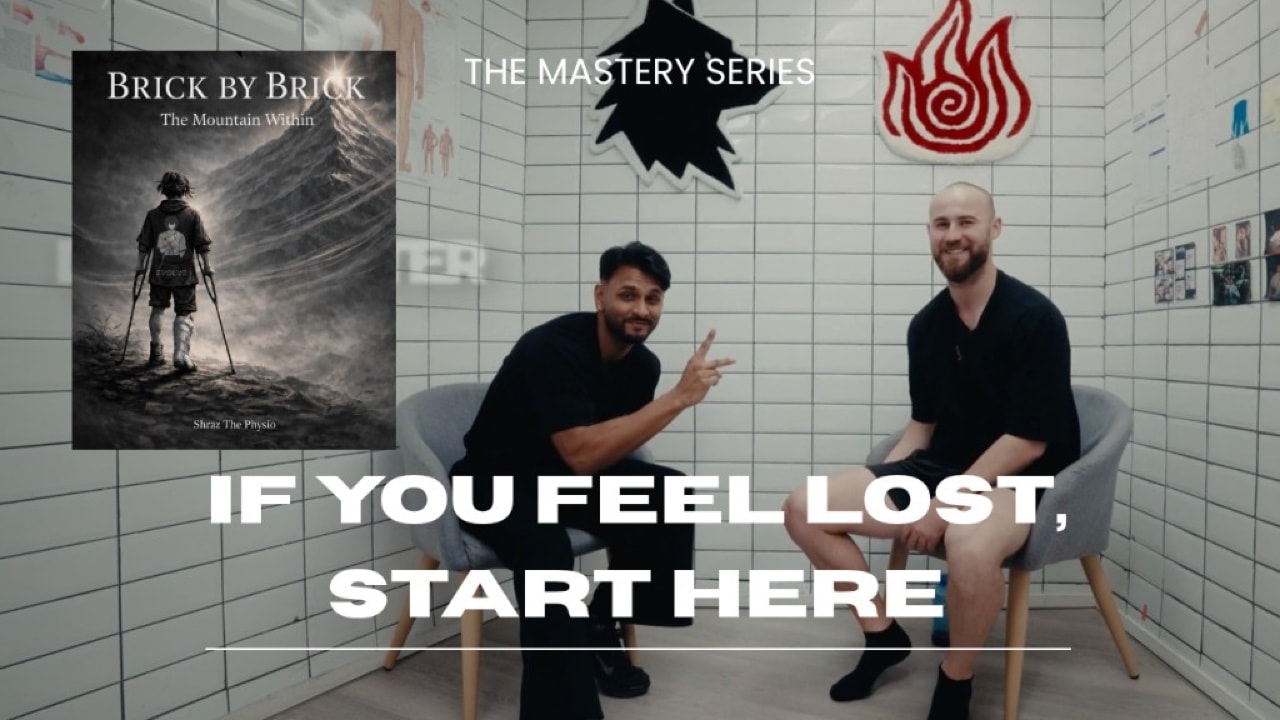
Brick By Brick: The Story Behind the Book
Why Brick By Brick exists: the patterns behind chronic pain, the three pillars of recovery, and why rebuilding takes seven weeks instead of one sitting. Watch the full session below — then open the video page for notes, timestamps, and related guides.
Nobody rushes rehab for fun
The advice to “not rush it” is everywhere and it’s useless on its own, because it never addresses why people rush in the first place. It’s rarely impatience or ego. It’s obligation.
In the Brick By Brick episode, Matt describes exactly this with his fractured ankle — watch on YouTube. He teaches martial arts and tricking, so he has to constantly demonstrate. His recovery dragged partly because he kept trying to still benefit other people, putting a lot of stress through the ankle while doing it.
That’s not carelessness. That’s someone doing their job.
Who this hits hardest
- Coaches and instructors — demonstrating is the product.
- Personal trainers — sessions don’t pause because your shoulder did.
- Tradies and sole traders — no work, no income, and clients who booked you specifically.
- Parents and carers — a toddler doesn’t accept a modified lifting plan.
What all four share: stopping doesn’t just cost you, it costs someone else. So you don’t stop, and the tissue never gets a stretch of consistent, tolerable load.
The loop this creates
Progress a bit, load it past what it can handle, flare, back off, lose the ground you made, start again. Each lap feels like bad luck. Stacked up, it’s a pattern — and it’s why a recovery measured in months turns into one measured in years. If that loop sounds familiar, our post on rehab restart loops goes further into it.
Substitute, don’t stop
The useful move is almost never full withdrawal. It’s removing the one loaded component while keeping the role:
- Name the specific load that’s doing the damage — not “teaching”, but “demonstrating jump landings”.
- Find the version without it. Cue verbally. Use a senior student to demo. Reorder the job so the overhead work comes later in the week.
- Protect a floor. Decide the minimum rehab that happens regardless of how busy the week gets.
- Pick the re-entry date in advance, tied to a capacity marker rather than a feeling.
The long view
Matt got there — back to flipping, and the ankle held up on a snow trip a year later. But he’s candid that some of that year was self-inflicted. His full story is here.
What is the point of getting to the destination if you don’t enjoy the journey? Slowing down isn’t losing time. It’s the only way the time counts.
Related reading
The story behind Brick By Brick · Small daily wins compound · Start the free 7-week series
Book a physio assessment at Evolve Physio & Mastery — Cabramatta & South West Sydney.
Frequently Asked Questions
Why does rushing rehab make recovery take longer?
Loading tissue beyond what it can currently tolerate produces flare-ups, and each flare tends to cost more time than the sessions you were trying to save. The net effect is a longer total timeline, not a shorter one.
But I can’t just stop — people rely on me.
Usually the answer isn’t stopping, it’s substituting. Coaches can talk through and cue instead of demonstrating. Tradies can change task order. The goal is keeping the role while removing the specific load the injury can’t handle yet.
How do I know if I’m rushing?
A reliable sign is repeated returns to square one — you progress, flare, back off, then repeat the same loop without ever getting further than last time.
Where is this in the video?
Matt describes it from about 12:47 to 13:17 of the Brick By Brick episode (https://youtu.be/wfOG6tsP_uo).