Driving Range Low Back Pain: Why a Bucket of Balls Beats Up Your Spine
Video masterclass
Your Ultimate Golf Mobility Guide | Play Better, Pain-Free
The 3 areas golfers get injured (hips, shoulders, low back) and the exact mobility drills we use to keep your swing pain-free and powerful. Watch the full session below — then open the video page for notes, timestamps, and related guides.
Free program
Golfer's Back Mobility Guide
The Golf Low Back Mobility Mastery Guide is a structured mobility and strength program designed specifically for golfers dealing with nagging low back stiffness, post-round soreness, or reduced swing power.
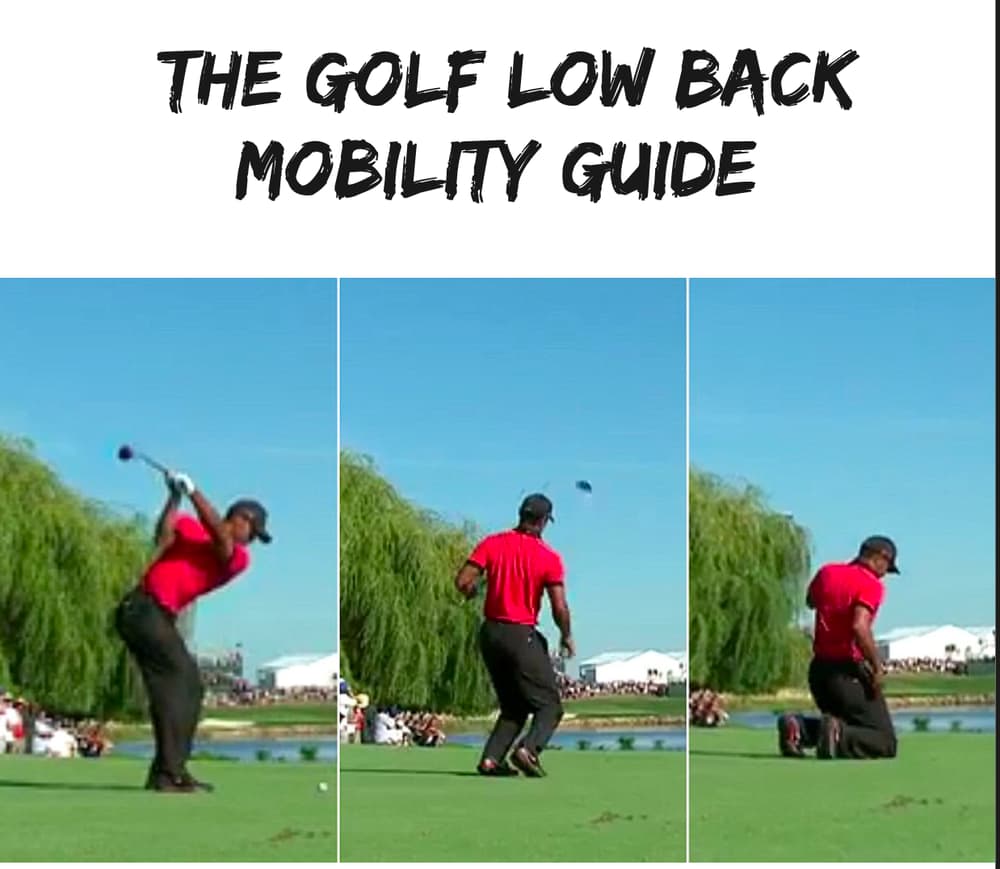
The range is not a warm-up. It is a workout.
Weekend golfers around Liverpool, Fairfield and the Southwest often tell us the same story: the Saturday social round was fine. Sunday at the range — one large bucket, mostly driver — and Monday the lumbar spine will not let them put on socks. That is not mysterious. It is dose.
A round of golf is interval training. A poorly structured range session is a continuous rotational set on a cold spine, often after a week of sitting. We already wrote about hips, rotation and the Monday back. This post is about the practice habit that quietly does more damage than the card.
Why a bucket overloads the lumbar spine
- No locomotion. Walking between shots is recovery. The mat gives you none of it.
- Same swing, same segment. Block practice grooves the same shear and side-bend into the same lumbar levels.
- Driver last, when you are tired. The longest lever arrives when hip and thoracic rotation have already quit.
- Cold start. First 15 balls as “warm-up” at 90% is not a warm-up.
A range session your back can survive
- Five minutes of hip and thoracic rotation before the first ball — not a coffee in the car park.
- Wedges first. Mid-irons second. Driver as a short, fresh block.
- Sets of 8–12 balls, then walk, reset posture, one mobility drill.
- Stop while the swing still looks like your swing. The last 20 ugly drivers are not practice.
If the back nine is where you fall apart on course, that is a different fatigue problem — see back-nine stiffness and performance.
When it is more than “a bit stiff”
Leg pain, numbness, or a back that will not straighten after the range is not a stretch-it-out day. Read sciatica vs low back pain and get assessed.
Free golf back program
Claim the free Golfer’s Back Mobility Guide. Acute flare? Use the Back Pain Mastery Guide first. Book a golf-body assessment in Cabramatta — we work with club golfers who want more speed without paying for it on Monday.
Frequently Asked Questions
Why does the range hurt more than the course?
On course you walk, wait, and hit a variety of shots. On the range you often smash 60–100 similar swings in a tight block with no walk and a cold lumbar spine. That is volume the joint never sees on Saturday.
Is it my swing or just too many balls?
Usually both. A swing that dumps rotation into the lumbar spine survives 30 balls and fails at 80. We fix capacity and the pattern — a coach still owns the swing thoughts.
How many balls should I hit?
If your back is currently irritable, think quality blocks of 8–12 swings with a walk and a mobility reset, not one giant bucket. Build volume like training, not like a punishment session.
Should I stop the driver on the range?
If driver is the shot that lights you up, start with wedges and mid-irons after a real warm-up. Add driver as a short, fresh block — not the last 40 balls when you are tired.
Can I still play while I rehab this?
Often yes — 9 holes or a walking round with a warm-up beats another max range day. Escalating night pain, leg symptoms, or a back that locks is a stop-and-get-seen rule.
What program is this?
Our free Golfer’s Back Mobility Guide is built for rotational load. If you are in an acute flare, start with the Back Pain Mastery Guide, then return to the golf-specific work.