Sciatica vs Lower Back Pain: How to Tell the Difference (and What Physio Can Do)
The question everyone brings in
"Do I have sciatica or just back pain?" It's probably the single most common question we field across our Cabramatta clinic. The distinction matters — and not just semantically. True sciatica (lumbar radiculopathy) has different drivers, different timelines, and sometimes different treatment from ordinary low back pain. Getting the label right at the start saves months of wrong treatment later.
This post sits alongside our broader lower back pain guide, which covers general back pain in more detail. Here, we zoom in on the leg-pain question specifically.
What is sciatica, really?
Sciatica — more accurately called lumbar radiculopathy — is pain, numbness, tingling or weakness caused by irritation or compression of a spinal nerve root in the lower back. The most commonly affected roots are L5 and S1, which together form a large part of the sciatic nerve.
Classic features:
- Pain traveling from the buttock down the back or side of the leg, often past the knee
- Sharp, shooting, electric or burning quality
- Sometimes numbness, tingling, or pins-and-needles in a specific dermatomal pattern (e.g. L5 = top of foot and big toe; S1 = outside of foot and heel)
- Occasional weakness — e.g. can't lift the big toe (L5), or can't heel-raise strongly (S1)
- Made worse by forward bending, sitting, coughing, sneezing, or straining
What about referred pain?
"Referred pain" is pain felt in one area but generated by another structure. A facet joint, muscle (piriformis, glute medius), or sacroiliac joint can all refer pain into the buttock or back of the thigh. It looks like sciatica but isn't. Key differences:
- Referred pain rarely travels past the knee (sciatica often does)
- Referred pain is usually a dull ache, not sharp or electric
- Referred pain doesn't come with numbness, tingling or true weakness
- Referred pain doesn't follow a clear dermatomal pattern
A competent physio can distinguish the two in a single session using a combination of history, neural tension tests (slump and straight-leg raise), dermatomal sensation testing, myotomal strength testing, and reflex testing.
Red flags — when to escalate fast
- Cauda equina syndrome — numbness in the 'saddle' area, inability to pass urine or sudden loss of bowel/bladder control, severe progressive weakness in both legs. This is a medical emergency requiring same-day hospital review.
- Progressive neurological deficit — rapidly worsening weakness
- Unexplained weight loss, night sweats, history of cancer with new back pain
- Significant trauma
These are uncommon, but worth knowing. The vast majority of sciatica is not sinister.
Do I need a scan?
Not early, not usually. The RACGP's Choosing Wisely guidelines and Australian Commission on Safety and Quality in Health Care standards recommend against routine imaging for low back pain in the first 4–6 weeks unless red flags are present.
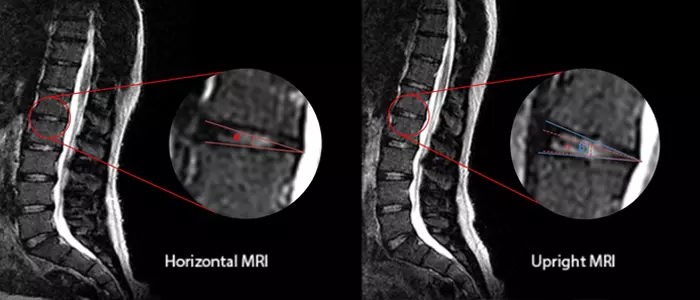
Why? Because MRI findings in asymptomatic adults routinely show disc bulges, protrusions, and degeneration — and these findings correlate poorly with who actually has pain. A scan at 2 weeks often creates more anxiety than clarity and rarely changes treatment.
What actually works
Good evidence supports a multi-pronged approach:
- Keep moving. Avoid bed rest. Graded walking and gentle movement help settle nerve irritation.
- Nerve glides. Gentle, non-provocative mobilisation of the affected nerve (slump slides, sciatic nerve glides) — short, frequent, pain-tolerable.
- Targeted strength. Glute medius, deep abdominals, hip extensors, and progressive general strength. Strong hips and trunk protect the low back.
- Manual therapy. Lumbar and hip mobilisations, soft-tissue release — as an adjunct to, not a replacement for, active exercise.
- Education. Most sciatica has a predictable course. Understanding the timeline reduces fear and helps people stay active.
- Medication. Short courses of simple analgesics, prescribed by your GP, can help you engage with rehab. Avoid long-term use of opioids or gabapentinoids.
Expected timeline
- Weeks 0–2: pain typically peaks. Focus on movement, position management, sleep positioning.
- Weeks 2–6: progressive improvement. Leg pain retreats before back pain in many cases.
- Weeks 6–12: most cases largely resolve. Residual niggles managed with ongoing strength work.
- Beyond 12 weeks: if symptoms persist, we reassess — imaging may be appropriate, and specialist opinion can be arranged.
What about surgery and injections?
Epidural steroid injections can help severely painful radiculopathy in the short term, though effects tend to fade by 6 months. Microdiscectomy surgery is considered for people with progressive neurological deficit, cauda equina, or persistent disabling leg pain after 6–12 weeks of good conservative care. Outcomes at 12 months are broadly similar between surgical and non-surgical groups for non-emergency cases — but surgery gets select patients out of severe pain faster.
Free: Back Pain Mastery Guide (flare roadmap)
Sciatica often sits in the same recovery lane as a lumbar nerve irritation flare — the Back Pain Mastery Guide (free) walks the early stages, with Knee and Shoulder guides for leg or arm co-pain. View all Mastery programs.
Book a sciatica assessment
If you've got leg pain that won't quit — whether it's your first time or a recurring flare — the single most important thing is an honest assessment, a clear diagnosis, and a plan. Book a sciatica physio assessment at Evolve Physio & Mastery in Cabramatta. We see clients from Liverpool, Fairfield, Bankstown, Canley Heights and across Southwest Sydney.
References: RACGP clinical guidelines for low back pain; Choosing Wisely Australia; Koes et al. 2007 "Diagnosis and treatment of sciatica" (BMJ); Weinstein et al. SPORT trial on lumbar disc herniation (JAMA).
Frequently Asked Questions
Is all leg pain with back pain 'sciatica'?
No — and this mix-up matters. True sciatica (lumbar radiculopathy) is pain, numbness or weakness caused by irritation of a lumbar nerve root — usually L5 or S1. Referred pain from muscle or facet joints can mimic the pattern but has different drivers and responds to different treatment. A good physio assessment tells them apart in the first session.
Do I need an MRI for sciatica?
Usually no — at least not immediately. Australian guidelines (RACGP, Choosing Wisely Australia) recommend against routine imaging in the first 4–6 weeks unless red flags are present. Most sciatica settles meaningfully with exercise-based physio in that window. Imaging doesn't change management for the typical case and can lead to unnecessary surgery or anxiety.
Does sciatica always get worse before it gets better?
Not necessarily. With good management — graded movement, nerve-glide work, progressive strength — most people see steady improvement over 6–12 weeks. About 75% of cases fully resolve within 3 months without surgery or injections.
When is surgery the right call?
Surgery (microdiscectomy is the most common) is considered if: severe, progressive neurological deficit; cauda equina syndrome (medical emergency); or persistent, disabling leg pain despite 6–12 weeks of good conservative treatment. For most people, outcomes at 12 months are similar between surgery and non-surgical care — but surgery gets people out of pain faster in select cases.
Will nerve-flossing or stretches cure my sciatica?
They help, but they're part of a package. Effective treatment combines graded exercise, manual therapy, nerve-glide ('flossing') work, strength and conditioning, and clear education. Stretching alone is rarely enough.