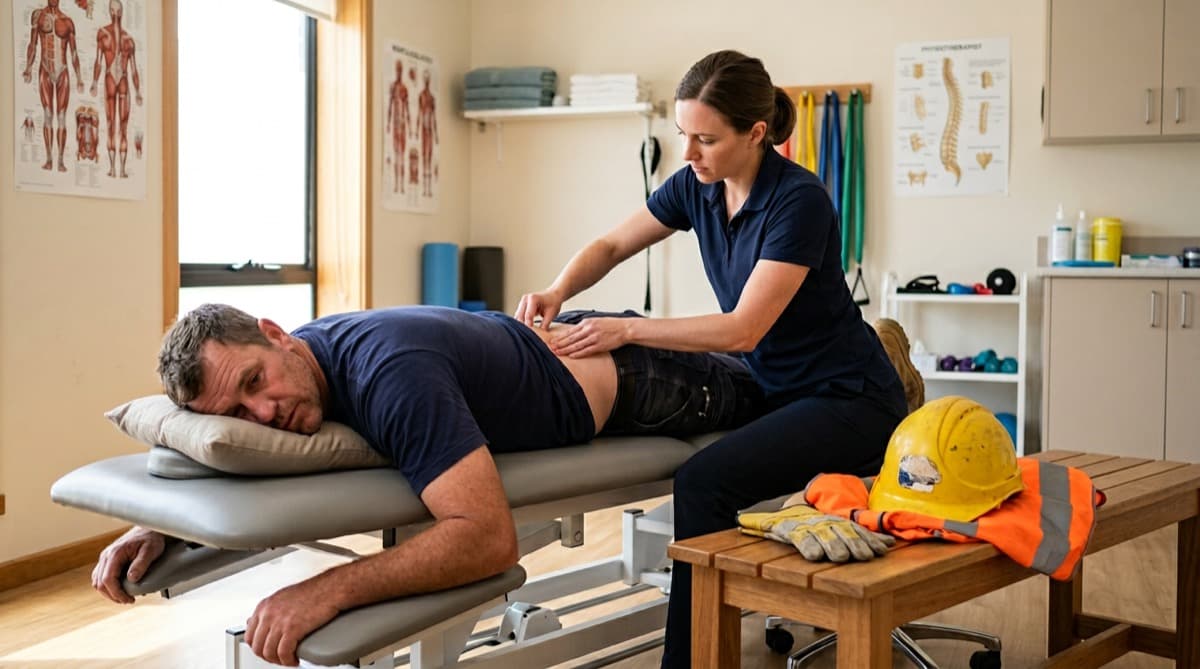
The First 48 Hours After a Workplace Injury: A Practical Step-by-Step Guide for NSW Workers
The 48 hours that shape the next 12 months
Most people who hurt themselves at work for the first time don't know what to do next. The system is complicated, the language is jargon-heavy, and the people who could help (case managers, doctors, even physios) often assume more knowledge than the average worker has. The result: people make small mistakes in the first 48 hours that compound over the months to come.
This post is the version we wish every injured worker could read on the day of injury. Clear steps, in order, with the reasoning. If you've found this article hours after an injury, take 10 minutes to read through. If you're reading proactively, save the link — workplace injuries don't give notice. At Evolve Physio & Mastery in Cabramatta we see workers from across Liverpool, Fairfield, Bankstown, Canley Heights, Smithfield, Wetherill Park, Bonnyrigg and broader Southwest Sydney — and the patients with the best outcomes are almost always the ones who handled the first 48 hours well.
Step 1 — Assess severity. Get the right level of care.
The first decision is medical, not administrative. Triage yourself or get someone to triage you:
Call 000 / get to ED immediately if:
- Major bleeding that won't stop with pressure.
- Suspected fracture with visible deformity.
- Head injury with loss of consciousness, vomiting, confusion or seizure.
- Chest pain, shortness of breath, or signs of stroke.
- Loss of bladder or bowel control following a back injury.
- Significant burns, electrical injuries, eye injuries.
- Crush injuries.
- Falls from height with any neurological symptoms.
Emergency care comes first. Workers compensation paperwork can be sorted out alongside or after. Don't delay emergency care for paperwork.
Same-day GP if:
- Significant pain or swelling that's affecting function.
- Suspected sprain, strain or muscle tear that's not improving with rest.
- Any neurological symptoms (numbness, tingling, weakness) that aren't emergency-level.
- Cut requiring stitches.
- Injury affecting your ability to work or do daily tasks.
GP within 24–48 hours if:
- Moderate pain that isn't improving.
- Pain that's interfering with sleep.
- You're considering whether to make a claim.
- You need to document the injury and any work restrictions.
Step 2 — Report the injury to your employer
As soon as you can after immediate medical care. The reporting establishes:
- That the injury happened.
- When it happened.
- The mechanism (how it happened).
- Witnesses if any.
- The site / location.
How to report:
- Tell your direct supervisor.
- Ensure the workplace injury register or incident reporting system records the event.
- Send a follow-up email or text confirming what you reported and to whom — creates a record.
- If you're labour-hire, report to both the host site AND your agency.
- If you don't speak English well, ask for translation help (your right under the system; insurers must provide interpreters).
What if you can't report immediately because you're being taken to hospital? Report as soon as practical — within 24–48 hours. NSW WorkCover allows up to 6 months from the date of injury to make a claim, but earlier is always better for documentation.
Step 3 — Document the scene and injury
While you're doing the above:
- Photograph the injury site, equipment involved, scene if safe to do so.
- Photograph any visible injury (bruising develops over 24–48 hours so photograph again at intervals).
- Write down the mechanism in your own words while it's fresh.
- Note witnesses by name and contact if possible.
- If your phone has a notes app, even rough notes are better than nothing.
Photos and contemporaneous notes carry significant weight if the claim is ever contested.
Step 4 — See your GP for a Certificate of Capacity
The Certificate of Capacity is the document that:
- Records your diagnosis.
- States that the injury is work-related.
- Documents your current work restrictions.
- Sets expected recovery timeline.
- Triggers wage replacement and treatment funding.
You can see any GP. Some GPs are more comfortable with WorkCover paperwork than others — if your usual GP isn't, ask for a referral to one who is, or visit a medical centre with WorkCover experience. In our Cabramatta-Liverpool area there are several practices that handle a high volume of WorkCover patients and know the system well.
Bring to the GP appointment:
- Photo ID.
- Medicare card.
- Your account of what happened.
- Your workplace details (employer name, address, supervisor name, where the injury happened).
- Your photos and notes.
- Any earlier medical records relevant to the body region.
Step 5 — The insurer opens the claim
Your employer notifies their workers compensation insurer (icare for most NSW businesses, or a specialised scheme agent for some industries). The insurer has 7 days to make a liability decision. In most cases, provisional liability is accepted within that window — which means treatment costs are covered while the claim is fully assessed (typically up to 12 weeks).
You'll get a letter or call from a case manager at the insurer who will be your primary contact. Save their details. Be respectful and professional — case managers handle hundreds of claims and your behaviour shapes the working relationship.
Step 6 — Book your first physio appointment
Don't wait for the claim to be fully approved. Early physio is one of the strongest predictors of good outcomes. Sessions 1–8 are typically covered under initial treatment within the provisional liability window. From session 9, the physio submits an Allied Health Recovery Request (AHRR) to the insurer with a treatment plan and functional goals.
You have the right to choose your own physio in NSW — your employer or insurer cannot dictate who you see. Choose a physio who:
- Is SIRA-aligned and follows the NSW Clinical Framework.
- Has experience with WorkCover claims in your industry.
- Is convenient enough that you'll attend consistently.
- Communicates clearly with your GP, employer and insurer.
- Builds a plan focused on return to function, not endless passive treatment.
Step 7 — Start the conversation with your employer about modified duties
Your Certificate of Capacity sets out your work restrictions. The employer is generally required to consider what modified or alternative duties are available consistent with those restrictions. Common modifications include:
- Reduced hours.
- Lighter physical tasks.
- Different roles (admin, training, supervision) during recovery.
- Workstation modifications.
- Alternative shift patterns.
Where the employer can't accommodate, vocational rehabilitation services funded by the insurer can help.
What to avoid in the first 48 hours
- Don't try to "work through it." Pushing through severe pain risks worsening the injury and complicates the claim later.
- Don't sign anything without understanding it. Some employers and insurers ask injured workers to sign acknowledgments or releases early. Don't sign anything that limits your rights without legal advice.
- Don't agree to "off-the-books" arrangements. "Just take a few days off and I'll pay you cash, no need for paperwork" sounds friendly but leaves you with zero coverage if the injury worsens.
- Don't go silent on the insurer. Return calls, respond to requests for information, attend appointments. Going dark looks bad and can affect entitlements.
- Don't post about it on social media. Insurers monitor social media. A "I'm fine, just took the day off" post when your claim says you can't lift 5kg is bad for your case.
- Don't make medical decisions without your treating team. Discontinuing medications, returning to full duties early, declining recommended investigations — these all need to be informed decisions made with your doctor.
The 72-hour and 1-week checkpoints
At 72 hours, you should have:
- Reported the injury and confirmed it's documented.
- Seen a GP and obtained a Certificate of Capacity.
- Begun the formal claim through your employer.
- Booked or started physio.
At 1 week, you should have:
- Confirmation from the insurer that provisional liability has been accepted (or, if denied, a Section 74 notice with reasons — see our claim denial guide).
- Started physio.
- Begun modified duties or a graduated return-to-work plan, where appropriate.
- A clear understanding of your case manager and how to contact them.
If something feels wrong
Early signs that the claim is heading in a problematic direction:
- The insurer is taking longer than 7 days to make a liability decision.
- Provisional liability has been denied without clear medical reasons.
- Your employer is pressuring you to return to work outside your restrictions.
- You're being asked to use sick leave or annual leave for what should be workers compensation.
- Communication from the insurer feels adversarial.
Any of these are reasons to get legal advice early. WIRO offers free legal services for many workers. Workers compensation lawyers typically offer free initial consultations and operate on no-win-no-fee for many disputes.
Related reading
For the broader system, our WorkCover physio guide. For specific industries: tradies and construction, aged care, warehouse, truck driving, cleaning. For if your claim is denied, our claim denial guide. For IMEs and WPI assessment later in the claim, our IME guide and WPI piece.
Book a WorkCover physio assessment
If you've been injured at work and want to start physio promptly, we can usually see you within a week. We handle the WorkCover paperwork with your insurer so you can focus on recovery. Book at Evolve Physio & Mastery, Cabramatta. We see injured workers from across Liverpool, Fairfield, Canley Heights, Bonnyrigg, Bankstown, Smithfield, Wetherill Park and Southwest Sydney. SIRA-aligned, evidence-based, focused on return to function — not endless passive treatment. For the system itself in plain English, our Workers Compensation Mastery Guide walks through every stage.
This article is general educational information about NSW workers compensation. It is not legal or medical advice. For medical decisions, see your GP. For legal questions about your claim, consult a workers compensation lawyer or contact WIRO. For emergency injuries, call 000. References: SIRA NSW; icare NSW; SafeWork NSW; WIRO; Workplace Injury Management and Workers Compensation Act 1998 (NSW).
Frequently Asked Questions
I hurt myself at work this morning. What do I do first?
Tell your supervisor and make sure it's in the workplace injury register. Then assess severity: emergency (call 000 or get straight to ED for serious injuries — major bleeding, suspected fractures with deformity, head injury, chest pain), urgent (same-day GP), or non-urgent (GP within 48 hours). Photograph the injury and the scene if safe to do so.
Do I have to report straight away?
As soon as practical. The longer you wait, the harder it is to document and the more likely you'll miss the 6-month claim window. Even if you think it's minor and will resolve, reporting creates a record in case it doesn't.
Do I need to see a particular GP?
No — you can see any GP for a workers compensation matter. Some GPs are more familiar with WorkCover paperwork than others, which can speed up the process. If your usual GP isn't comfortable with workers compensation, ask for a referral to one who is.
Can I start physio before my claim is approved?
Yes — and you should. NSW workers compensation has provisional liability provisions that generally cover the first 12 weeks of treatment while your claim is being assessed. The insurer has 7 days to make a liability decision; provisional acceptance allows treatment to start immediately.
What if I'm not sure my injury is serious enough to make a claim?
Report it anyway. Reporting doesn't commit you to making a formal claim, but it creates the paper trail you'll need if symptoms persist. Many injuries that seem minor in the first 24 hours become significant in the following weeks.
I'm worried about how my employer will react. What do I do?
Report the injury formally — you have legal protection from adverse treatment for making a workers compensation claim or report. Document everything in writing where possible (emails, text messages). If you experience retaliation, contact the Fair Work Ombudsman, WIRO, or a workers compensation lawyer.