Cleaners and Housekeeping Staff: Repetitive Strain Injuries on WorkCover NSW
The most physical job nobody calls 'physical'
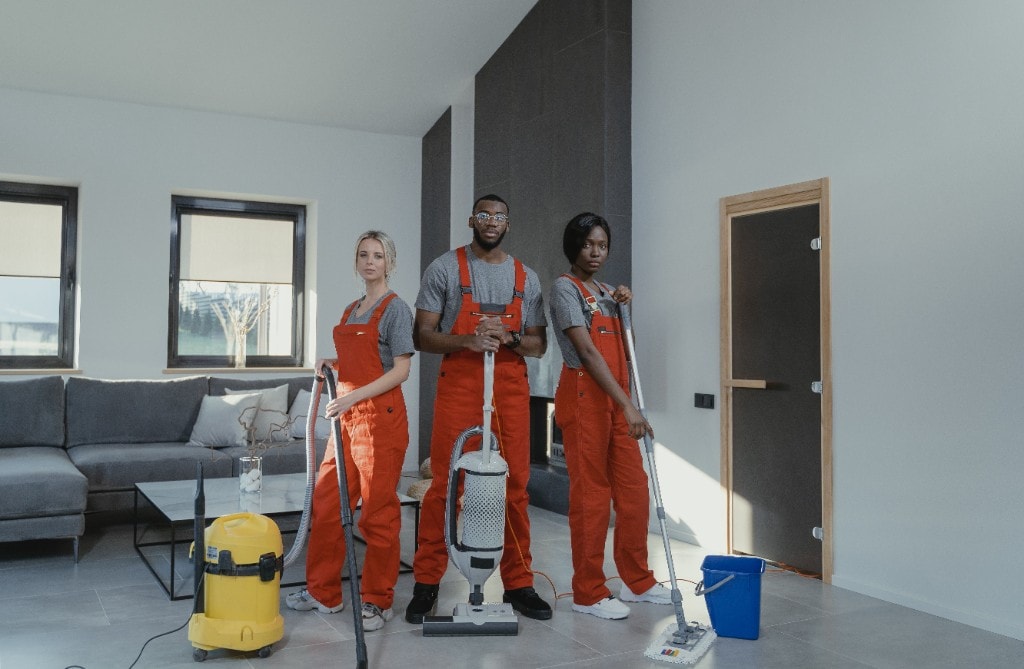
Cleaning is one of the most physically demanding occupations in Australia. A typical commercial cleaning shift involves repeated overhead reaching, sustained gripping of vacuum and mop handles, twisting under sinks and around fixtures, kneeling on hard floors, and lifting wet linen or rubbish bags that don't always feel heavy but are heavier than you think. Multiply that by an 8-hour shift, five or six days a week, for years — and the cumulative load on the shoulders, wrists, lower back and knees is enormous. At Evolve Physio & Mastery in Cabramatta, cleaners — commercial, hospital, hotel housekeeping, school, and domestic — make up a significant portion of our WorkCover caseload, particularly from across the Liverpool, Fairfield, Bankstown and broader Southwest Sydney area.
This post is for cleaners thinking about whether to report an injury, cleaners already on a WorkCover claim, supervisors and HR teams trying to support staff well, and family members helping someone navigate the system.
The cleaning injury 'big four'
1. Shoulder overuse and rotator cuff strain
Vacuuming, mopping, overhead dusting, window cleaning, scrubbing — all involve sustained low-to-moderate-load shoulder work, often at or above shoulder height. Over months and years this overloads the rotator cuff, particularly supraspinatus. Symptoms creep in: pain reaching overhead, ache at night, weakness lifting things you used to lift easily. By the time most cleaners present, the rotator cuff has been irritable for 6–18 months.
2. Wrist, forearm and hand tendinopathies
Gripping vacuum and mop handles, wringing cloths, scrubbing, spraying trigger bottles — repetitive forearm and wrist load drives tendinopathies (lateral epicondylitis, de Quervain's, carpal tunnel syndrome). Often bilateral. The dominant hand is usually worse but the non-dominant hand catches up because it does most of the steadying.
3. Lower back pain
Bending to clean low surfaces, lifting wet linen, twisting between cleaning tasks. Acute episodes ("I bent down to pick up a bin and couldn't straighten up") on top of months of gradual ache are typical. Disc-related back pain features in cleaners who do a lot of forward-bending work.
4. Knee pain
Hours of kneeling on hard surfaces (bathroom cleaning, edges, skirting boards) drives prepatellar bursitis ("housemaid's knee" — the name isn't accidental), patellofemoral pain, and meniscal irritation. Often missed because cleaners normalise sore knees.
Why early reporting matters specifically for cleaners
We see two patterns that make cleaning injuries worse than they need to be:
- Working through it for months before reporting. By the time the injury is reported, the original mechanism is hard to identify, the symptoms have entrenched, and the claim is more complex to manage.
- Reporting then continuing the same duties. If work isn't modified, treatment is just running the tap with the plug pulled. Recovery stalls.
Reporting early triggers the system — Certificate of Capacity, work modifications, treatment funding — and gives recovery a real chance. NSW WorkCover law protects you from being penalised for making a claim. If you're unsure how to talk to your employer, your GP or a trusted supervisor can help you start the conversation.
The NSW WorkCover pathway, applied to cleaning work
- Tell your employer or supervisor. Make sure it's in the workplace injury register. If you don't speak English at work, ask for a translator or have a family member call.
- See your GP for a Certificate of Capacity. The certificate sets out your restrictions — for example "no vacuuming or overhead reaching for 4 weeks, no kneeling more than 30 minutes at a time."
- The insurer opens the claim. Most NSW employers are insured through icare. The insurer has 7 days to make a liability decision; provisional liability usually covers treatment for the first 12 weeks while the claim is fully assessed.
- Start physio. Sessions 1–8 are usually covered as initial treatment; from session 9 your physio submits an Allied Health Recovery Request (AHRR) to the insurer.
- Graduated return to duties. Modified duties first (lighter cleaning, fewer hours), then progressive return to full duties as capacity rebuilds.
For the full overview, see our WorkCover physio guide. For first-48-hour decisions, see the first 48 hours after a workplace injury.
What WorkCover physio for cleaners actually looks like
Treatment runs in three layers, simultaneously:
- Symptom management. Hands-on therapy, soft tissue work, pain education, sleep position adjustments.
- Capacity building. Specific strengthening of the shoulders (rotator cuff and scapular control), grip and forearm endurance, hip and lower back strength, knee strength.
- Work-task simulation. The piece most generic physio misses. We rehearse vacuuming, mopping, lifting linen, kneeling and standing back up — the actual tasks your job requires — in a graded way that rebuilds tolerance.
Suitable duties that work for cleaning roles
Cleaning employers sometimes resist 'modified duties' because they think cleaning is all-or-nothing. It isn't. Realistic modifications include:
- Light-duty zones (offices, lower-load areas) instead of high-load zones (kitchens, bathrooms, gyms).
- No overhead work for 4–6 weeks.
- Reduced shift length (4–6 hours) with full progression over 4–6 weeks.
- Switching from vacuum to dust mop or sweep for upper-limb injuries.
- Use of a kneeling pad and standing rests for knee injuries.
- Lighter cleaning carts and trolleys.
- Pairing with another cleaner for high-load tasks.
A good return-to-work coordinator (often someone within your company or the insurer) helps make these workable. If your workplace doesn't have one, your physio and GP can help negotiate.
Language and cultural context — Southwest Sydney
A large proportion of cleaners across Cabramatta, Fairfield, Liverpool and Bankstown come from Vietnamese, Chinese, Iraqi, Lebanese, Khmer, Filipino and South Asian backgrounds. We see a few patterns in clinic worth naming:
- Reluctance to report injuries due to fear of losing shifts or visa concerns. WorkCover entitlements apply regardless of visa status for paid work performed in NSW. Permanent residency or citizenship is not a requirement to make a claim.
- Language barriers with employers and case managers — every NSW WorkCover insurer has interpreter services available at no cost. Ask for one.
- Cultural reluctance to take time off work, often combined with multiple jobs / shifts. We work with patients to design a plan that respects their financial reality and still allows recovery.
When the injury is more serious than 'just' overuse
See your GP and physio promptly — and consider escalation — for any of the following:
- A discrete acute injury moment (sudden pop, lift gone wrong, slip on a wet floor).
- Numbness, tingling or weakness in the arm or hand (possible nerve involvement).
- Bladder or bowel changes with back pain (red flag — seek emergency care).
- Severe night pain that doesn't ease with position changes.
- No improvement despite 4–6 weeks of structured care and modified duties.
Related reading
For lower back pain in detail, our lower back pain guide. For shoulder issues, our rotator cuff and shoulder impingement piece. For carpal tunnel and forearm work, our carpal tunnel post. For when to image, our MRI for back pain myth-buster.
Book a WorkCover physio assessment
If you're cleaning through pain — or you've been told to "rest" without a real plan — we can help. Book a WorkCover assessment at Evolve Physio & Mastery, Cabramatta. We see cleaners from Liverpool, Fairfield, Canley Heights, Bonnyrigg, Bankstown, Smithfield, Wetherill Park and across Southwest Sydney. We're SIRA-aligned and handle the AHRR paperwork with your insurer. For a clear walk-through of the WorkCover system itself, our Workers Compensation Mastery Guide covers your entitlements and the process in plain English.
This article is general educational information about NSW workers compensation and physiotherapy. It is not legal advice. For legal questions about your claim, seek advice from a workers compensation lawyer. References: SIRA NSW; icare NSW; NSW Workers Compensation Clinical Framework.
Frequently Asked Questions
Are cleaning injuries really covered by WorkCover?
Yes. Any injury arising out of or in the course of paid employment is covered by NSW workers compensation, including repetitive strain injuries that build up over months or years of cleaning work. Sub-contractor and labour-hire cleaners may have different coverage pathways — always report the injury and clarify with your employer or the labour-hire agency.
I clean for several different employers — who's liable?
Generally the employer you were working for at the time the injury occurred (or where the bulk of the aggravating work happened, for gradual onset injuries). For multi-employer scenarios, the insurer apportions liability. You only lodge one claim — don't try to claim against multiple employers separately.
I'm worried about losing shifts if I report this — should I?
Yes. You have legal protection from adverse treatment for making a workers compensation claim in NSW. Not reporting often makes the problem worse — symptoms entrench, treatment is delayed, and you may lose entitlement to weekly payments if reporting drifts past the 6-month notice window.
Do I need a Certificate of Capacity if I just want a few sessions of physio?
For WorkCover-funded treatment, yes — your GP needs to issue a Certificate of Capacity to open or maintain the claim. Without one, you can still self-fund physio, but you may not be reimbursed and you lose the wage replacement pathway if your symptoms worsen.
How long do shoulder and wrist overuse injuries take to settle?
It depends on severity, how long they've been building, and whether work duties can be modified. Mild cases settle in 4–8 weeks with the right load management and strengthening. More entrenched cases with significant tendon change can take 3–6 months of structured rehab. Continuing to do the aggravating work full-time without modification slows everything down significantly.
Do I need to keep cleaning while I recover, or can I take time off?
This is decided between you, your GP and the insurer. Most cases respect a graduated return — modified duties for a period (e.g. lighter cleaning, no vacuuming, reduced hours), then graduated increase. Full-time off is reserved for more severe injuries. The Certificate of Capacity from your GP sets the restrictions.