TMJ and Jaw Pain Physio in Cabramatta: A Practical Guide to Clicking, Locking and Chronic Jaw Pain
The most under-treated joint in the body
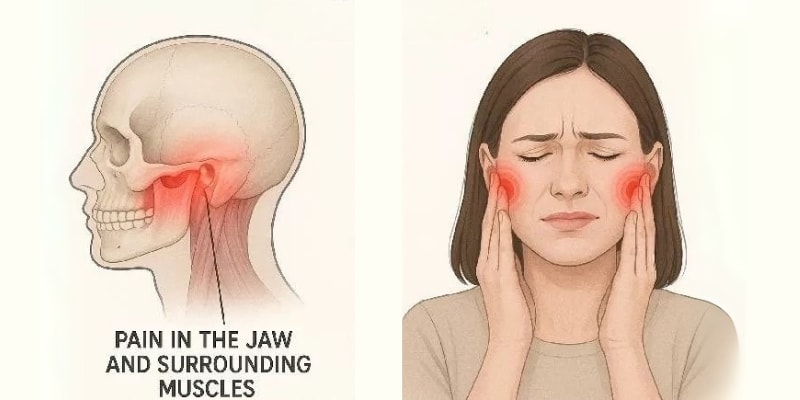
The temporomandibular joint (TMJ) is the joint between your lower jaw (mandible) and the temporal bone of the skull, just in front of your ear. It moves every time you talk, chew, yawn, swallow — thousands of times a day. It's a complex joint with a disc, ligaments, and powerful muscles, and when it goes wrong it can produce some of the most disabling pain patterns we see in clinic: facial pain, headaches, ear-area pain, neck pain, locking or clicking that interferes with eating and talking. Yet TMJ disorders are one of the most under-recognised areas in primary care. People are told to 'live with it', 'see a dentist for a splint', or 'try to stress less'. None of which, on their own, usually fixes it. Physiotherapy for TMJ dysfunction is a well-established, evidence-based treatment — and in our experience at Evolve Physio & Mastery in Cabramatta, it's one of the most rewarding conditions to treat because results often come quickly.
How the TMJ works (briefly)
The mandible articulates with the temporal bone via a small joint that contains an articular disc. When you open your mouth, two things happen sequentially:
- Rotation — the first 25mm or so of mouth opening occurs with the lower joint surface rotating beneath the disc.
- Translation — the second phase of opening, the disc and condyle glide forward together along the temporal bone surface.
Closing reverses this. Dysfunction at the disc (it can become displaced forward) or in the muscles that move the jaw (masseter, temporalis, pterygoids) produces the typical TMJ pain pattern.
The common TMJ presentations
1. Anterior disc displacement with reduction (the 'clicking jaw')
The disc sits anteriorly when the mouth is closed, then recaptures (reduces) onto the condyle during opening — which is the click you hear. Often a closing click follows as the disc displaces again. May or may not be painful. The classic presentation.
2. Anterior disc displacement without reduction (the 'locking jaw')
The disc displaces anteriorly and doesn't recapture, blocking the condyle from sliding forward. The jaw can't open fully — typically less than 35mm — and movement is restricted. This is often when people first present to physio after months of clicking.
3. Myofascial pain
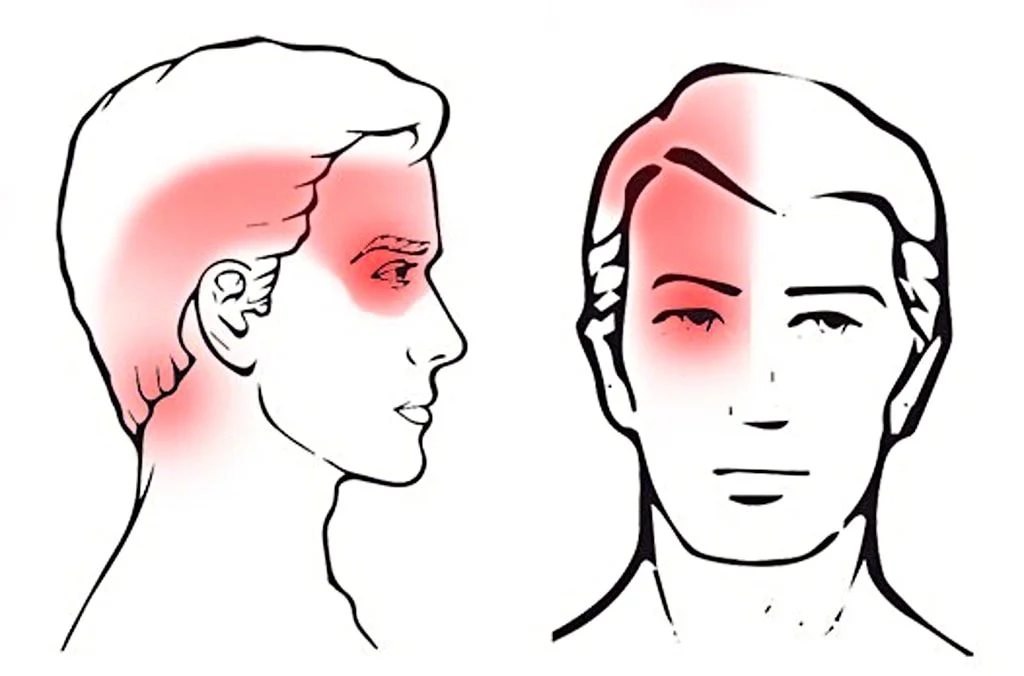
The big jaw muscles (masseter, temporalis, pterygoids) become tense, tender, and produce referred pain — to the temple, ear area, behind the eye, into the neck. Often driven by bruxism (grinding) or sustained clenching during the day. Frequently coexists with neck and shoulder tension.
4. Osteoarthritis of the TMJ
Degenerative changes at the joint surface — typical in older patients, sometimes following years of bruxism or trauma. Can produce crepitus (grinding sound), stiffness, and pain on loading.
5. TMJ dysfunction with referred ear and headache pain
One of the most common 'misses' — patients investigate ear pain or headaches for months before someone palpates the jaw muscles and reproduces the pain pattern.
What causes TMJ dysfunction?
- Bruxism (grinding) and clenching — usually nocturnal, often unrecognised by the patient. Stress is a major driver but it's not the whole story.
- Trauma — direct blow to the jaw, whiplash, prolonged dental procedures with mouth held wide open.
- Sustained postures — forward head posture, slouched desk position, frequent chin-on-hand position.
- Habits — gum chewing, nail biting, ice chewing, talking on the phone with the handset wedged against the shoulder.
- Anxiety and stress — drive clenching, sleep disturbance, and increased muscle tone.
- Dental factors — malocclusion in some cases (though often less of a driver than was previously assumed).
- Hormonal factors — TMJ disorders are more common in women, particularly in the reproductive years.
- Hypermobility — generalised joint hypermobility can affect the TMJ too.
What a physio assessment looks like
- History — pattern of pain, jaw sounds, locking episodes, sleep, stress, parafunctional habits (gum chewing, clenching during work).
- Observation — symmetry of jaw movement, jaw deviation on opening, range of mouth opening (normal: 40–55mm), lateral deviation and protrusion.
- External palpation — masseter, temporalis, suboccipital and cervical muscles. Reproduction of pain on palpation is highly suggestive of muscle-driven contribution.
- Joint palpation — over the TMJ itself, feeling for tenderness, clicking, and joint position during movement.
- Intra-oral examination (with consent and gloves) — palpation of medial and lateral pterygoid muscles, which are responsible for many TMJ pain patterns and not accessible externally.
- Cervical spine assessment — the upper cervical spine (C1–C3) is closely linked to the TMJ and frequently contributes to pain patterns.
- Postural and ergonomic review.
Treatment that works
- Manual therapy to the TMJ — gentle joint mobilisation techniques, including distraction techniques and intra-oral mobilisation when indicated.
- Soft tissue release of jaw muscles — externally and intra-orally (with consent).
- Cervical spine treatment — particularly upper cervical mobilisation, which can significantly reduce TMJ pain by addressing referred contribution.
- Exercises — controlled jaw opening, lateral movements, postural exercises, deep neck flexor activation.
- Habit modification — recognising and reducing daytime clenching, posture awareness during desk work, chewing patterns.
- Stress and relaxation strategies — diaphragmatic breathing, progressive muscle relaxation, addressing sleep quality.
- Dental coordination — splint therapy through a dentist when indicated.
For most patients, a course of 6–8 sessions over 6–12 weeks produces meaningful improvement. Chronic cases with multiple contributors may take longer.
The night splint question
A well-fitted occlusal splint (mouth guard) worn at night reduces the force of clenching and grinding while you sleep. It's not a 'cure' — it doesn't stop the bruxism, it just makes the bruxism less damaging. For many people it's a critical part of the picture, allowing the joint and muscles to recover. Custom splints fitted by a dentist generally work better than over-the-counter options. We coordinate with dental colleagues when splints are indicated.
What to do today (before your first appointment)
- Catch yourself clenching during the day — set a phone reminder every hour to check ('lips together, teeth apart').
- Eat softer foods for a few days if pain is severe — avoid steaks, hard nuts, chewing gum.
- Avoid wide opening — no big yawning, no big mouthfuls.
- Heat to the jaw muscles for 10–15 minutes can give symptom relief.
- Notice your jaw position during sleep if possible — sleeping on your side with the cheek pressed into the pillow can drive jaw asymmetry.
- Sleep position — back or side with neutral neck position. Avoid prone (face-down).
When to escalate
- Locked jaw that doesn't unlock within a day.
- Significant trauma to the jaw.
- Inability to bring teeth together properly.
- Significant facial numbness or weakness.
- Systemic symptoms (fever, swelling) — possible infection of dental origin.
These need prompt medical or specialist dental review.
The link to headaches and neck pain
TMJ dysfunction, headaches and upper cervical pain often travel together — they share neural pathways (the trigeminocervical nucleus) and muscle attachments. Treating one without addressing the others rarely gives a complete result. See our cervicogenic headaches and migraines piece and our neck pain guide for the related conditions.
What to expect over the course of care
- Session 1: Detailed assessment, working diagnosis, initial treatment, home program.
- Sessions 2–4: Reduction in pain and muscle tension, restoration of range of motion, addressing habits.
- Sessions 5–8: Consolidation, joint control, longer-term self-management.
- Beyond 8 sessions: Maintenance or addressing more complex contributing factors.
Book a TMJ assessment
If you've been dealing with a clicking, locking, or painful jaw — or persistent headaches, ear pain or facial pain that you suspect might involve the jaw — we'd love to help. Book at Evolve Physio & Mastery, Cabramatta. We see TMJ patients from across Liverpool, Fairfield, Canley Heights, Bonnyrigg, Bankstown, Smithfield, Wetherill Park and Southwest Sydney. TMJ physiotherapy is consistently one of the most rewarding referrals we receive — many patients see meaningful change within a handful of sessions after years of being told nothing could be done.
References: Armijo-Olivo et al. 2016 'Effectiveness of manual therapy and therapeutic exercise for temporomandibular disorders' (Phys Ther); La Touche et al. 2009 cervical spine treatment in TMJ disorders; Kraus 2014 TMJ physiotherapy approach; Schiffman et al. 2014 Diagnostic Criteria for Temporomandibular Disorders (DC/TMD).
Frequently Asked Questions
Will my jaw ever stop clicking?
Many clicking jaws settle with the right combination of physio, habit change and occasionally a night-time splint. Some keep clicking but become pain-free and functional, which is also a good outcome. Persistent painful clicking with intermittent locking is the most important to address early.
Should I see a dentist or physio first?
For pain alone — physio is reasonable first. For pain combined with bite changes, tooth pain, or new wear patterns — dental review first, then physio for the muscle and joint component. The two professions often work in parallel rather than in sequence.
Is TMJ pain stress-related?
Stress is a major contributing factor for many people — it drives jaw clenching, grinding, and shoulder/neck tension that all load the TMJ. But TMJ pain isn't 'just stress' — there are real biomechanical changes at the joint that respond to specific physio intervention.
Do mouthguards (occlusal splints) actually work?
Yes — for many people. A well-fitted night splint reduces the force of clenching and grinding while you sleep, allowing irritated joint and muscle tissues to recover. They work best alongside physio, education and habit change, not as standalone treatment.
What does a TMJ physio session actually involve?
Assessment of jaw movement, palpation of jaw muscles internally and externally (with consent), neck and upper cervical assessment, treatment combining manual therapy to the joint and muscles, intra-oral release work (with consent), exercises, and education on habits (clenching, posture, chewing).
How long does TMJ treatment take?
Many people see significant improvement in 4–8 sessions over 6–12 weeks. Chronic, long-standing TMJ issues with complex contributing factors (bruxism, anxiety, multiple comorbidities) can take longer.