Cervicogenic Headaches and Migraines: How to Tell If It's Coming From Your Neck (and What Physio Can Do)
Not all headaches are equal
If you're getting headaches several times a month — or several times a week — you've probably tried painkillers, possibly hydration, maybe a chiropractor or a massage. Some of what people call 'tension headaches' or 'mild migraines' are actually cervicogenic headaches: pain referred from structures in the upper cervical spine (C1–C3) that present as headache. These respond well to targeted physiotherapy when correctly diagnosed. The catch is that they're often misdiagnosed as migraine — and migraine-targeted medication doesn't fix them. Let's untangle this.
The three main types of recurrent headache
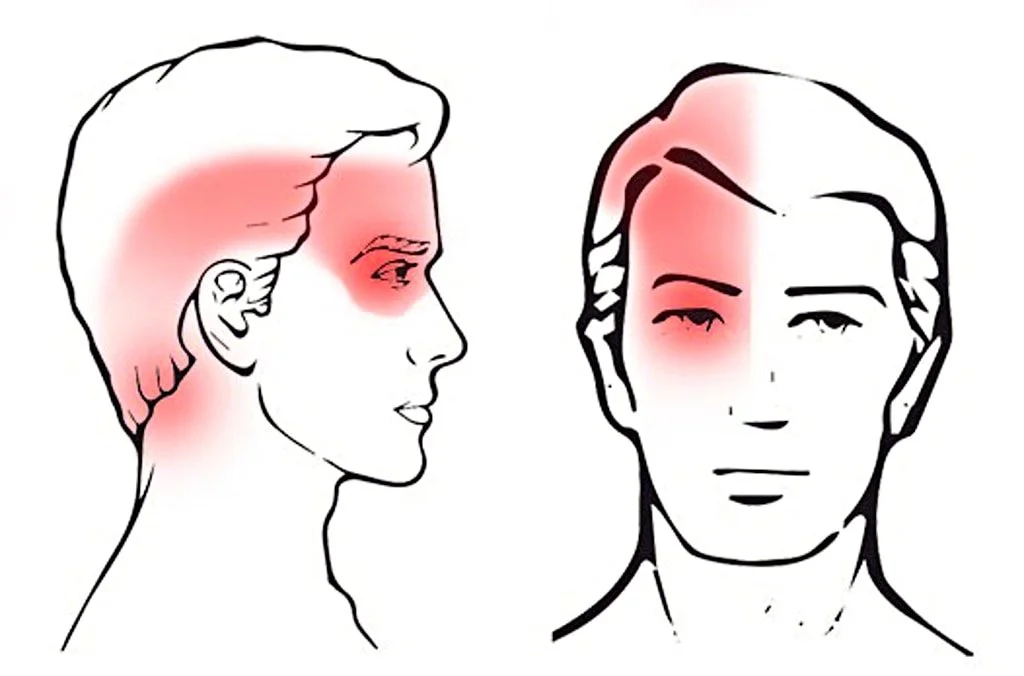
- Cervicogenic headache — arising from the upper cervical spine. Usually unilateral (same side every time), starts at the base of the skull, refers over the head, often into the temple, forehead or behind the eye. Provoked by neck postures and movement. Often accompanied by neck stiffness and tenderness.
- Tension-type headache — usually bilateral, pressing or tightening (not throbbing), mild to moderate, not made worse by routine activity, no nausea or light sensitivity. Often related to sustained postural load, stress and jaw clenching.
- Migraine — usually unilateral, throbbing, moderate to severe, made worse by routine activity, often with nausea, photophobia, phonophobia, and sometimes aura. Lasts 4–72 hours.
They can coexist. Many people have a primary migraine condition with cervicogenic and tension-type contributors that amplify it. Treating the contributors often reduces overall headache frequency even when the migraine itself remains.
Why the upper cervical spine matters
The first three cervical nerve roots (C1, C2, C3) share neural pathways with the trigeminal nerve (which supplies the face and head) in a structure called the trigeminocervical nucleus. This shared neural real estate means pain from the upper cervical joints, muscles or nerves can be perceived as headache — referred pain. The most common patterns:
- Suboccipital area → over the head → behind the eye.
- Base of skull → behind the ear → temple.
- Upper trapezius → up the side of the neck → temple.
The cervicogenic headache 'pattern'
- One-sided (usually same side every time).
- Starts at the base of the skull or upper neck.
- Spreads upward over the head.
- Provoked or worsened by neck postures (long desk work, looking up, sleeping awkwardly).
- Often accompanied by neck stiffness, restricted rotation toward the affected side, tender suboccipital muscles.
- Not usually associated with nausea or aura.
- Responds (partially) to neck movements and to manual treatment of the upper cervical spine.
How we assess
The diagnostic process involves:
- Detailed history — pattern, location, triggers, associated symptoms, sleep, work setup, prior treatment, medications.
- Neck range of motion — particularly upper cervical (chin tucks, rotation in flexion), looking for asymmetry and reproduction of headache pattern.
- Palpation of upper cervical joints — provoking familiar headache from C1–C3 segments is highly suggestive of cervicogenic origin.
- Cervical flexion-rotation test — a validated test for upper cervical dysfunction.
- Cranial nerve and neurological screen — rule out red flags.
- Postural and ergonomic review — desk setup, screen height, sleep position, pillow.
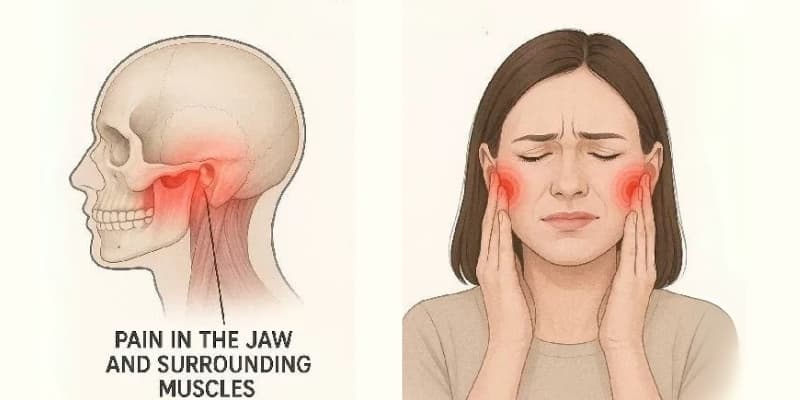
- Jaw and TMJ check — the jaw is closely linked to the upper cervical spine and contributes to many headache patterns.
Treatment that works for cervicogenic headache
- Manual therapy to the upper cervical spine — mobilisations to C1, C2, C3 segments. The Jull et al. studies in the early 2000s established this as one of the most effective interventions when combined with exercise.
- Targeted exercise program — deep neck flexor strength (chin tuck training, craniocervical flexion exercises), scapular stabilisers, thoracic mobility.
- Postural and ergonomic correction — desk setup, monitor height, regular movement breaks.
- Sleep position and pillow review — a poorly chosen pillow can perpetuate the issue.
- Soft tissue work — to suboccipital muscles, upper trapezius, levator scapulae as adjunct.
- Education on triggers and self-management — recognising the early signs and intervening before a full headache develops.
Typical course: 6–10 sessions over 6–12 weeks. Most patients see meaningful improvement within 4 sessions; if there's no change, we revisit the diagnosis.
Migraine — where physio fits in
For people with a clear migraine diagnosis, physio doesn't replace medical management. But it often helps in three ways:
- Addressing co-existing cervicogenic and tension-type headaches that amplify overall headache burden.
- Reducing provocateurs (poor neck/posture, jaw tension, sleep position).
- Aerobic exercise — moderate-intensity aerobic exercise (3x/week for 30–40 minutes) has good evidence as a prophylactic for migraine frequency. We help build sustainable programs.
We work alongside GPs and neurologists, not in place of them.
Tension-type headaches
Almost always have a strong postural component — sustained desk work, screen time, poor sleep, jaw clenching, stress. The mainstays of management:
- Movement breaks every 30–45 minutes during sustained work.
- Postural retraining — not 'sit up straight' but variability of posture across the day.
- Deep neck flexor and scapular strengthening.
- Jaw and stress management — often the under-recognised driver.
- Aerobic exercise — same evidence as for migraine.
Red flags that need urgent medical review
- Sudden severe 'thunderclap' headache.
- Headache after head trauma.
- Headache with neurological symptoms (weakness, numbness, vision change, speech difficulty).
- Headache with fever, neck stiffness, or rash.
- New headaches over age 50.
- Headache that wakes you from sleep.
- Significant change in pattern of long-standing headache.
These warrant prompt medical assessment, not physio first.
The desk worker headache cluster
Many of our patients in the Cabramatta and Liverpool area work long hours at desks or in front of screens — banking, IT, admin, healthcare. The cluster looks like: upper neck tension, headache by mid-afternoon, worse on Fridays, eased over the weekend. Adding to it: a poor pillow, late-night phone scrolling in bed, and a desk setup that puts the screen below eye level. Practical changes here often outperform 'treatment' — see our desk worker shoulder and neck pain guide.
What to expect in your first session
- ~50 minutes including detailed history, assessment, and initial treatment.
- A working diagnosis of headache type(s).
- Specific provocation/relief findings — usually we can reproduce or change your headache pattern in the session, which is reassuring and confirms the diagnosis.
- A home exercise program (3–5 exercises, 10 minutes/day).
- Ergonomic and sleep recommendations.
- Plan for follow-up and clear expectations on timeline.
Book a headache assessment
If you're tired of taking painkillers for headaches that keep coming back, get them properly diagnosed. Book at Evolve Physio & Mastery, Cabramatta. We see headache patients from across Liverpool, Fairfield, Bankstown, Canley Heights and Southwest Sydney.
References: Jull et al. 2002 'A randomized controlled trial of exercise and manipulative therapy for cervicogenic headache' (Spine); Hall & Robinson 2004 cervical flexion-rotation test diagnostic accuracy; Luedtke et al. 2016 musculoskeletal interventions for migraine systematic review (Cephalalgia).
Frequently Asked Questions
How can I tell if my headache is from my neck?
Cervicogenic headaches are usually one-sided (the same side every time), start at the base of the skull or upper neck and refer up over the head, and are provoked by neck positions and movements (long desk hours, looking up, sleeping awkwardly). Migraines are usually throbbing, often with light or sound sensitivity, nausea, or visual aura. They can coexist — physio assessment differentiates them.
Will physio cure my migraines?
Pure migraine (vascular/neurological) is a medical condition, not a musculoskeletal one. But many people have a 'neck-driven' component that contributes to migraine frequency or severity. Treating the neck reduces overall headache load in many patients — even when migraines remain a separate medical issue.
How long does treatment take?
Cervicogenic headaches typically respond in 4–8 sessions over 6–12 weeks. Tension-type headaches with strong postural drivers often improve faster. Migraine adjunct treatment is ongoing — we work alongside your GP or neurologist.
Should I see a neurologist first?
If you have red flags (sudden severe headache, headache with neurological symptoms, headache after head injury, new headaches over age 50), see a doctor first to exclude serious causes. For typical recurrent headache, starting with physio is reasonable, and we'll refer if anything doesn't fit.
Can my pillow be causing my headaches?
Sometimes. A pillow that puts your neck in sustained flexion or rotation for 6–8 hours every night can be a perpetuating factor in upper cervical headaches. We assess sleep position as part of the consultation and make practical recommendations.
What's the difference between migraine and a tension headache?
Tension-type headaches are usually bilateral, pressing or tightening (not throbbing), mild to moderate, not made worse by routine activity, and not associated with nausea or photophobia. Migraines are usually one-sided, throbbing, moderate to severe, made worse by activity, often with nausea and photophobia, lasting hours to days.