Chronic Ankle Instability: Why You Keep Rolling Your Ankle (and How to Fix It)
Free program
The Knee Pain Mastery Guide
The Knee Pain Mastery Guide by Evolve Physio & Mastery is a structured knee rehabilitation program designed for athletes dealing with ACL, MCL, and meniscus injuries.
One sprain becomes a pattern
You rolled your ankle playing netball, touch footy, or stepping off a curb. It swelled, you rested, strapped it for a few weeks, felt 'fine' — and then it happened again. And again. That's chronic ankle instability (CAI): not one bad sprain, but a loop of incomplete recovery and recurring giving-way episodes. We see it constantly in Cabramatta and Liverpool — often in people who were never given a structured rehab plan after the first injury.
Mechanical vs functional instability
- Mechanical: Ligaments are genuinely lax — the joint moves too far. More common after Grade II–III sprains.
- Functional: Ligaments are adequate but the neuromuscular system can't control the joint fast enough — you 'feel' unstable even when imaging looks OK.
Most recurrent sprainers have a mix. Both respond to loading — but the program emphasis shifts based on which dominates.
The 8-week stability program
Weeks 1–2: Sensory retraining
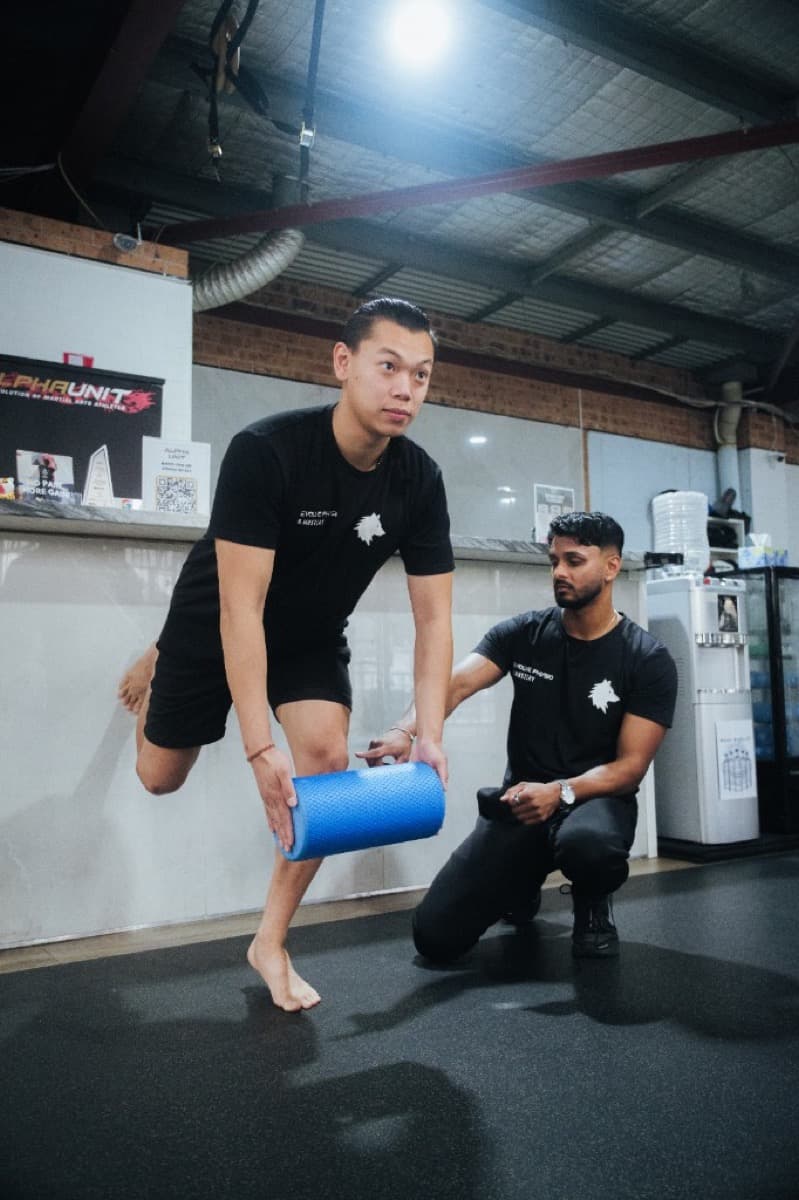
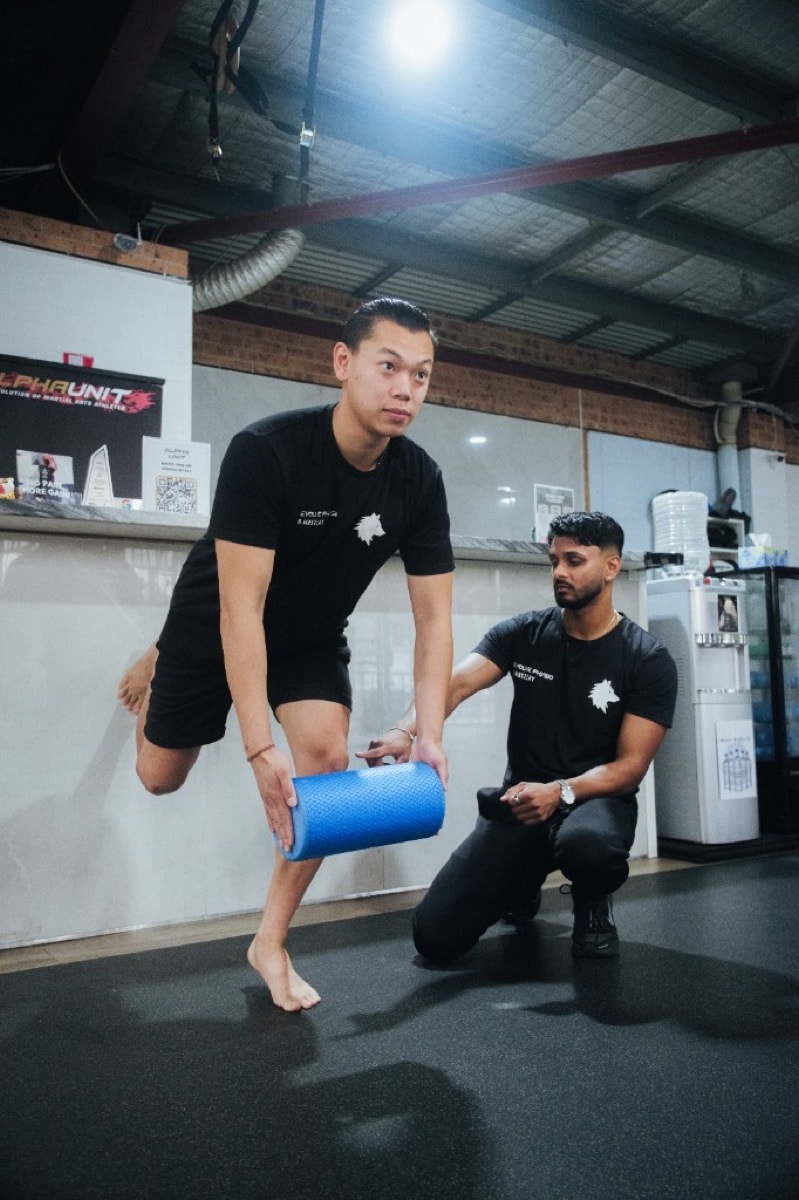
- Single-leg stand: 3 × 30–45 sec, eyes open, daily
- Progress to eyes closed and soft surface (pillow, balance pad)
- Resisted band eversion (peroneals): 3 × 12–15, every second day
- Double-leg then single-leg calf raises: 3 × 10–15
Weeks 3–4: Strength + dynamic balance
- Single-leg RDL or reach patterns: 3 × 8 per side
- Lateral band walks and monster walks: 2 × 15 steps
- Star excursion balance test positions — reach all directions, controlled
- Two-leg → single-leg pogo hops (small amplitude): 3 × 20
Weeks 5–6: Hop and change-of-direction prep
- Single-leg hop for distance — track symmetry (within 10% of uninjured side)
- Triple hop, crossover hop
- Figure-8 runs at 50% speed on flat ground
Weeks 7–8: Sport-specific return
- Cutting, deceleration, and reactive drills at progressive speed
- Sport simulation: 20–30 min at 80% intensity without next-day swelling or giving-way
- Taper bracing/taping only when all hop tests pass
Return-to-sport criteria
- No giving-way episodes for 4+ weeks
- Single-leg hop symmetry within 10%
- Star excursion within 90% of uninjured side
- Confidence score 8/10+ for your sport
When to escalate
Persistent mechanical instability after 6 months of compliant rehab, significant osteochondral lesions on imaging, or high-grade ligament rupture in competitive athletes — orthopaedic review for Broström repair or equivalent may be appropriate. That's the minority.
Connects to the ankle & running cluster
Just sprained? Start with our 6-week ankle sprain protocol. Returning to running? Our return to running guide picks up once you're hop-symmetrical. For plantar and heel pain that sometimes co-exists, see plantar fasciitis.
Book an ankle stability assessment
Recurrent sprains don't fix themselves — but they do fix with the right progression. Book a physio assessment at Evolve Physio & Mastery. We see athletes and weekend warriors across Liverpool, Cabramatta, Fairfield, Bankstown and Southwest Sydney.
References: Doherty et al. 2017 'Treatment and prevention of acute and recurrent ankle sprain' (Br J Sports Med); Hoch et al. 2012 chronic ankle instability review; Verhagen et al. 2014 proprioceptive training meta-analysis.
Frequently Asked Questions
Why does my ankle keep giving way?
After a sprain, ligaments often heal enough to walk — but the sensors that tell your brain where your ankle is in space (proprioception) stay dulled. Weak peroneals and delayed reflexes mean the foot rolls before you can correct it. That's mechanical instability plus functional instability.
Do I need surgery for chronic ankle instability?
Most people don't. Surgery is reserved for high-grade ligament ruptures with persistent mechanical instability after 3–6 months of structured rehab, or athletes who fail return-to-sport testing despite excellent compliance. The majority respond to balance and strength work.
How long does rehab take?
Expect 8–12 weeks of consistent daily balance work plus 2–3 strength sessions per week before sport-specific cutting feels trustworthy. Recurrent sprainers who've had years of 'just strapping it' often need the full 12 weeks.
Will an ankle brace fix it?
Braces and taping help in the short term — especially returning to sport — but they don't replace retraining. Use them as a bridge while you rebuild proprioception and peroneal strength, not as a permanent solution.
What exercises actually work?
Single-leg balance (eyes open → eyes closed → unstable surface), resisted ankle eversion (peroneals), calf raises, hop progressions, and sport-specific cutting drills once baseline strength is restored.