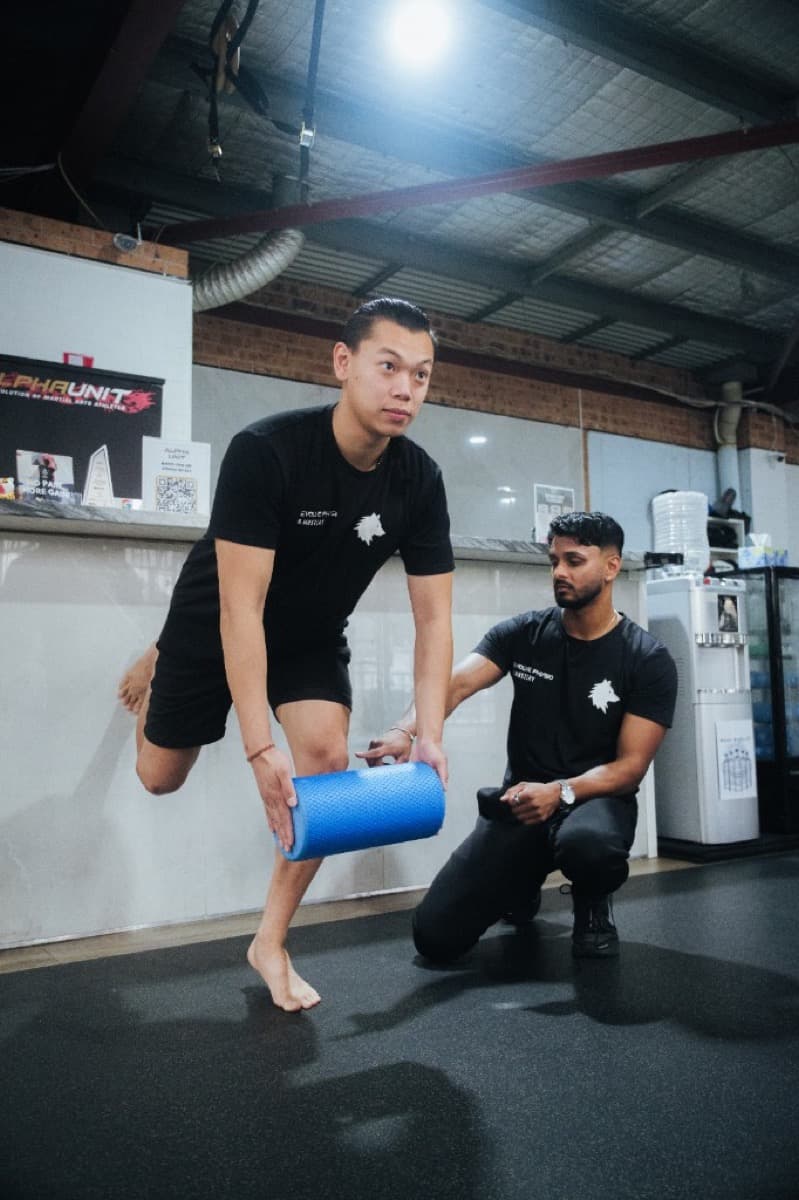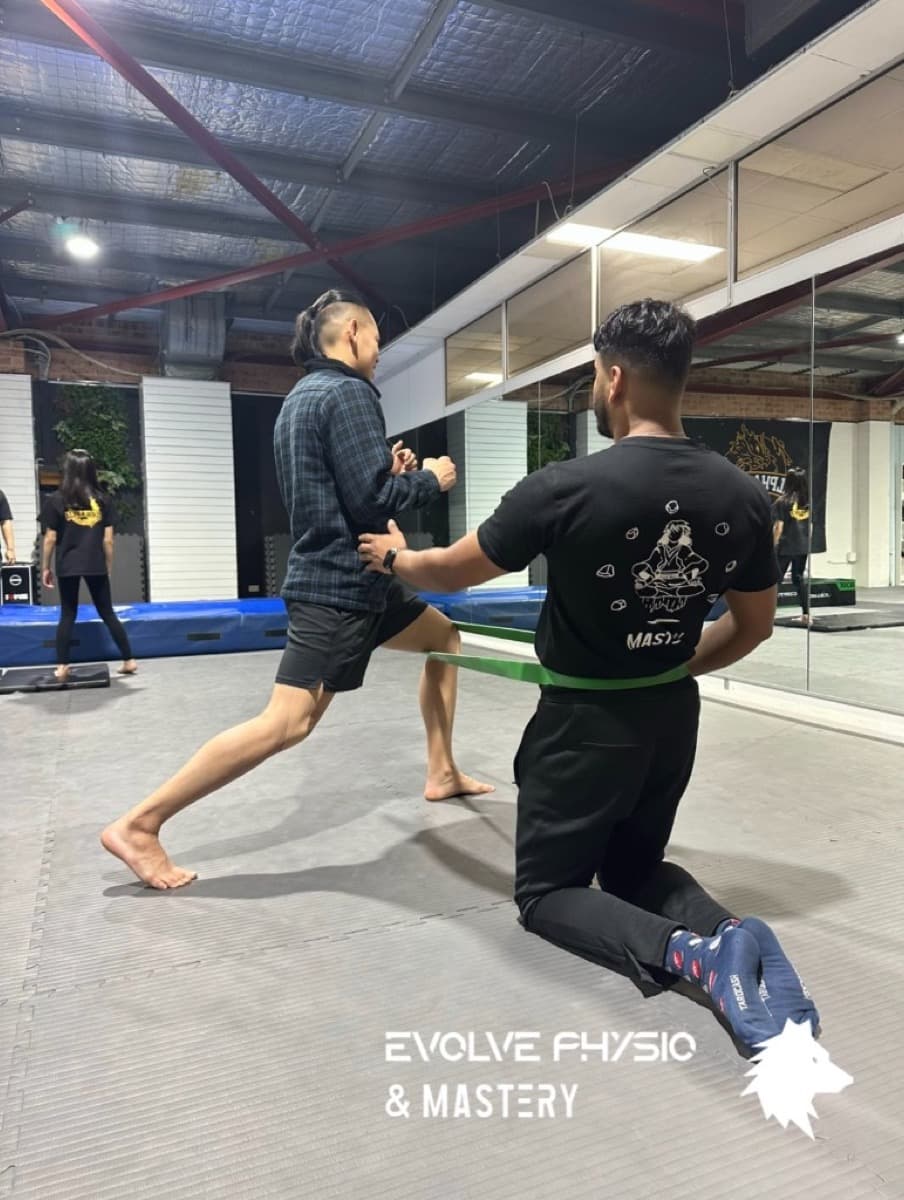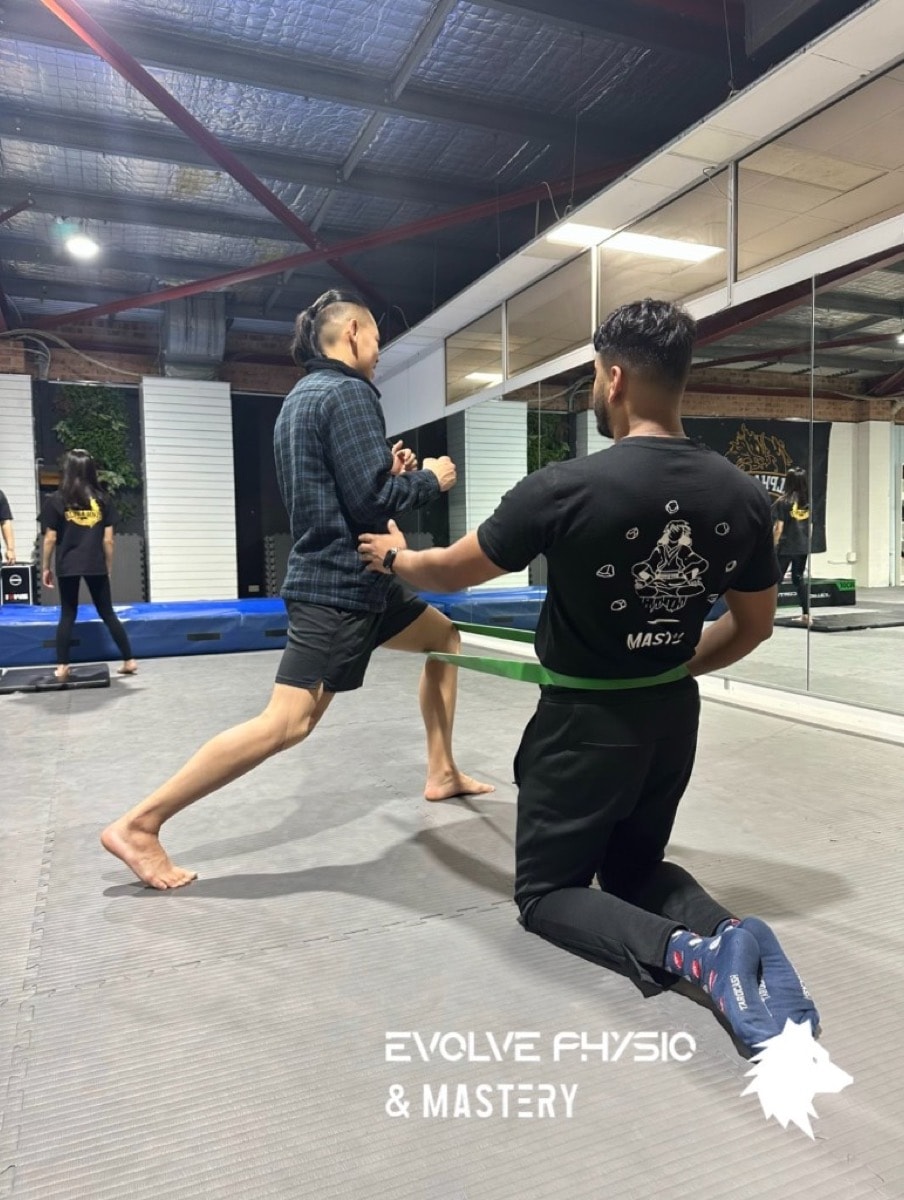
Return to Running After Injury: A Progressive 8-Week Framework
Video masterclass
The Best Running Protocol Nobody Teaches | Ultra Marathon Prep
The full 20-week framework we use to prep runners for marathons and ultras — addressing old injuries, mechanics, tendon health, and durability. Watch the full session below — then open the video page for notes, timestamps, and related guides.
Mastery program
The ACL Comeback Program
A structured 28-day knee rehab program designed for people stuck in the "almost better" phase after ACL or meniscus injury. Rebuild strength, restore confidence, and bridge the gap between feeling okay and being fully back.
Why coming back is the hard part
Most running injuries are recoverable. Most re-injuries happen because people came back too fast. We see a steady stream of runners in our Liverpool and Cabramatta clinic who finally got over a calf strain, shin splints, or plantar fasciitis — then went out for a 10km "just to test it," and were back in our clinic three weeks later.
Returning to running after injury is its own skill. Done well, you come back stronger than before. Done poorly, you trade a 4-week niggle for a 12-week one.
Want a structured program, not just an article?
This guide gives you the framework. The ACL Comeback Program ($50) is our 28-day lower-limb strength block for the “almost better” phase — when you can walk and do daily life but need progressive loading before you trust running again. Pair it with the free Knee Pain Mastery Guide for day-to-day exercises.
The principle underneath
Tissue capacity is built incrementally. Bone, tendon, muscle and connective tissue all remodel in response to load — but each has a different adaptation timeline:
- Muscle adapts in days to weeks
- Tendons take 8–12+ weeks to meaningfully change
- Bone takes 12+ weeks to re-fortify after a stress injury
This is why "I feel fine" at week 4 after a stress fracture isn't the same as "the tibia is ready for 40km/week." The framework below respects those timelines.
Before you run again — the readiness checks
- Walking. You should be able to walk for 30+ minutes pain-free and without next-day symptoms.
- Single-leg calf raises. Target: 25+ reps on each side for most lower-limb injuries.
- Single-leg squat. Reasonable control, no obvious knee-valgus collapse, 8–10 reps pain-free.
- Hopping. 20 hops on each leg pain-free — the real run-test proxy.
- Specific tissue tests. For calf strains — heavy calf raises pain-free. For plantar fascia — the Rathleff protocol progressed. For ACL rehab — hop battery >85% symmetry. For stress fractures — medical clearance and imaging where appropriate.
Online Rehab Academy
Book a free discovery call
Want this protocol mapped to your injury, scan and timeline? Our Online Rehab Academy pairs video-guided rehab with remote coaching from our clinical team — the same standards as in-clinic care, from home.
The 8-week framework
Frequency: 3 runs per week, never back-to-back. Add 2 strength sessions per week on non-running days or immediately post-run.
Weeks 1–2: Walk-run intervals
- Session structure: 1 min run / 2 min walk × 6 (total ~18 min)
- Progress to 2 min run / 2 min walk × 6 by end of week 2
- Easy conversational pace only
Weeks 3–4: Longer run intervals
- Week 3: 3 min run / 1 min walk × 6 (total 24 min)
- Week 4: 5 min run / 1 min walk × 5 (total 30 min)
- Still easy pace, flat terrain
Weeks 5–6: Continuous running
- Week 5: 20–25 min continuous easy running, 3 times/week
- Week 6: 25–30 min continuous easy running, 3 times/week
- Introduce very mild undulations (gentle hills) in one session
Weeks 7–8: Volume and reintroducing variety
- Week 7: increase longest run to 35–40 min; other two runs 25–30 min
- Week 8: longest run 45 min; introduce one session with a few short (30–60 second) efforts at tempo if feeling strong
- Total weekly volume around 100–120 min by end of week 8
Beyond week 8
Once you've built a consistent 120-min / week base without symptoms, you can progress volume by no more than 10–15% per week toward your target weekly volume. Long run shouldn't exceed roughly 30–35% of total weekly volume. Introduce one speed or hill session per week when ready.
Strength work to run alongside
Two sessions per week, 20–30 minutes each.
- Heavy calf raises — straight-leg and bent-knee, 3 x 6–8
- Single-leg deadlifts — 3 x 8 per side
- Bulgarian split squats or step-ups — 3 x 8 per side
- Side-lying hip abduction or Copenhagen side plank — 3 x 10–12
- Core integration — plank variations, dead bugs, bird-dogs
Signs you're progressing too fast
- Pain during a run that gets worse as you continue
- Morning stiffness or soreness that hasn't settled by afternoon
- New pain somewhere else (your body is compensating)
- Sleep disturbance from the injured area
Any of these → hold at current volume or drop back one week. Regression is normal and not a failure — it's part of the process.
Signs you're progressing well
- Pain during runs dropping steadily week by week
- No morning symptoms
- Strength scores improving (calf raise reps, single-leg squat quality)
- Your head feels good — confidence returning
Connects to the running cluster
For specific injury recoveries: shin splints, ITB syndrome, runner's knee, stress fractures, Achilles tendinopathy, back pain when running. For ankle and hamstring return paths, see our ankle sprain protocol and hamstring return framework. For post-ACL return to sport, our ACL return-to-sport testing guide covers the criteria-based framework.
Related return-to-run guides
- Return to running after a stress fracture (12-week protocol)
- Return to running after a calf strain (6-week program)
- Tennis leg recovery time — week by week
- Return to running after plantar fasciitis
- Shin splints vs stress fracture
- Return to running after ACL surgery
- Walk-run program after injury
- Running after 40 — masters return guide
- Metatarsal stress fracture return plan
- Return to running after hamstring strain
Go deeper with our Running Masterclass
Once you're through the 8-week rebuild, our full 20-week running framework covers mechanics, deceleration, tendon conditioning, and long-term durability — the same system we use with marathon and ultra athletes. Watch the Running Masterclass above for the long-form walkthrough.
Buy The ACL Comeback Program or book a free discovery call
The ACL Comeback Program is our paid 28-day lower-limb strength and confidence block ($50). We use it for ACL and meniscus rehabs — and for athletes stuck in the “almost better” phase after knee sprain, giving-way, or a long layoff from running and court sport. It is built for the whole lower limb, not only post-op ACL.
Purchase The ACL Comeback Program →
Want a plan mapped to your scan, sport and timeline without coming in first? Book a free discovery call for our Online Rehab Academy →
Free progressive home loading: Knee Pain Mastery Guide. In Cabramatta / South West Sydney? Book an in-clinic physio assessment.
References: Nielsen et al. 2012 "Training errors and running related injuries"; Gabbett 2016 "The training-injury prevention paradox" (Br J Sports Med); Warden et al. 2021 bone stress injury management; Lauersen et al. 2014 strength training and sports injury prevention meta-analysis.
Frequently Asked Questions
How soon after an injury can I start running?
It depends entirely on the injury. A minor calf strain might allow gentle jogging within 10–14 days; a tibial stress fracture needs 6–8+ weeks off running; post-ACL reconstruction is usually 12+ weeks before starting. The principle: you start running when the tissue passes appropriate load tests, not when the calendar says so.
What's the 10% rule and does it actually work?
The 10% rule (don't increase weekly volume by more than 10% per week) is a sensible rule of thumb for general progression, but isn't magic. A smarter approach tracks acute vs chronic workload ratio and allows flexibility — but 10% remains a useful starting guideline for amateur runners.
Should I start back with walk-run intervals or slow jogging?
Walk-run intervals. Every time. They protect the tissue, keep loading below pain threshold, and build volume progressively. Continuous 'easy jogging' is usually too much too soon after a layoff.
How much strength work should I do alongside running rehab?
Two to three strength sessions per week through the return window. Heavy, low-rep lower-body strength work actively protects against re-injury and is one of the strongest predictors of successful return. Don't skip it.
How do I know I'm progressing too fast?
Three signals: (1) pain during running that persists and worsens week-over-week; (2) pain the morning after that doesn't settle within 24 hours; (3) compensations showing up elsewhere (new hip pain, new knee ache). Any one of these is a cue to hold volume or step back a week.