ITB Syndrome in Runners and Cyclists: Why Stretching Doesn't Fix It
The most mismanaged knee pain in running
Sharp pain on the outside of the knee, always at roughly the same distance into a run — 3km, 5km, 7km — and then it gradually forces you to stop. That's the classic presentation of iliotibial band (ITB) syndrome, one of the most common running injuries we see in our Liverpool and Cabramatta catchment.
Despite being extremely common, ITB syndrome is probably the most poorly managed injury in amateur running circles. The standard advice — stretch the ITB, foam-roll it aggressively, rest — fails most people. The evidence tells a different story.
What's actually happening
The ITB is a thick band of fibrous connective tissue running from the hip to just below the knee on the outside of the thigh. It was traditionally thought to "rub" over the bone on the outside of the knee during running, causing friction-related pain.
Modern cadaveric and imaging research has dismantled that picture. The ITB is firmly anchored to the femur along much of its length and doesn't actually slide back and forth over the bone. What appears to happen instead is compression of soft tissue — including a small fat pad — between the band and the lateral femoral epicondyle at around 30° of knee flexion (the angle reached roughly mid-stance in running).
Repetitive compression → tissue irritation → pain. Load-related, not friction-related.
Why stretching and rolling miss the point
If the ITB isn't actually tight, and the pain isn't from friction, stretching and rolling target the wrong mechanism. You get a temporary sensation of relief, but the next run reproduces the same pain at the same distance, because the underlying compression picture hasn't changed. The things that change it are load (reduce compression exposure) and strength (build the hip and knee control that reduces compression per step).
The strength side of the fix
Multiple studies have linked weakness of the hip abductors and external rotators — particularly glute medius — with increased ITB-related knee pain. Strong hips keep the knee tracking well and reduce the angle at which compression peaks.
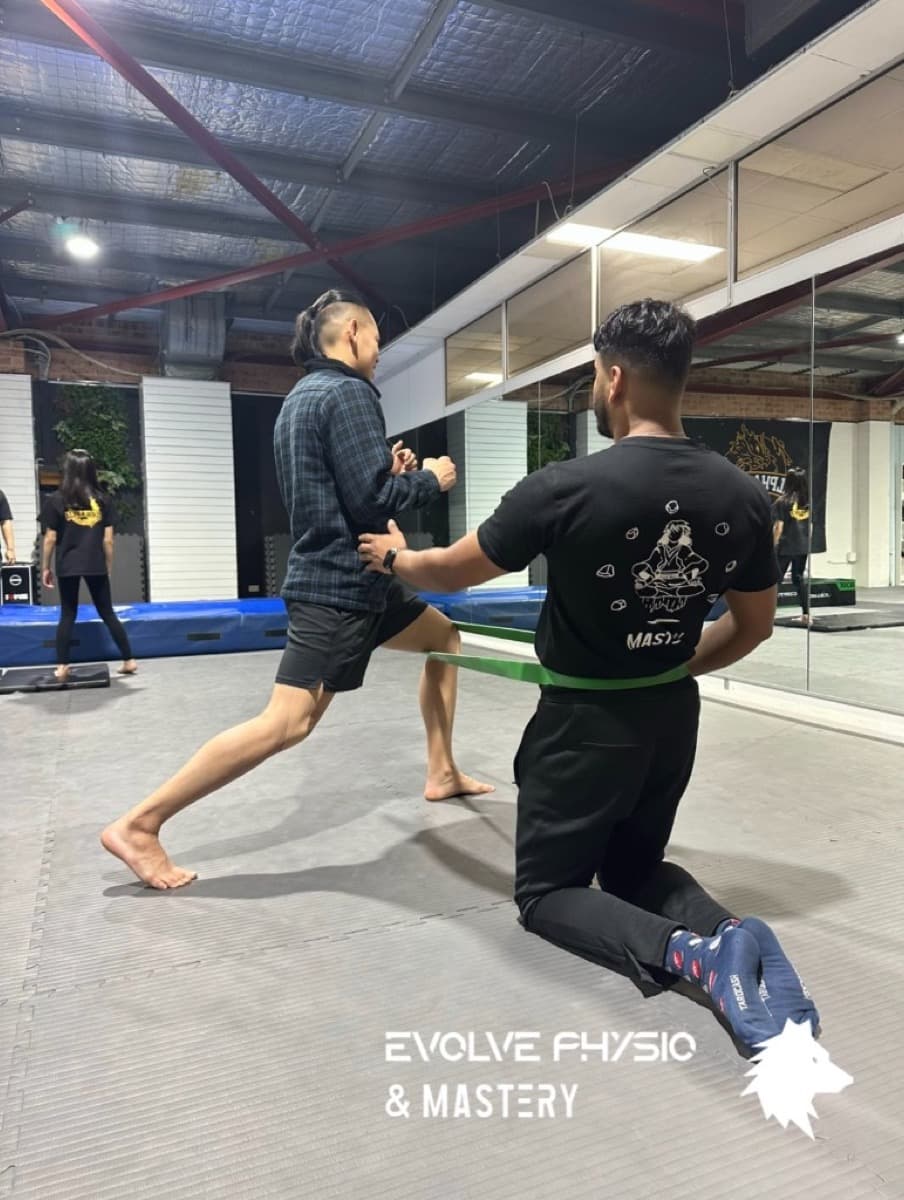
- Side-lying leg raises — 3 sets of 15 with a short band around the knees. Glute medius endurance.
- Copenhagen-style side planks with top-leg lifts — 3 sets of 10–12. Integrated hip control.
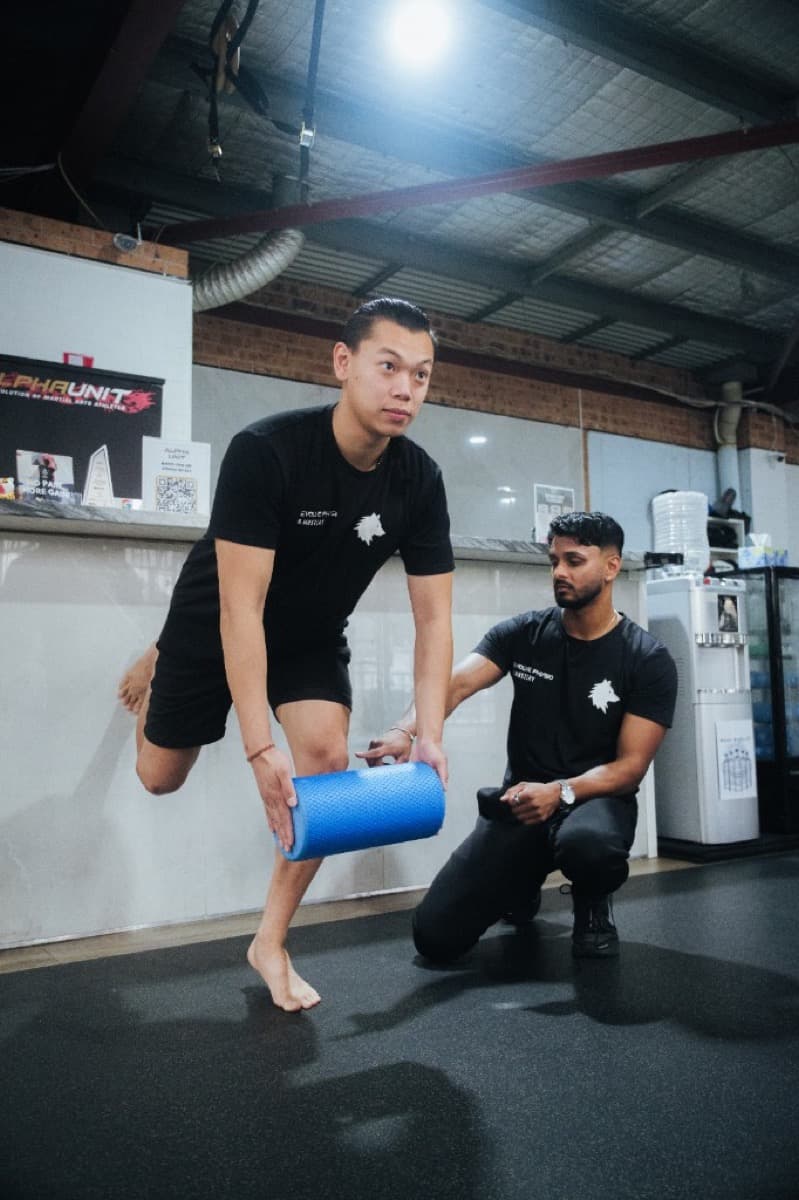
- Single-leg squats or step-downs — 3 sets of 8–10. Hip and knee control under load.
- Single-leg deadlifts — 3 sets of 8–10 per side. Posterior chain and hip stability.
- Hip thrusts — 3 sets of 8–10 heavy. Glute max strength.
Three strength sessions per week alongside modified running. Within 3–4 weeks most people feel a meaningful shift.
The load side of the fix
- Drop weekly running volume by 30–50% for 2–4 weeks
- Avoid downhill running (increases the 30°-flexion time, provocative)
- Shorten stride length slightly and increase cadence by 5–7% — this reduces compression dose per kilometre
- Run on softer surfaces temporarily
- Cross-train to maintain fitness (swimming, deep-water running, upper-body cycling — avoid aggressive road cycling as it can also provoke ITB)
For cyclists specifically
Cyclists with ITB syndrome benefit from:
- Saddle height check — too high increases the knee flexion range hit per pedal stroke
- Cleat position check — excessive float or a misaligned cleat increases lateral knee stress
- Bike fit with someone who understands ITB mechanics
- Reduced volume while strength builds — same principles as running
What to stop doing
- Stretching the ITB in the "leaning-against-a-wall" position and expecting resolution
- Aggressive foam rolling the ITB itself — painful and ineffective
- Running through gradually worsening pain ("hoping it'll settle")
- Passive treatments (ultrasound, massage only) as a standalone strategy
Expected timeline
- Weeks 1–2: pain-free strength work plus reduced running. Pain during runs starts to retreat.
- Weeks 3–6: progressive return to volume. Strength gains become noticeable.
- Weeks 6–10: full running volume restored; maintenance strength continues.
- Beyond 3 months: if not resolving, we'd revisit the diagnosis, consider injection therapy for refractory cases, and check for contributing factors (leg-length discrepancy, specific movement patterns).
Connects to the running cluster
For shin pain, see our shin splints guide. For anterior (front of knee) running pain, see our runner's knee guide. For returning to running after any injury layoff, our return to running guide has a week-by-week framework.
Watch how we build running durability
ITB syndrome sits on the same spectrum of load-capacity problems we address in our full running framework. Watch The Best Running Protocol Nobody Teaches for the 20-week approach we use with our own marathon and ultra athletes — it addresses the hip, knee and tendon work that prevents ITB flares in the first place.
For resilient hip-to-knee control (especially if you have any knee, meniscus or ACL history), purchase The ACL Comeback Program — our paid 28-day lower-limb strength block. Day-to-day hip/knee loading: free Knee Pain Mastery Guide.
Buy the program, book an online consult, or come into clinic
Purchase The ACL Comeback Program →
Prefer remote guidance? Request an online consult →
Local to Cabramatta? Book a running / cycling physio assessment at Evolve Physio & Mastery — Liverpool, Fairfield, Bankstown and Southwest Sydney.
References: Fairclough et al. 2006 "The functional anatomy of the iliotibial band" (J Anat); Fredericson et al. 2000 hip abductor weakness in ITB syndrome; Noehren et al. 2007 kinematics of female runners with ITB syndrome; Willy & Davis 2011 hip strengthening trials.
Frequently Asked Questions
What causes ITB syndrome?
Repetitive compression of soft tissue between the ITB and the lateral femoral condyle (the bony bump on the outside of the knee). Modern imaging studies have shown there's no actual 'friction' between the band and the bone — it's a compression-related pain problem, usually triggered by load spikes in running or cycling, often with hip weakness as a contributing factor.
Why doesn't stretching help?
Because the ITB isn't really 'tight' in a way you can lengthen. It's a thick fibrous band of dense connective tissue tethered to the femur along much of its length. Meaningful stretching of the band itself is anatomically near-impossible. Stretching gives a sensation of relief — but doesn't change pain at 5km into the next run.
Does foam rolling work?
Foam rolling the ITB itself is ineffective for the pain problem — and often uncomfortable. Foam rolling the surrounding muscles (vastus lateralis, glute medius, TFL) can reduce soreness and may help you tolerate training better, but it's not the treatment.
What actually fixes ITB syndrome?
Two things working together: (1) load management — pulling running/cycling volume back to below the pain threshold for 2–4 weeks; (2) hip abductor and external rotator strengthening, particularly glute medius. Strong hips offload the lateral knee.
How long before I'm back to full running?
For typical uncomplicated cases, 4–8 weeks of modified training plus strength work. Chronic cases that have been running through pain for months take longer — often 3–4 months before full volume is restored.