Aged Care Worker Injuries on WorkCover NSW: Lifting, Transfers and Back Pain
The industry that hurts the people it relies on
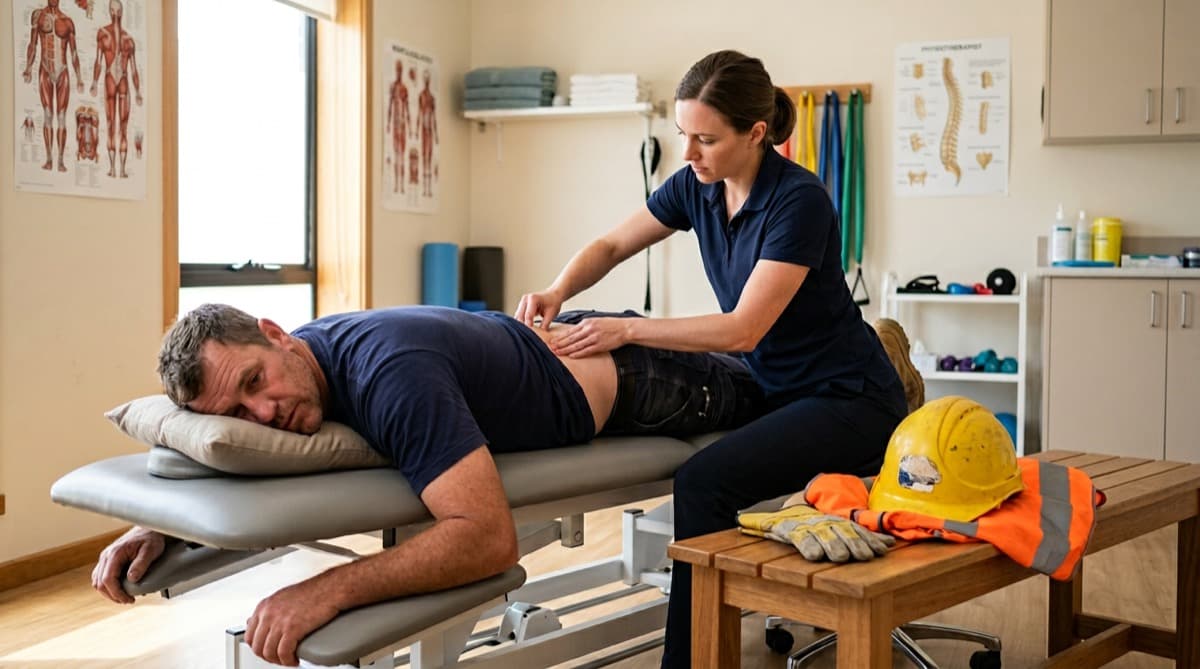
Aged care has one of the highest rates of musculoskeletal injury of any industry in Australia. SafeWork NSW data consistently ranks aged care workers — Assistants in Nursing (AINs), Personal Care Assistants (PCAs), registered and enrolled nurses — among the highest claim rates per capita for back, shoulder and knee injuries. The mechanism is well known: repeated patient transfers, often understaffed, often rushed, often without proper equipment. At Evolve Physio & Mastery in Cabramatta, aged care workers are one of our largest WorkCover patient groups — particularly from the cluster of facilities across Liverpool, Fairfield, Bankstown, Cabramatta, Canley Heights and broader Southwest Sydney.
This post is for carers and nurses thinking about whether to report an injury, those already on a claim, and managers and care coordinators trying to support injured staff well.
The injury patterns we see most in aged care
1. Lumbar spine injuries from transfers
Bed to chair, chair to commode, chair to standing, repositioning in bed. The single highest-load tasks in aged care. Acute episodes ("I was helping Mrs X stand and felt my back go") on top of months of cumulative load. Disc-related injuries are common.
2. Shoulder injuries from boosting and repositioning
Pulling a patient up the bed, supporting weight during a transfer, holding limbs during a hoist. Rotator cuff strains and tendinopathies dominate.
3. Knee injuries from kneeling and squatting
Bathing, dressing, wound care, picking up dropped items. Meniscal irritation, patellofemoral pain, prepatellar bursitis.
4. Wrist and hand injuries
Gripping, holding, supporting patient weight, repetitive medication administration tasks for nurses. Carpal tunnel syndrome, lateral epicondylitis, thumb base osteoarthritis.
5. Slip, trip and fall injuries
Wet bathroom floors, cluttered rooms, tripping on equipment. Wrist and ankle injuries from instinctive protective movements.
Why aged care workers under-report — and why that backfires
The common reasons aged care staff don't report injuries:
- "I don't want to leave my team short."
- "It's not that bad, I can manage."
- "I don't want to be a complainer."
- "My English isn't great and the paperwork feels overwhelming."
- "I'm worried about my shifts being cut."
- "I'm worried about my visa or work history."
The pattern in clinic: the carer works through it for six months, the injury entrenches, the claim eventually gets reported in a worse state, and the recovery takes twice as long. Early reporting protects you, your patients (who deserve a fit carer), and your team (because you don't end up on extended leave). NSW WorkCover covers paid work performed regardless of visa status. Insurers have interpreter services free of charge.
The NSW WorkCover pathway for aged care
- Report to your manager and the facility incident system. Most aged care facilities have a workplace injury reporting platform. Use it.
- See your GP for a Certificate of Capacity. Document the mechanism, current symptoms, and work restrictions.
- The insurer opens the claim. Most aged care providers are insured through icare or a scheme agent. Provisional liability typically covers the first 12 weeks of treatment.
- Start physio early. Sessions 1–8 are initial treatment. From session 9, the physio submits an Allied Health Recovery Request to the insurer with measurable functional goals.
- Graduated return to duties. Modified duties first (no transfers, lighter physical demands), progressive return to full patient care.
For the system overview, our WorkCover physio guide. For first-48-hour decisions, our first 48 hours guide.
What WorkCover physio for aged care workers actually involves
The same three layers, calibrated to aged care demands:
- Symptom management. Pain, sleep, movement, early return to normal activity outside of work.
- Capacity rebuilding. Progressive strength work focused on hip extensors, glutes, back extensors, scapular control, grip and forearm endurance — the muscle groups that absorb transfer load.
- Task simulation. Mimicking patient transfer biomechanics in the gym — kettlebell deadlifts at moving weights, partial squats with asymmetric load, shoulder press in stepping patterns. The transition from rehab gym to real bedside is the part most generic physio misses.
Realistic modified duties for aged care roles
- No solo transfers — hoist or two-carer transfers only for a defined period.
- Medication rounds, observations, documentation.
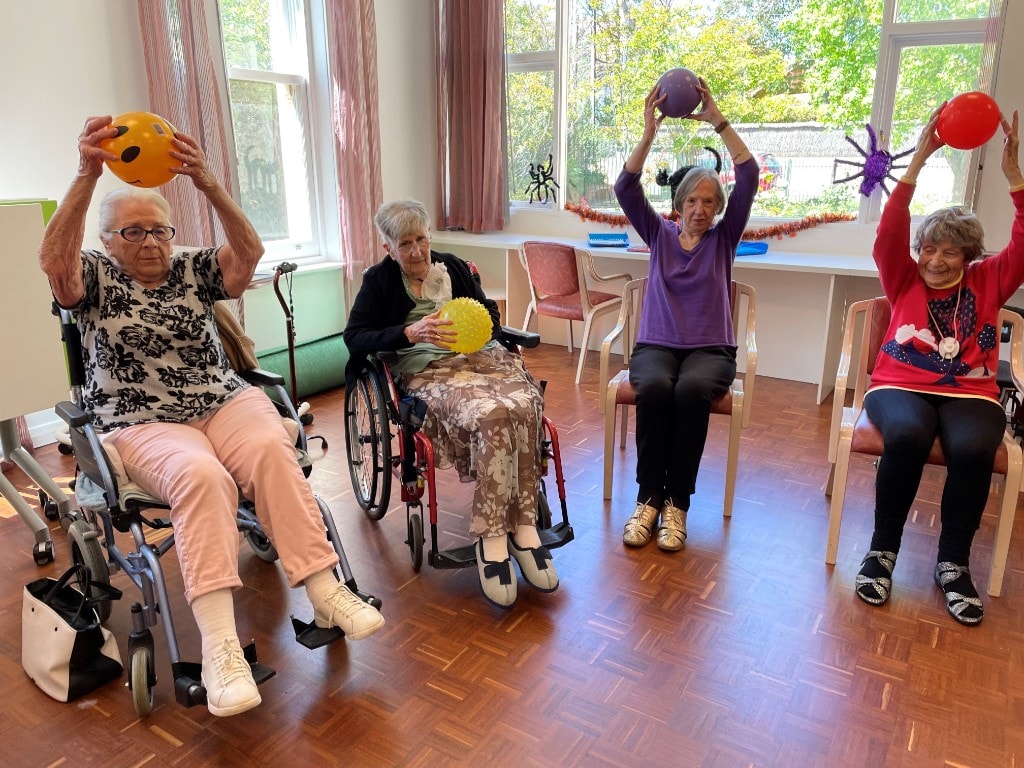
- Resident social and activity support.
- Mealtime assistance (when patients are sitting and supported).
- Care plan reviews.
- Mentoring new staff or students.
- Administrative or training work for a defined recovery period.
A good return-to-work coordinator at the facility (or via the insurer) makes this workable. If they aren't engaged, your physio and GP can help drive the conversation.
The hoist conversation — please don't skip it
The single most powerful injury prevention intervention in aged care is consistent, correct use of mechanical hoists, slide sheets and other transfer aids. Facilities that have invested properly in equipment and training have lower injury rates. Where equipment exists but isn't used — usually due to time pressure or familiarity — injury rates stay high. As an injured worker returning to duty, advocate for the equipment to be used. As a manager, audit that equipment is available, accessible and used. As a colleague, normalise using the hoist even when "it'll just take a second" to do manually.
For nurses specifically — the documentation matters
Registered and enrolled nurses face the same physical demands as carers, often with additional mental load and shift complexity. Nursing claims sometimes also include psychological injury components — assault, exposure to traumatic events, sustained understaffing. NSW workers compensation covers psychological injury where work is "the main contributing factor" to the condition. The threshold is higher than for physical injury but the coverage exists. Document early, see your GP, and consider whether you need both physical and psychological assessment.
Cultural and language context
A large proportion of aged care staff across Liverpool, Fairfield and Cabramatta come from Vietnamese, Filipino, Indian, Nepali, African and Middle Eastern backgrounds. Practical points:
- WorkCover covers paid work performed in NSW. Visa status does not exclude you from coverage.
- NSW insurers must provide interpreter services at no cost. Ask.
- Multi-job casuals — make sure all employments are accounted for in any wage replacement calculation.
- Cultural reluctance to take time off is common; we work with patients to design recovery plans that respect their financial reality.
Related reading
For lower back pain in detail, our lower back pain guide. For shoulder issues, our rotator cuff impingement piece. For chronic pain that lingers, our chronic pain guide. For the system pathway, our WorkCover physio guide.
Book a WorkCover physio assessment
If you're a carer, AIN, PCA or nurse working through pain — or you've reported an injury and need a SIRA-aligned physio — we'd love to help. Book a WorkCover assessment at Evolve Physio & Mastery, Cabramatta. We work with aged care staff from facilities across Liverpool, Fairfield, Canley Heights, Bonnyrigg, Bankstown, Cabramatta and Southwest Sydney. All paperwork handled with your insurer. For the system itself in plain English, our Workers Compensation Mastery Guide.
This article is general educational information about NSW workers compensation and physiotherapy. It is not legal advice. For legal questions about your claim, seek advice from a workers compensation lawyer. For psychological injury, see your GP and consider a referral to a psychologist. References: SIRA NSW; SafeWork NSW; icare NSW.
Frequently Asked Questions
Is back pain from years of patient lifting covered by WorkCover even without a single injury moment?
Yes. NSW workers compensation covers gradual onset injuries that arise out of or in the course of work. The absence of a specific 'I lifted X and felt a pop' moment doesn't disqualify you — but documentation is more important. See your GP early, describe the work pattern that aggravates symptoms, keep a symptom diary, and get a Certificate of Capacity.
Will I lose my job if I report a back injury?
You have legal protection from dismissal or adverse treatment for making a workers compensation claim. In reality, aged care providers are facing chronic staffing shortages and most are motivated to support injured staff back to work, not lose them. Most claims resolve with modified duties and graduated return, not termination.
I'm a casual / agency carer working across multiple facilities — who covers me?
Your direct employer (the agency or the facility holding your employment contract) is responsible for the workers compensation policy. Agency staff working across multiple sites should report to the agency primarily. The injury location may matter for incident investigation but not for claim liability.
Are night-shift back injuries handled differently?
No — they're treated the same. Night shifts can mean fewer hoists, fewer co-workers to help with transfers, and rushed manual handling — but the WorkCover process is identical regardless of shift time. Document the staffing context if it's relevant; it supports the work-related nature of the injury.
I'm afraid of becoming 'that person' who's always on WorkCover. What if it's just a niggle?
Early reporting of niggles is the opposite of becoming 'that person.' The patients who develop chronic disability are usually the ones who worked through pain for months until it became unmanageable. Early-intervention physio is one of the cheapest and most effective interventions in the system — most niggles resolve in 2–4 sessions if caught early.
Can I keep doing patient care work during recovery?
Usually yes — with modifications. Your GP and physio will write restrictions based on assessment. Common modifications: no transfers without a second carer or mechanical aid for 4–8 weeks, no lifting over a specific weight, no overhead work, reduced shift length. Full removal from patient care is reserved for more severe injuries.