Standing Back Bends for a Disc Bulge (Watch the Symptoms, Not the Range)
Video masterclass
5 Bulging Disc Lower Back Exercises for Pain Relief
Sitting or bending aggravates your disc bulge? A movement check, then five extension-preference exercises — plus why relief isn’t the whole comeback. Watch the full session below — then open the video page for notes, timestamps, and related guides.
Free program
The Back Pain Mastery Guide
The Low Back Mobility Mastery Guide, created by Evolve Physio & Mastery, is a step-by-step recovery program designed to help you navigate a low back flare-up with clarity and confidence.
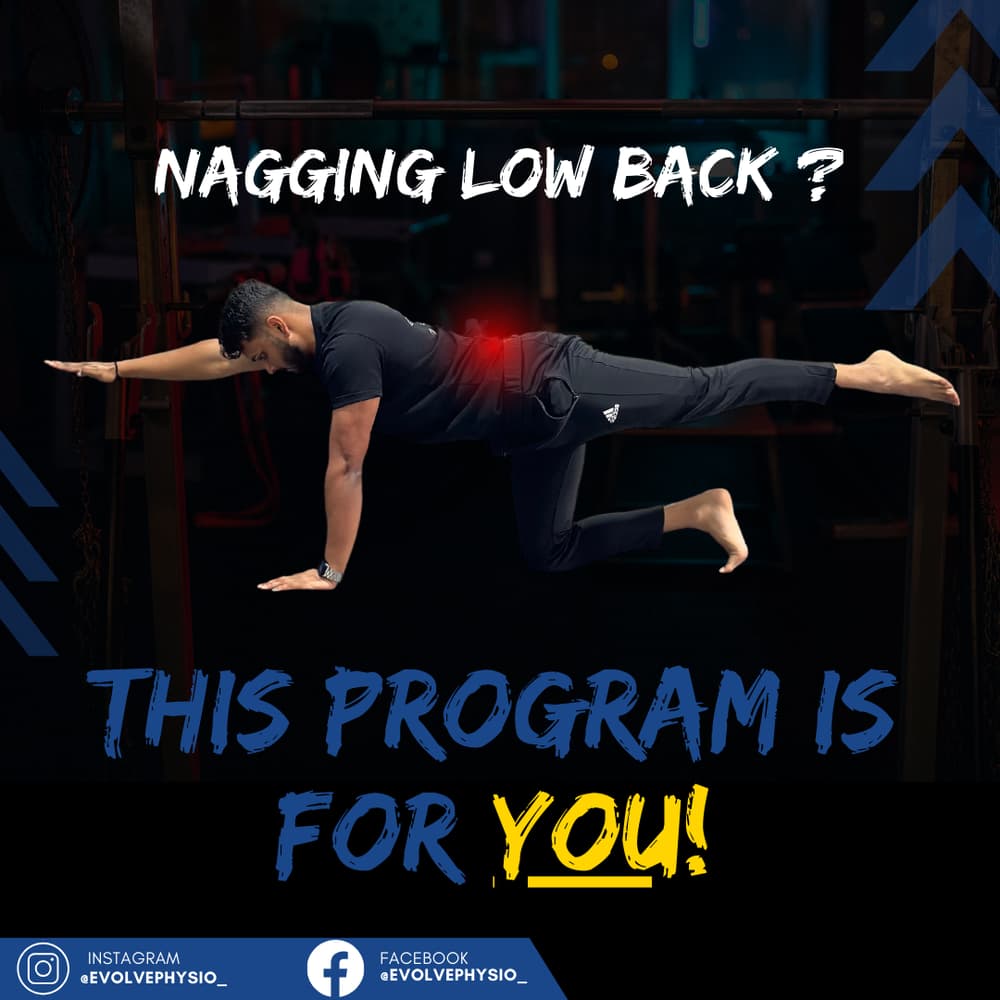
Repeated extension, on your feet
Exercise 2 in 5 Bulging Disc Lower Back Exercises is standing back-bends. You already know from the movement check that this direction is the one that tends to help. Now you dose it. Watch on YouTube.
The cue is not “go further.” The cue is: what happened to the symptoms on the last three reps compared to the first three? If they are easing or moving toward the spine, keep the small range. If they are marching down the thigh, stop.
Want a structured plan, not just five exercises?
This video is a starting point for one type of back. The Back Pain Mastery Guide (free) is our step-by-step flare-up roadmap — what to do early, how to reintroduce movement, and when a symptom is a red flag. Pair it with a free Rehab Academy discovery call if you want the plan mapped to your scan and your week.
Coaching we actually use
- Feet under you. Knees not locked into a dump.
- Hands at the lower back for a hinge point so you don’t hang off the knees.
- Exhale as you ease back. Don’t hold your breath and brace like a max lift.
- Return to standing taller than you started — that taller posture is part of the drill.
Do these after a long sit before you do them after a heavy session you haven’t earned. Direction first. Load later.
Online Rehab Academy
Book a free discovery call
Want this protocol mapped to your injury, scan and timeline? Our Online Rehab Academy pairs video-guided rehab with remote coaching from our clinical team — the same standards as in-clinic care, from home.
Then get on the floor
Once standing is honest, cobra and its progressions give you more extension to work with. Then we stop living in extension forever — dead bug and the wall runner start putting the rest of life back in.
Get the free Back Pain Mastery Guide or book a discovery call
The Back Pain Mastery Guide is our free flare-up-to-function roadmap for the lower back and hips — early settling, graded movement, and a red-flag list. It is not a substitute for an assessment if your pain is spreading down the leg or getting worse.
Get The Back Pain Mastery Guide (free) →
Want this mapped to your scan, sport and the fear of bending? Book a free discovery call for our Online Rehab Academy →
The massage ball from the video: shop the massage ball. In Cabramatta / South West Sydney? Book an in-clinic physio assessment.
Frequently Asked Questions
How do I do a standing back-bend?
Stand tall, hands on the belt-line or buttocks for support, gently hinge backwards from the lower back, then return. Small. Repeated. You are not trying to look at the ceiling on rep one.
How many?
A common starting dose is 8–12 slow reps, then reassess. Two or three batches in a day beats one heroic set. If symptoms travel down the leg, you are done.
Should I feel a stretch?
A gentle crease in the lower back is normal. Sharp catch, dizziness, or pain lighting up further down the limb is not the stretch you want.
When in the day?
After sitting is often when extension-preferring backs need it — getting out of the car, off the couch, after a desk block. Use it as a reset, not as a warm-up for deadlifts you shouldn’t do this week.
Is this the same as cobra?
Same direction, different gravity. Standing is the one you can do in a car park. Cobra is the floor version with more range available. We use both in the video.
Where is the demo?
Exercise 2 from 2:40 — /video-library/v/5-bulging-disc-lower-back-exercises.