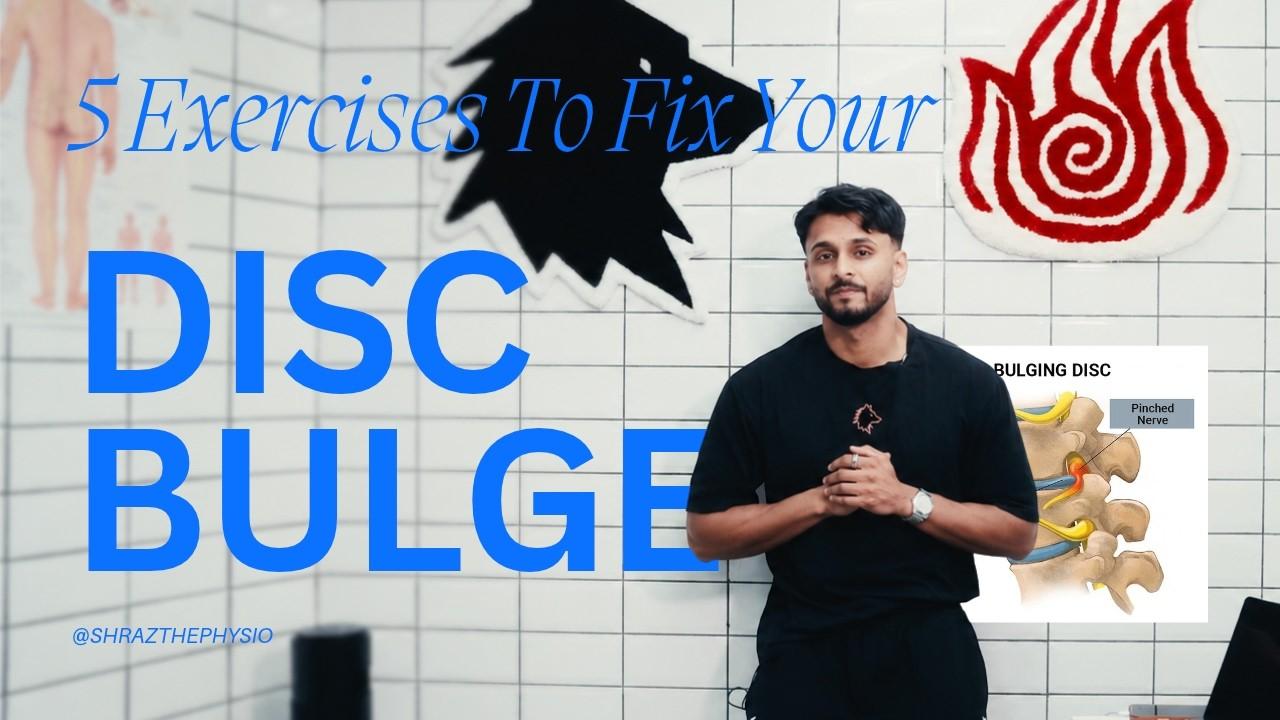
Massage Ball for a Disc Bulge: Lower Back and Glutes First
Video masterclass
5 Bulging Disc Lower Back Exercises for Pain Relief
Sitting or bending aggravates your disc bulge? A movement check, then five extension-preference exercises — plus why relief isn’t the whole comeback. Watch the full session below — then open the video page for notes, timestamps, and related guides.
Free program
The Back Pain Mastery Guide
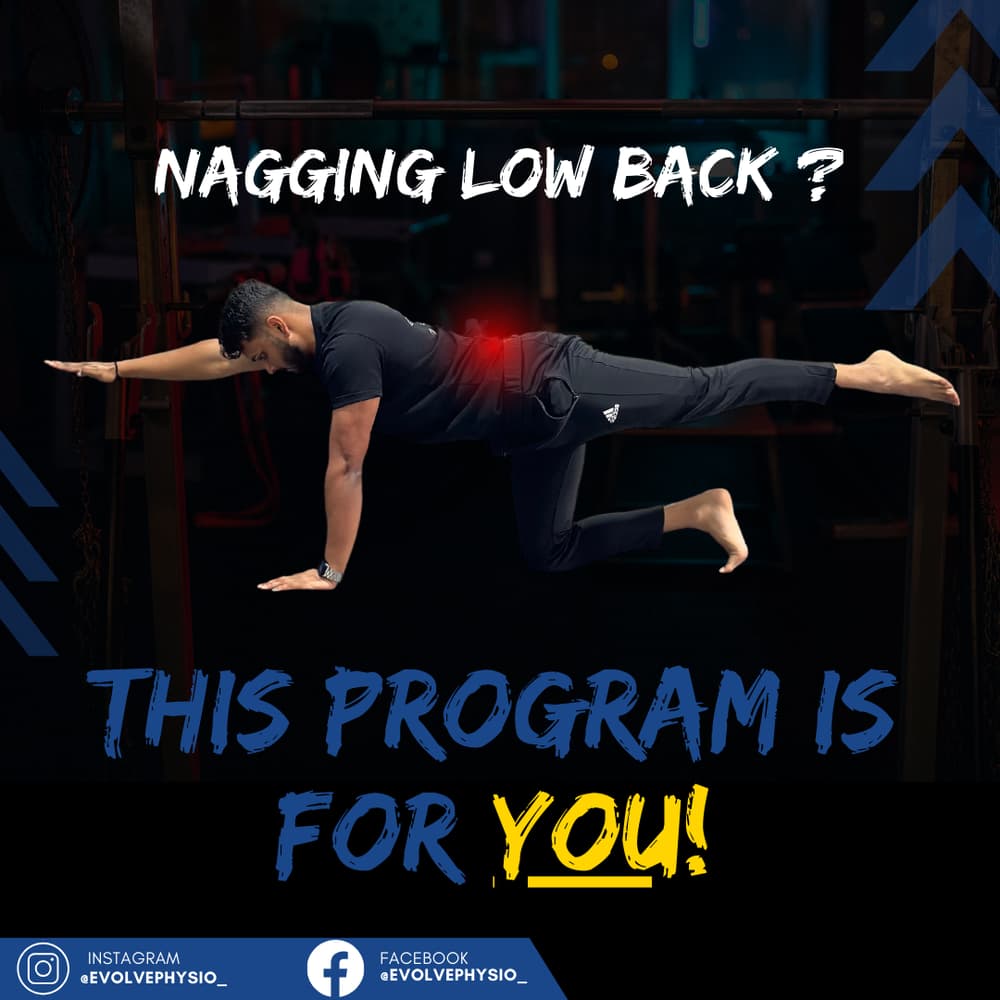
The Low Back Mobility Mastery Guide, created by Evolve Physio & Mastery, is a step-by-step recovery program designed to help you navigate a low back flare-up with clarity and confidence.
Soften the guard, then load
Exercise 1 in 5 Bulging Disc Lower Back Exercises is a massage ball on the lower back and glutes. Not because the disc needs to be “released.” Because the muscle around a threatened back has been on shift for weeks, and it will not let you extend honestly until it comes down a notch. Watch on YouTube.
This only belongs after you have done the movement check. If extension is the wrong direction, digging into the lumbar spine with a ball is not a workaround.
Want a structured plan, not just five exercises?
This video is a starting point for one type of back. The Back Pain Mastery Guide (free) is our step-by-step flare-up roadmap — what to do early, how to reintroduce movement, and when a symptom is a red flag. Pair it with a free Rehab Academy discovery call if you want the plan mapped to your scan and your week.
How we use it
- Wall, not a circus. Ball between the wall and the muscle next to the spine. Knees soft. Small knee bends to move the pressure. You should be able to talk.
- Glutes. Sit on the ball, or pin it against a wall at the back of the hip. Piriformis-type spots are fair game. Numbness down the leg is not — get off.
- Then stand up and re-test. A couple of standing back-bends. Did anything change? If not, you did a massage, not a treatment. That’s still allowed. It just isn’t the whole session.
The ball we use in the video: massage ball in the store.
Online Rehab Academy
Book a free discovery call
Want this protocol mapped to your injury, scan and timeline? Our Online Rehab Academy pairs video-guided rehab with remote coaching from our clinical team — the same standards as in-clinic care, from home.
What this is not
It is not cracking the disc back in. It is not a reason to skip standing back-bends and cobra progressions. And it is not something you do for 20 minutes on a nerve root the night before a long drive.
Hub: the five-exercise map.
Get the free Back Pain Mastery Guide or book a discovery call
The Back Pain Mastery Guide is our free flare-up-to-function roadmap for the lower back and hips — early settling, graded movement, and a red-flag list. It is not a substitute for an assessment if your pain is spreading down the leg or getting worse.
Get The Back Pain Mastery Guide (free) →
Want this mapped to your scan, sport and the fear of bending? Book a free discovery call for our Online Rehab Academy →
The massage ball from the video: shop the massage ball. In Cabramatta / South West Sydney? Book an in-clinic physio assessment.
Frequently Asked Questions
Why start with a massage ball instead of cobras?
Guarded paraspinals and glutes will steal the next four drills. A few minutes of targeted pressure often lets standing back-bends and cobras actually happen. It is not treating the disc with a ball. It is taking the bodyguard off the door.
Where do I put it?
Lower back (the muscle either side of the spine, not on the bony spinous processes) and glutes. Against a wall is usually more controllable than the floor. Sit on it for glute/piriformis. Slow. Breathe.
Can I roll directly on the spine?
No. Stay on the muscle. If you hit a lightning-bolt down the leg, you are on a nerve or you are too aggressive. Move off. Smaller pressure.
Which ball?
The one from the video is in our store — a firm, high-density ball, roughly 6.5 cm. Softer than a granite lacrosse ball is kinder for a hot back. Shop it from the massage-ball product page.
How long?
Minutes, not a half-hour punishment. 30–90 seconds on a spot that eases, then change. If you stand up stiffer and angrier, that was too much.
Where is this in the video?
Exercise 1 from 1:33 — https://youtu.be/t3rd8G1MFd8.