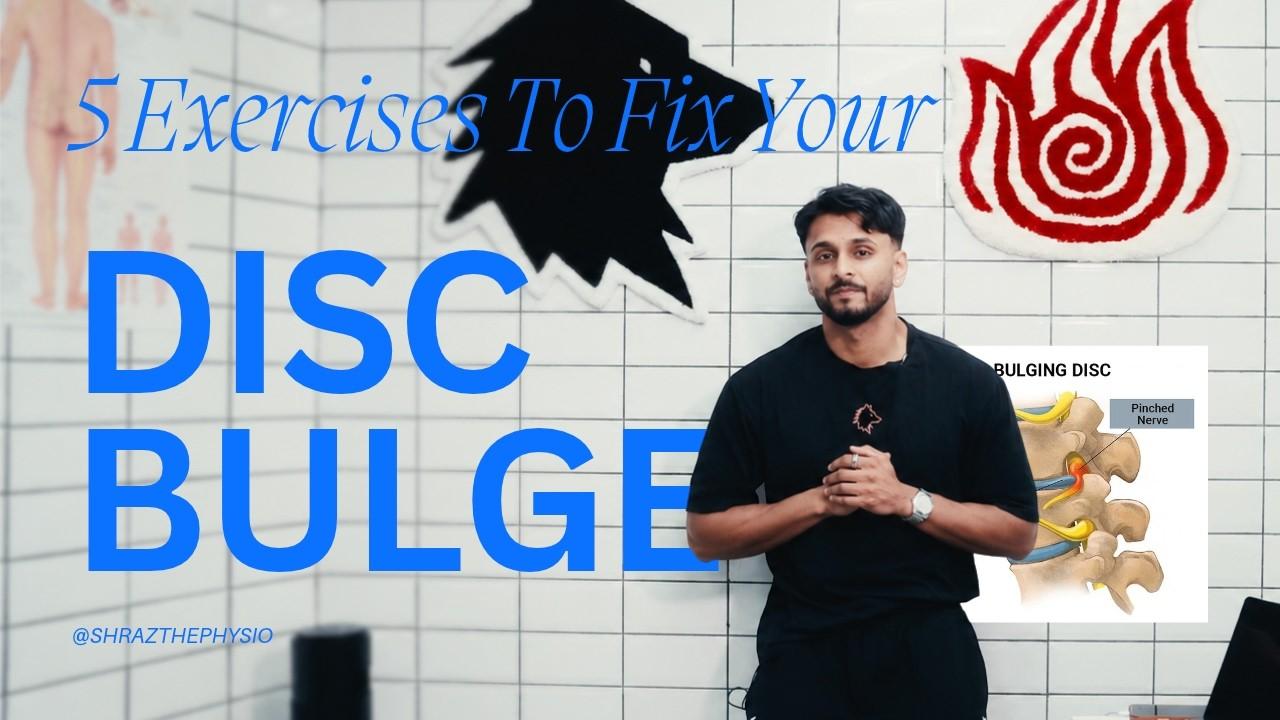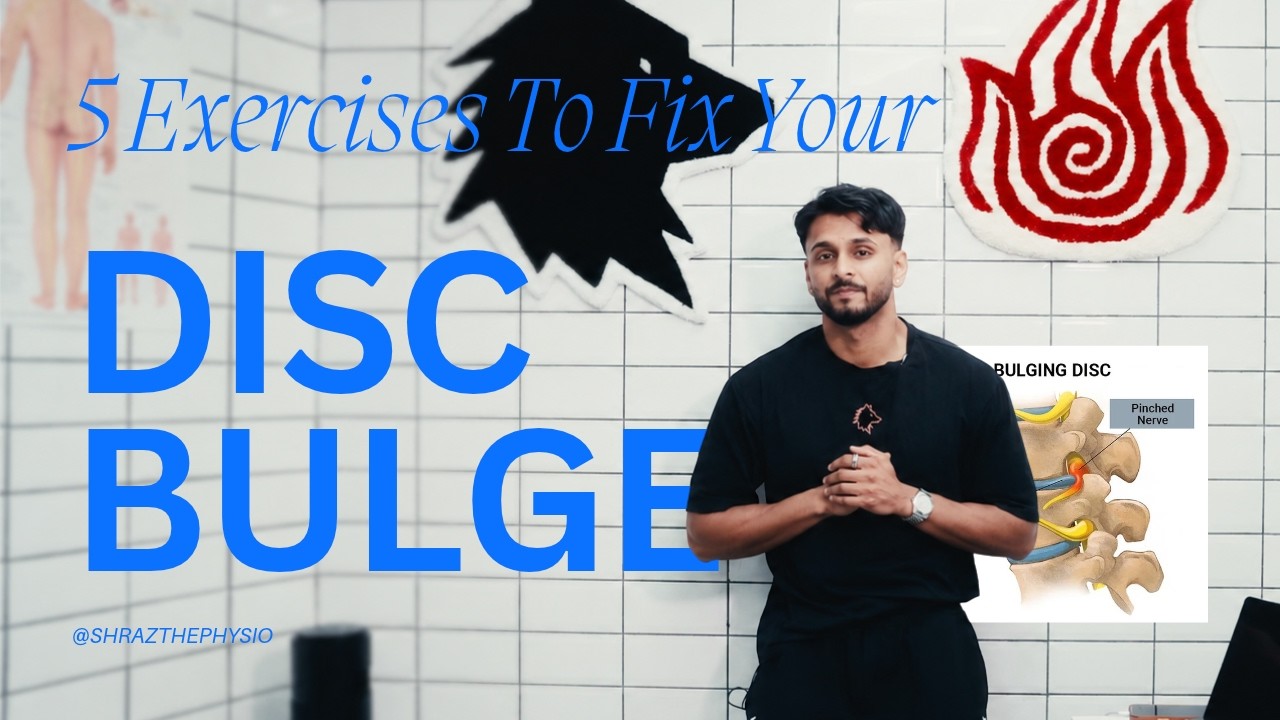
Wall Runner Exercise for a Disc Bulge: Get Upright Again
Video masterclass
5 Bulging Disc Lower Back Exercises for Pain Relief
Sitting or bending aggravates your disc bulge? A movement check, then five extension-preference exercises — plus why relief isn’t the whole comeback. Watch the full session below — then open the video page for notes, timestamps, and related guides.
Free program
The Back Pain Mastery Guide
The Low Back Mobility Mastery Guide, created by Evolve Physio & Mastery, is a step-by-step recovery program designed to help you navigate a low back flare-up with clarity and confidence.

You cannot live on the floor
Exercise 5 in 5 Bulging Disc Lower Back Exercises is the wall runner. Hands on the wall. March or run on the spot. Trunk quiet. Hips doing the work. Watch on YouTube.
The sequence was the point: ball, standing bends, cobra, dead bug — then upright. Relief from extension is a great start. I don’t want you spending the rest of your life only moving in positions that feel safe. Shoes. Kids. Gym. Trust. That’s the sentence in the middle of the video, and the wall runner is how we start practising it on your feet.
Want a structured plan, not just five exercises?
This video is a starting point for one type of back. The Back Pain Mastery Guide (free) is our step-by-step flare-up roadmap — what to do early, how to reintroduce movement, and when a symptom is a red flag. Pair it with a free Rehab Academy discovery call if you want the plan mapped to your scan and your week.
Coaching
- Wall at arm’s length. Lean just enough that the hands share some weight.
- Ribs stacked over pelvis. If you hinge and poke the bum back, you have made a standing fold — the thing we were avoiding.
- March first. Drive the knee without yanking the lower back. Then a light run if the march is clean.
- Quiet footfalls. Loud slapping usually means the trunk gave up.
Online Rehab Academy
Book a free discovery call
Want this protocol mapped to your injury, scan and timeline? Our Online Rehab Academy pairs video-guided rehab with remote coaching from our clinical team — the same standards as in-clinic care, from home.
If this still feels like too much
Go back a step: dead bug and standing back-bends. If folding forward is actually your easing direction, you are on the wrong page — read the flexion fork.
Get the free Back Pain Mastery Guide or book a discovery call
The Back Pain Mastery Guide is our free flare-up-to-function roadmap for the lower back and hips — early settling, graded movement, and a red-flag list. It is not a substitute for an assessment if your pain is spreading down the leg or getting worse.
Get The Back Pain Mastery Guide (free) →
Want this mapped to your scan, sport and the fear of bending? Book a free discovery call for our Online Rehab Academy →
The massage ball from the video: shop the massage ball. In Cabramatta / South West Sydney? Book an in-clinic physio assessment.
Frequently Asked Questions
What is a wall runner?
Hands on a wall, body in a gentle lean, marching or running on the spot while the trunk stays quiet. It is upright hip and trunk work — the opposite of living in cobra.
Why after the floor drills?
Extension work settles many of these backs. Then you still have to walk, climb stairs and pick kids up. The wall runner is the bridge out of the floor and into standing life.
How hard should it feel?
Breathing up, trunk not wiggling, back not folding. If you are sprinting on a hot disc, you skipped the first four exercises. Slow march first.
How many?
Two or three batches of 20–40 seconds. Stop if symptoms spread down the leg. This is a quality drill, not a conditioning test.
Can I skip to this because I hate the floor?
Only if your movement check already says extension is your friend and standing back-bends are honest. Skipping the settle phase is how people “try physio exercises” and flare.
Where is this in the video?
Exercise 5 from 6:18 — https://youtu.be/t3rd8G1MFd8.