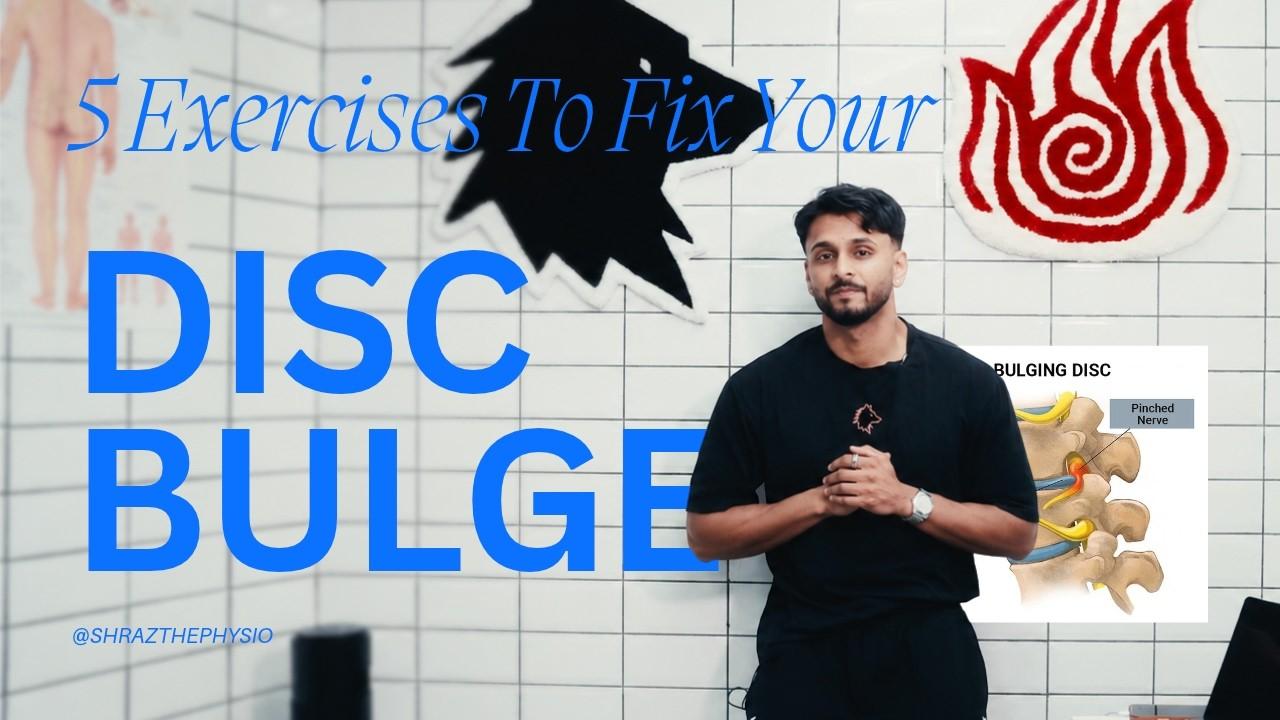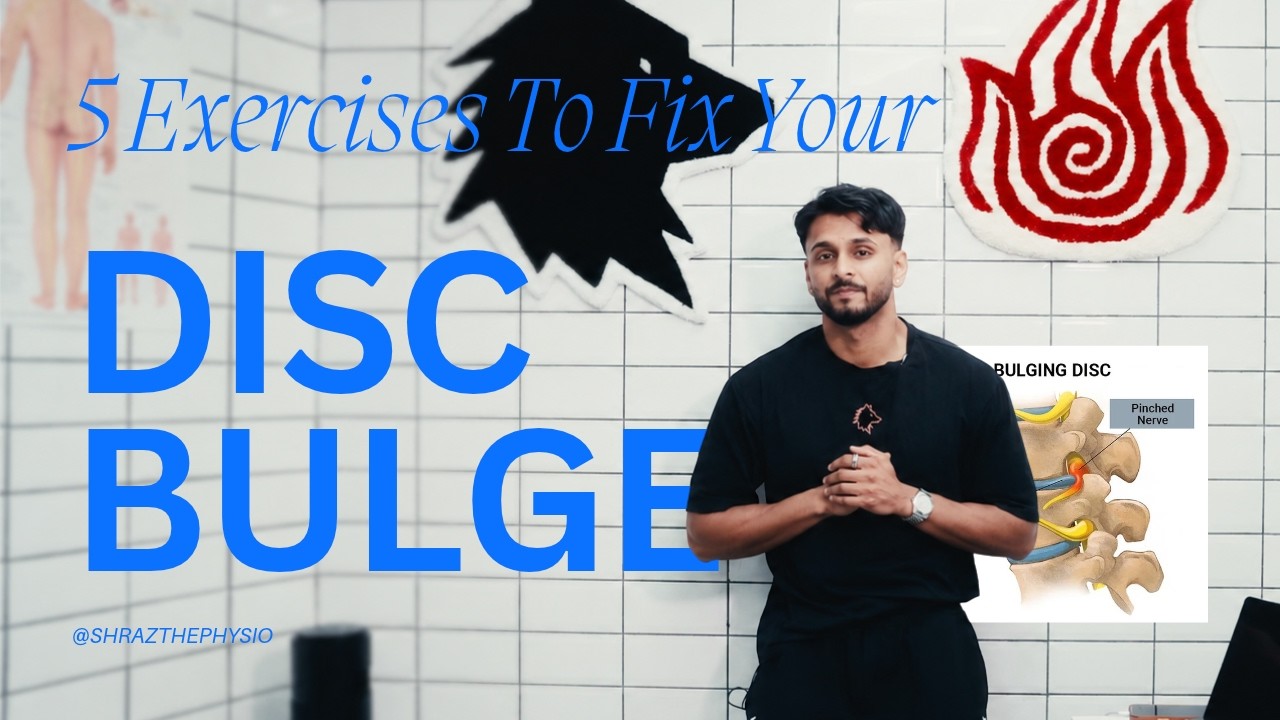
Disc Bulge Movement Check: Does Your Back Prefer Bending Backwards?
Video masterclass
5 Bulging Disc Lower Back Exercises for Pain Relief
Sitting or bending aggravates your disc bulge? A movement check, then five extension-preference exercises — plus why relief isn’t the whole comeback. Watch the full session below — then open the video page for notes, timestamps, and related guides.
Free program
The Back Pain Mastery Guide
The Low Back Mobility Mastery Guide, created by Evolve Physio & Mastery, is a step-by-step recovery program designed to help you navigate a low back flare-up with clarity and confidence.

Before you throw exercises at it
Been told you have a disc bulge? Does sitting, bending forward, putting your shoes on or picking something off the floor aggravate your back?
In 5 Bulging Disc Lower Back Exercises that is the first question — not “which stretch went viral.” Pay attention to how your back responds to movement. Watch on YouTube.
The five drills that follow are for one group: people whose back feels better moving backwards. We call that an extension directional preference. If that is not you, copying the list is how a flare gets louder.
Want a structured plan, not just five exercises?
This video is a starting point for one type of back. The Back Pain Mastery Guide (free) is our step-by-step flare-up roadmap — what to do early, how to reintroduce movement, and when a symptom is a red flag. Pair it with a free Rehab Academy discovery call if you want the plan mapped to your scan and your week.
How we actually check it
- Note where the symptoms are right now (back only vs down the buttock or leg) and how irritable they are.
- Try a small dose of extension — a few standing back-bends, or lying on your stomach if you can get there without a fight.
- Wait. Did the pain ease, stay, or travel further down the leg?
- Compare that to what sitting and folding forward usually do. If those are the aggravators and extension calms things, you have a direction to work with.
Centralisation — symptoms retreating toward the spine — is a greenish light. Peripheralisation — symptoms spreading further down the limb — is a stop. Do not “push through” that to finish a set.
Online Rehab Academy
Book a free discovery call
Want this protocol mapped to your injury, scan and timeline? Our Online Rehab Academy pairs video-guided rehab with remote coaching from our clinical team — the same standards as in-clinic care, from home.
This is not every disc
The video says it on the card: general education, not an individual assessment. These exercises will not suit every back or every bulge. Red flags still exist — unexplained weight loss, fever, saddle numbness, rapidly worsening weakness. Those are a doctor, not a cobra.
If you have had “a disc” for years, the bulge is often no longer the whole story. Read how long a disc bulge takes to heal before you marry the MRI label.
Next: the five, starting with the massage ball. Hub: all five plus the confidence piece. Flexion fork: what if bending forward feels better.
Get the free Back Pain Mastery Guide or book a discovery call
The Back Pain Mastery Guide is our free flare-up-to-function roadmap for the lower back and hips — early settling, graded movement, and a red-flag list. It is not a substitute for an assessment if your pain is spreading down the leg or getting worse.
Get The Back Pain Mastery Guide (free) →
Want this mapped to your scan, sport and the fear of bending? Book a free discovery call for our Online Rehab Academy →
The massage ball from the video: shop the massage ball. In Cabramatta / South West Sydney? Book an in-clinic physio assessment.
Frequently Asked Questions
What is an extension directional preference?
Your symptoms ease, centralise (move up the leg toward the back) or feel more “right” when you move into extension — standing taller, bending backwards — and they often worsen when you sit or fold forward. It is a response pattern, not a personality type.
Should everyone with a disc bulge do extension exercises?
No. The video is explicit: these five drills are for people whose back feels better moving backwards. If bending forward is what calms you, this list is the wrong medicine. That fork is the last chapter of the video.
How do I test it without making things worse?
A few slow standing back-bends or a short prone lie, then wait. Better, worse, or no change? Symptoms spreading further down the leg is a stop. Worsening pain is a stop. This is a screen, not a workout.
My MRI says disc bulge. Isn’t that enough to pick exercises?
The scan names a structure. It does not tell you which direction your nervous system currently likes. Two people with the same report can need opposite starting drills. That’s why we check movement first.
What if nothing changes either way?
Then you don’t guess a YouTube list. You get assessed. Directional preference is useful when it is obvious. When it isn’t, forcing cobras is how people flare.
Where is this in the video?
Opening — 0:00 to 1:33 of /video-library/v/5-bulging-disc-lower-back-exercises or https://youtu.be/t3rd8G1MFd8.