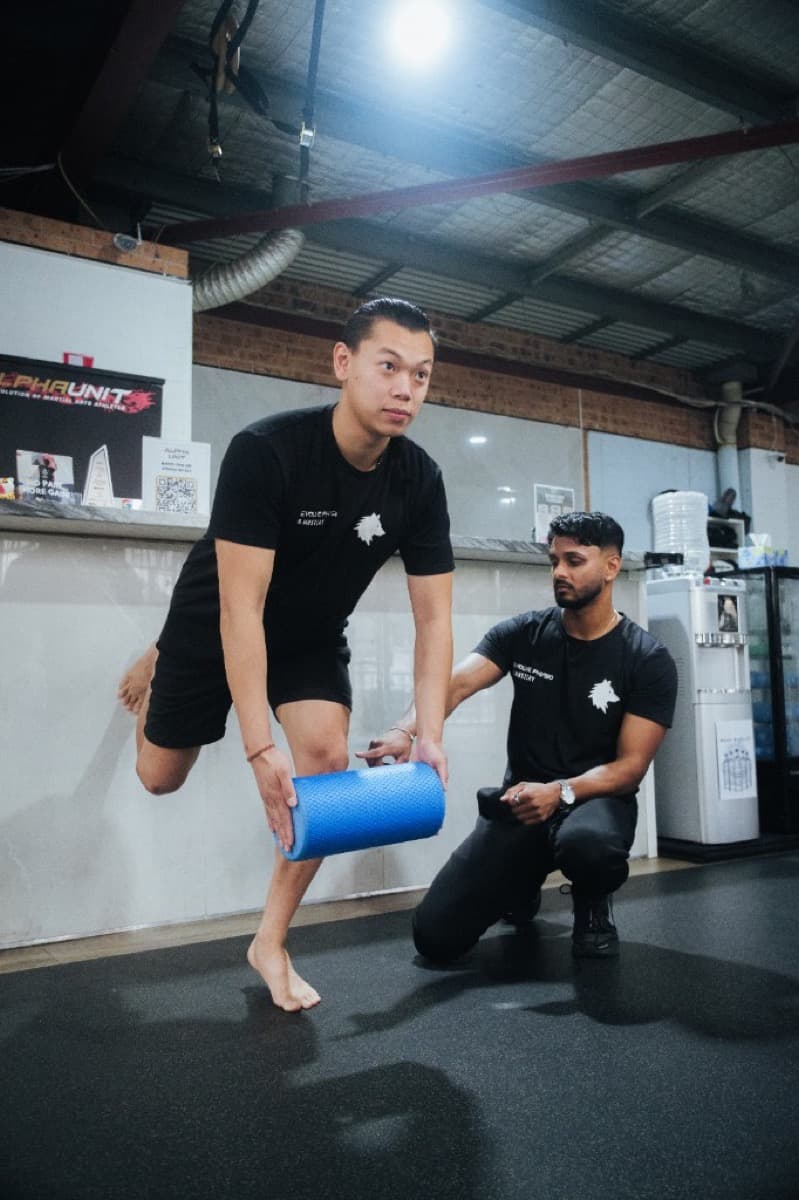
Return to Sprinting Program: Jog, Strides, Acceleration, Max Velocity
Video masterclass
How to Go from Injured to Performing at Your Best | Full 6-Step Guide
The exact 6-step framework we use with athletes to bridge the gap between rehab and peak performance — for any chronic injury or post-op pain. Watch the full session below — then open the video page for notes, timestamps, and related guides.
Mastery program
The ACL Comeback Program
Your ACL injury isn't fresh. You've done the early rehab. You can walk, take the stairs, maybe even jog. The knee still isn't the one you had.
Sprint return is a progression, not a date
A return to sprinting program is how you put top speed back in after the tissue can tolerate running. It is not the first week of rehab. Jogging, strides, acceleration, and max velocity are different loads. Skipping to the last one because a game is on Saturday is how hamstrings, calves, and ankles fail the second time.
If you are coming back to easy running rather than speed, start with the return to running framework. This page is the speed progression that sits on top of that base.
Want a structured program, not just an article?
This guide gives you the framework. The ACL Comeback Program ($50) is our 28-day lower-limb strength block for the “almost better” phase — when you can walk and do daily life but need progressive loading before you trust running again. Pair it with the free Knee Pain Mastery Guide for day-to-day exercises.
Start with the injury, not the sprint
This program assumes you can already walk without a limp and your clinician has cleared impact. Which article you needed before today:
- Hamstring — do not start here. The hamstring return-to-sprint framework has the strength and length gates. Use this page once those gates are passed and you are building actual speed.
- Calf or tennis leg — repeated single-leg calf raises, pain-free, before any stride. See the calf strain guide and the return to running after a calf strain.
- Ankle sprain — hop and change of direction come from the ankle sprain return-to-sport protocol. Sprinting on an ankle that still rolls is a second sprain.
Online Rehab Academy
Book a free discovery call
Want this protocol mapped to your injury, scan and timeline? Our Online Rehab Academy pairs video-guided rehab with remote coaching from our clinical team — the same standards as in-clinic care, from home.
The four phases
One speed session at a time. Walk back or stand fully recovered between efforts. Flat surface. If the next morning is worse, you repeat the phase.
Phase 1: Easy jog, no sprinting
- 10–20 minutes of conversational jogging, every second day
- No strides, no hills, no “just a few fast ones” at the end
- Pass when you can jog without a limp the same day and the next morning
Phase 2: Strides
- 4–6 strides of 60–80 metres at about 60–70% effort, inside or after an easy jog
- Full walk-back recovery. Smooth, not a race
- Pass when strides do not change your jog the next day
Phase 3: Acceleration
- Build speed over 20–30 metres, finishing around 80–90%, then ease off. 4–6 efforts
- This is not a flying sprint. You start from a walk or a slow roll
- Pass when acceleration is symmetrical and the injured tissue is quiet the next morning
Phase 4: Short max velocity
- A rolling start into 10–20 metres at high speed. Start with 3 efforts, not 10
- One session. A second session in the week only after the first one is boring
- Sport-speed cutting and contact come after straight-line max velocity is clean, and only if the injury plan allows them
Rules that keep the program honest
- Next morning decides the next session. Pain, a shorter stride, or a limp means you stay put.
- Volume before intensity, then intensity in small pieces. More fast runs in one day is not a progression.
- Strength stays in the week. A calf, hamstring, or ankle that only gets sprinting and no strength work will fail the same way it failed the first time.
- Fatigue is a risk factor. Do not put the first max-velocity session at the end of a long training day.
Related reading
Return to running after injury · Hamstring return-to-sprint framework · Calf strain return to running · Ankle sprain return to sport
Buy The ACL Comeback Program or book a free discovery call
The ACL Comeback Program is our paid 28-day lower-limb strength and confidence block ($50). We use it for ACL and meniscus rehabs — and for athletes stuck in the “almost better” phase after knee sprain, giving-way, or a long layoff from running and court sport. It is built for the whole lower limb, not only post-op ACL.
Purchase The ACL Comeback Program →
Want a plan mapped to your scan, sport and timeline without coming in first? Book a free discovery call for our Online Rehab Academy →
Free progressive home loading: Knee Pain Mastery Guide. In Cabramatta / South West Sydney? Book an in-clinic physio assessment.
Frequently Asked Questions
What is a return to sprinting program?
Four phases: easy jogging with no fast work, strides at about 60–70%, accelerations that build speed over 20–30 metres, then short max-velocity efforts. You only move up when the next morning is as good as the morning before.
When can I start sprinting after a hamstring strain?
Not at phase 1 of this program. A hamstring has its own strength and length criteria first. Use the hamstring return-to-sprint framework, then bring the later phases of this program in once max-velocity work is actually allowed.
How often should I sprint in the first weeks back?
One speed session, with a full day between it and the next. A second session is earned, not scheduled. Consecutive max-velocity days are how fresh calves and hamstrings get re-injured.
Can I use this after a calf strain or ankle sprain?
Yes, once you can jog without a limp and the injury-specific plan says impact is allowed. A calf that cannot do repeated single-leg raises, or an ankle that still gives way on a hop, is not a sprinting ankle yet.
What if I feel something the next day?
Stay on that phase. Next-morning pain, tightness that changes your stride, or a limp means the tissue did not absorb the session. Repeating a phase is the program working.