Return to the Gym After Injury: A Safe 8-Week Strength Progression
Video masterclass
How to Go from Injured to Performing at Your Best | Full 6-Step Guide
The exact 6-step framework we use with athletes to bridge the gap between rehab and peak performance — for any chronic injury or post-op pain. Watch the full session below — then open the video page for notes, timestamps, and related guides.
Free program
The Back Pain Mastery Guide
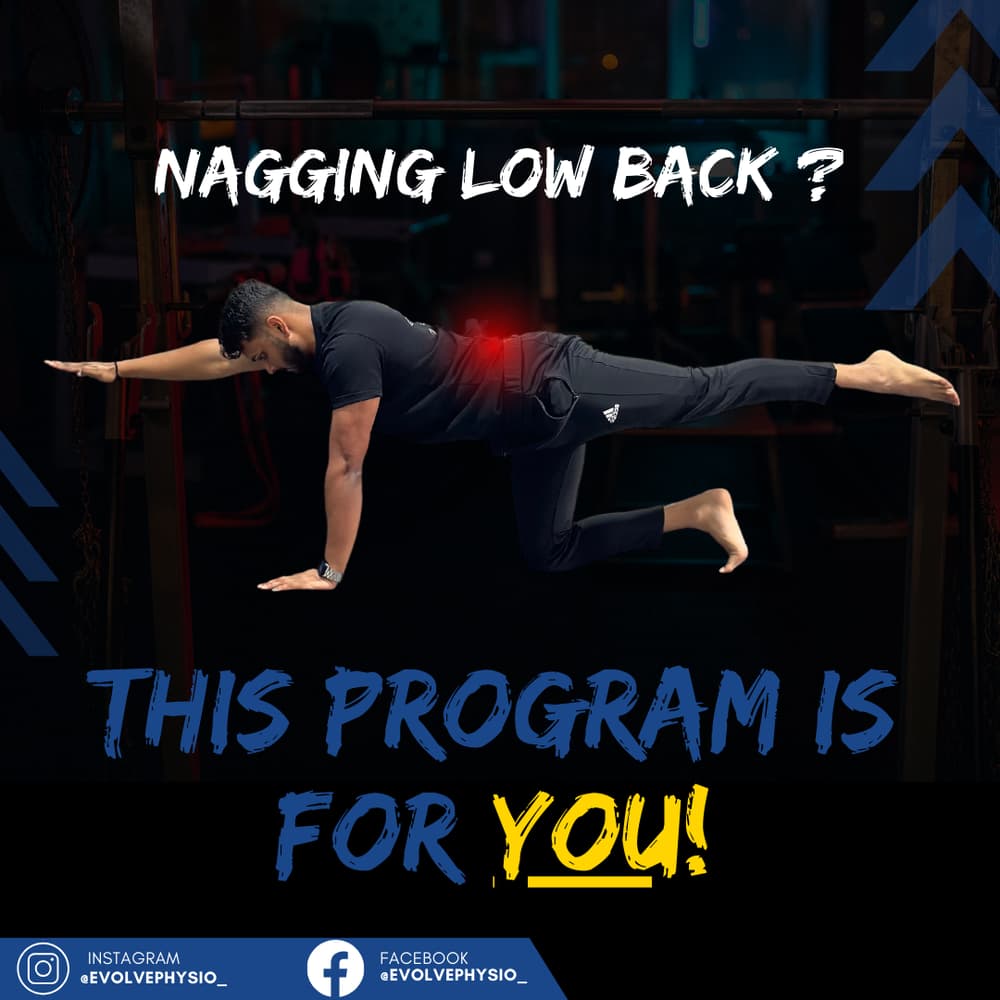
The Low Back Mobility Mastery Guide, created by Evolve Physio & Mastery, is a step-by-step recovery program designed to help you navigate a low back flare-up with clarity and confidence.
The gym gap
You finished physio, pain is manageable, and you're cleared to 'return to activity.' But the gym floor feels different — you're guarding, unsure whether that squat is safe, and tempted to test your old 1RM. That gap between cleared and confident is where re-injury lives. This 8-week framework is what we use at Evolve Physio for patients returning to strength training after knee, back, shoulder, and hip injuries.
The 8-week progression
Weeks 1–2: Pattern restoration
- Bodyweight squats to box, hip hinges with dowel, scapular wall slides
- Machines for isolated strength (leg press, chest press, row) — 3 × 12–15
- No maximal lifts; RPE 5–6 maximum
- Daily mobility for the injured region (10 min)
Weeks 3–4: Tempo loading
- Goblet squat and Romanian deadlift with light load: tempo 3-1-3, 3 × 8
- Introduce unilateral work: split squats, single-arm row, single-leg RDL
- Push-ups or bench press at moderate load
Weeks 5–6: Compound reintroduction
- Barbell back or front squat to parallel: 3 × 6–8, RPE 7
- Conventional or trap-bar deadlift: 3 × 6–8
- Overhead press (if shoulder cleared): 3 × 8
Weeks 7–8: Progressive overload
- Increase load 2.5–5 kg per week if form and symptoms stable
- Introduce one top set at RPE 8
- Sport-specific power if required (cleans, jumps — only with clearance)
Region-specific notes
- Knee: Box squat → full squat; monitor patellofemoral and tendon response. See knee pain guide.
- Back: Hinge before squat; neutral spine non-negotiable. Back Pain Mastery Guide for flare management.
- Shoulder: Horizontal push/pull before overhead. Shoulder Mastery Guide.
- Post-ACL: ACL Comeback Program runs parallel to gym return.
Watch the full rehab-to-performance bridge
Our Injured to Performing video walks through the 6-step process we use to take athletes from pain management back to full gym and sport performance — the same philosophy behind this 8-week plan.
Book a return-to-gym assessment
We offer Strength & Conditioning physio at Evolve — assessment, technique correction, and a gym program matched to your injury history. Book online, Cabramatta. Liverpool, Fairfield, Bankstown, Southwest Sydney.
References: Kristensen & Franklyn-Miller 2012 load and tissue capacity; Hughes et al. 2020 return to sport frameworks; ACSM progression models for resistance training.
Frequently Asked Questions
When can I squat again after a knee injury?
Once you have full pain-free range, single-leg squat control without valgus collapse, and at least 80% limb symmetry on hop tests for sports-related knee injuries. Start with box squats to parallel, then progress depth and load weekly.
Can I deadlift with lower back pain?
Often yes — with modification. Hip hinge pattern without pain, good lumbar control, and gradual load progression. If flexion-intolerant back pain is acute, settle symptoms first using our Back Pain Mastery Guide before loading axially.
How do I know if I'm lifting too heavy too soon?
Pain during the session that exceeds 3/10, next-day symptom spikes, loss of form (lumbar rounding, knee valgus), or confidence drops — all signal to hold or regress a phase.
Should I use a belt when returning?
Not initially. Build intrinsic core control first. A belt can be reintroduced at higher loads once movement quality is restored — not as a crutch for poor control.
Do I need a physio or can my PT coach handle it?
Ideally both communicate. Physio clears tissue readiness and pain boundaries; coach programmes progressive overload. We work with gym coaches across Southwest Sydney regularly.