Knee Pain in Cabramatta: When to See a Physio (and How We Help)
Why knee pain is so common
The knee is the largest joint in the body and it spends every day balancing two competing demands: stability and mobility. Add bodyweight, repetitive loading from walking, stairs, and squatting, plus the occasional misstep on a Cabramatta footpath, and it's not surprising it complains. Knee pain is one of the most common reasons people in South-West Sydney walk into Evolve Physio & Mastery — and the great news is that the vast majority of cases respond very well to focused physiotherapy.
According to the Australian Institute of Health and Welfare (AIHW), musculoskeletal conditions — including knee osteoarthritis — affect roughly 1 in 3 Australians and are the leading contributor to years lived with disability nationally. The Royal Australian College of General Practitioners (RACGP) and Australian Physiotherapy Association (APA) both recommend exercise-based physiotherapy as a first-line treatment for most non-traumatic knee pain.
Common causes of knee pain we see in clinic
Knee pain isn't a diagnosis — it's a symptom. Pinpointing what's actually going on is the first job of any decent physio assessment. The conditions we treat most often at Evolve Physio in Cabramatta include:
- Patellofemoral pain (runner's knee) — a dull ache around or behind the kneecap that flares with stairs, squats, or sitting too long. Very common in runners, hikers, and anyone who has recently ramped up activity.
- Knee osteoarthritis — gradual wear of the joint cartilage, typically in adults over 45. Stiffness in the morning, soreness after activity, and swelling are common.
- Meniscal injuries — the meniscus acts like a shock absorber inside the knee. Twisting injuries (think tennis or basketball) can tear it; degenerative tears appear with age.
- Ligament injuries (ACL, MCL, LCL) — usually traumatic, often sport-related. ACL ruptures, in particular, can occur with a planted foot and a sudden change of direction.
- Patellar tendinopathy (jumper's knee) — pain just below the kneecap, common in volleyball, basketball, and high-jumping sports.
- IT band syndrome — sharp pain on the outside of the knee, particularly in distance runners and cyclists.
- Post-surgical rehab — knee replacements, ACL reconstructions, and arthroscopies all require a structured rehab program to regain full function.
Signs you should book a physio appointment
Some knee niggles will settle on their own with a few days of relative rest. But there are clear signals that it's time for a professional assessment — and getting in early generally means a faster, more complete recovery.
- Pain that lasts more than two weeks without improving
- Swelling around the joint, especially if it appeared within hours of an injury
- The knee giving way, locking, or catching
- Difficulty fully straightening or bending the knee
- Pain on stairs (going up or down) that's worsening week to week
- Pain that wakes you at night or interferes with sleep
- Any knee injury sustained while playing sport — even if you can walk it off
If your knee gave way at the time of injury and swelled rapidly, it warrants prompt assessment for ligament or meniscal damage. The earlier this is identified, the better the long-term outcome.
How physio for knee pain actually works
Your first appointment at Evolve Physio is an honest conversation followed by a thorough physical assessment. We'll ask how the pain started, what makes it better or worse, your goals (whether that's playing soccer with the kids in Cabramatta Park or running a half marathon), and how it's affecting your work and daily life. From there we'll examine your knee's range of motion, strength, balance, and movement patterns to identify the driver of your pain.
Your treatment plan is built around what we find. Most plans combine some mix of:
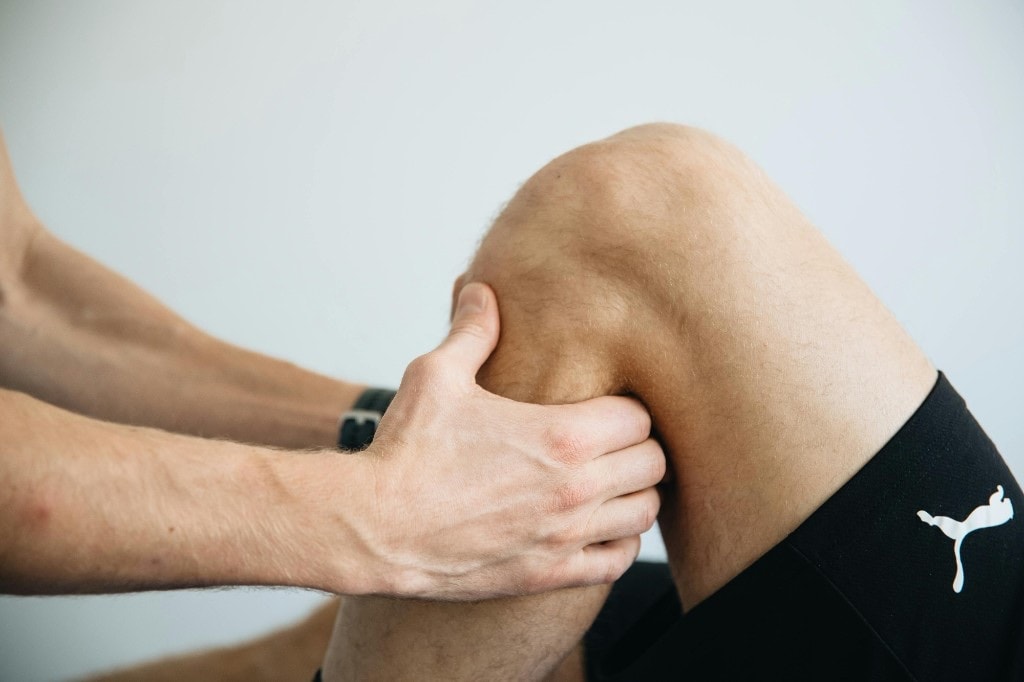
- Hands-on therapy — joint mobilisation, soft-tissue release, and trigger-point work to settle pain and restore mobility
- Targeted exercise rehabilitation — the cornerstone of recovery. We progressively load the muscles around the knee (quads, glutes, calves, hamstrings) so the joint is properly supported
- Dry needling — for stubborn muscle tightness in the quads, glutes, or calf when indicated
- Movement retraining — fixing the running, squatting, or landing pattern that's overloading the knee
- Education and self-management — so you understand what's happening, what to do at home, and how to prevent it coming back
For osteoarthritis specifically, supervised neuromuscular exercise programs (modelled on the international GLA:D framework) have strong evidence — many participants report meaningful pain reductions and several go on to defer or avoid joint replacement surgery. We bring those same principles into our Cabramatta clinic.
What recovery looks like
Realistic timelines depend on the diagnosis. As a rough guide:
- Patellofemoral pain — meaningful improvement in 4–6 weeks of consistent rehab
- Patellar/quadriceps tendinopathy — typically 8–12 weeks of progressive loading
- Meniscal irritation (non-surgical) — most people are back to normal activity within 6–10 weeks
- Knee osteoarthritis — exercise programs usually deliver clear improvements in pain and function within 8–12 weeks; benefits are best maintained with ongoing activity
- Post-ACL reconstruction — 9–12 months for return to sport, with criterion-based milestones along the way
Between sessions, the work you do at home matters as much as what we do in clinic. We'll give you a clear program — usually no more than a handful of exercises — and show you how to fit it into a busy life. Walking, swimming, and stationary cycling are all knee-friendly options to keep general fitness up while you rehab.
Funding pathways and what we work with
We see clients across private health, WorkCover, NDIS, DVA, and Medicare EPC/CDM plans. If you're not sure what you're covered for, just mention it when you book and we'll help you sort it before your first appointment.
Get your knee back on track
If you live in Cabramatta, Liverpool, Canley Heights, Fairfield, or anywhere in South-West Sydney and your knee has been holding you back, it's worth getting it assessed. Most people are surprised how much progress they can make in just a few weeks of focused physio — and how much better their knee feels once they actually understand what's going on.
Online programs: free knee guide + paid ACL bridge
Our free Knee Pain Mastery Guide runs through progressive strength in plain language, so you can keep momentum between sessions. The paid ACL Comeback Program is a focused 28-day block for people stuck in the "almost better" phase after knee injury or surgery.
Book a knee pain assessment at Evolve Physio & Mastery in Cabramatta and let's get you moving freely again. Browse all Mastery programs.
Frequently Asked Questions
Do I need a referral to see a physio for knee pain in Cabramatta?
No. Physiotherapists are first-contact practitioners in Australia, so you can book directly without seeing a GP. You only need a referral for specific funding pathways like an EPC/CDM plan, NDIS, or a WorkCover claim.
How many physio sessions will I need for my knee?
It depends on the diagnosis. Mild patellofemoral pain often settles in 4–6 sessions across 6–8 weeks. ACL or post-surgical rehab is a longer journey — typically 6–9 months — but the outcomes are excellent when the program is followed.
Should I rest or keep moving with knee pain?
Generally, keep moving — but smartly. Total rest deconditions the muscles that protect your knee and usually makes things worse. Your physio will help you load the joint at a level it can tolerate while it heals.
Do I need an MRI before starting physio?
Most knee problems don't need imaging. Australian guidelines recommend physio first for non-traumatic knee pain. Imaging is reserved for cases with red-flag symptoms — significant trauma, locking, or signs of structural damage.
Can physio help knee osteoarthritis or do I need a replacement?
Strong evidence shows that supervised exercise therapy (the GLA:D program internationally, and similar protocols here in Australia) reduces pain and improves function in knee osteoarthritis — often delaying or avoiding surgery entirely.