Pregnancy and Postnatal Back Pain: A Physio's Practical Guide Through Pregnancy and the First Year After Birth
The neglected musculoskeletal phase
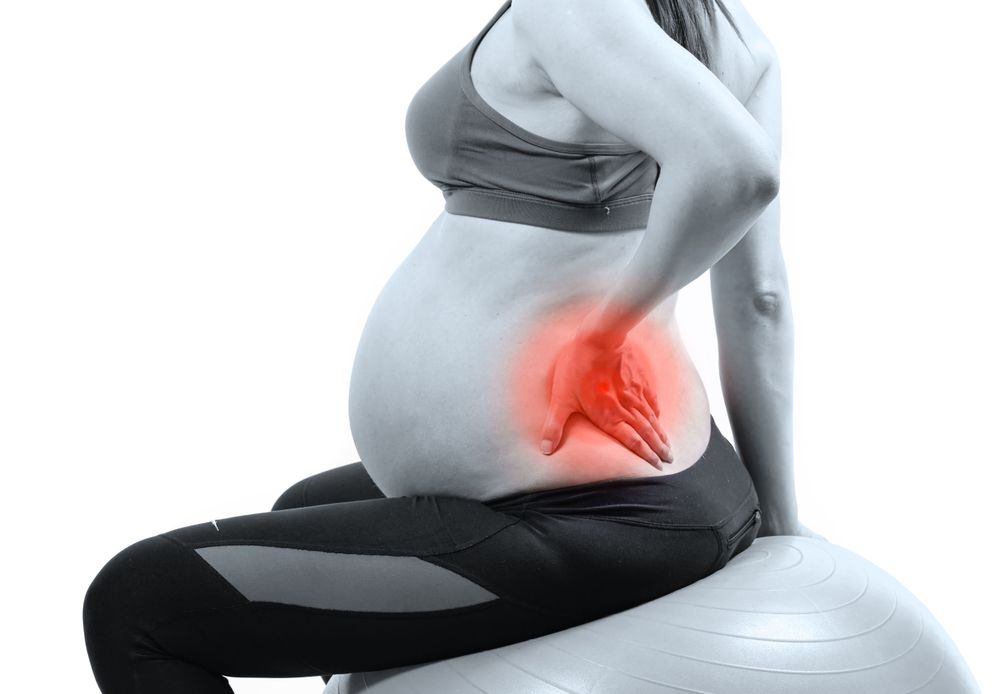
If you ask new mums in Cabramatta, Liverpool or anywhere else what the hardest physical thing about the first year is, you'll get answers about sleep, breastfeeding, and not having two hands to do anything. What rarely makes the list — but probably should — is the physical toll on the back, pelvis and abdomen, both during pregnancy and after. Up to 75% of pregnant women experience low back or pelvic girdle pain. About half of those continue to have symptoms postnatally. Most of it is well managed by physio, and most of it doesn't need to be tolerated as 'just part of having a baby.'
The two main pain patterns in pregnancy
1. Low back pain (LBP)
Pain centred in the lumbar spine, often worse with prolonged standing, sitting or carrying a toddler alongside pregnancy. Mechanism is a combination of postural change (centre of mass shifts forward), increased lumbar lordosis, and the abdominal wall stretching reducing its contribution to spinal stability.
2. Pelvic girdle pain (PGP)
Pain around the sacroiliac joints (back of pelvis, on one or both sides), pubic symphysis (front of pelvis), or both. Worse with single-leg loading — walking, getting in and out of bed or car, climbing stairs, rolling over in bed. Affects about 20% of pregnancies. Driven by hormonal changes (relaxin, oestrogen) increasing pelvic joint laxity, combined with increased mechanical load.
The two often coexist. Distinguishing them matters because the management differs slightly — PGP particularly responds to load management around single-leg activities and gluteal/pelvic floor strength.
Pregnancy management
- Pelvic floor strengthening — early and often. Reduces incidence of postnatal incontinence and supports the pelvis.
- Gluteal strengthening — bridges, side-lying clams, sit-to-stands. Glutes share load with the pelvis and reduce PGP.
- Activity modification — avoiding single-leg loading where it provokes pain (sit to put on pants/shoes, rather than standing on one leg).
- Sleep position — side-lying with a pillow between the knees from second trimester onwards.
- Aerobic exercise — moderate-intensity (you can hold a conversation), 150 minutes per week, throughout pregnancy in uncomplicated cases.
- Strength training — continued from pre-pregnancy in most cases, with intensity reductions in later trimesters. Lifting weights during pregnancy is safe and beneficial.
- Pregnancy support belt for women with significant PGP — symptom relief, not a cure.
What to avoid in later pregnancy: prone-lying exercises (after ~16 weeks), supine lying for prolonged periods (after ~20 weeks — can compress the vena cava), heavy Valsalva-style maximal lifts, and exercises that provoke significant pain.
The postnatal phase — first 6 weeks
The first 6 weeks postpartum is recovery time. The pelvic floor and abdominal wall have undergone significant change. Most women benefit from:
- Gentle walking — starting at whatever distance is comfortable, gradually increasing.
- Gentle pelvic floor activation — re-establishing the connection (it often feels distant after birth).
- Diaphragmatic breathing — supports the pelvic floor and the abdominal wall.
- Basic posture awareness during feeding (back support, baby brought up to breast rather than hunching down to baby).
- Sleep when possible (we know — this isn't optional advice as much as a wish).
What to avoid in the first 6 weeks: high-impact exercise (running, jumping), heavy lifting beyond the baby and basic tasks, sit-ups and crunches, prolonged sitting on hard surfaces (post-vaginal-birth pelvic floor recovery).
The 6-week postnatal check — and what to ask
The GP postnatal check is brief and often focused on the baby. Specifically ask about:
- Pelvic floor function — any incontinence (urinary, gas, faecal)? Any pelvic organ prolapse symptoms (heaviness, bulging)?
- Diastasis recti — degree of separation, status of the linea alba.
- Back and pelvic pain status.
- Caesarean wound healing if relevant.
- Clearance for graduated return to exercise.
A women's health physio assessment around 6–10 weeks postpartum is highly valuable, even when 'everything feels OK'. Subtle issues caught early are much easier to address than ones that have been present for two years.
Returning to exercise postnatally
The return-to-running framework that's gained traction in the last few years (Goom, Donnelly & Brockwell 2019) suggests a gradual return over 12+ weeks:
- Weeks 0–6: walking, gentle pelvic floor and core re-engagement.
- Weeks 6–12: progressive walking, low-impact strength work, advanced core and pelvic floor work, single-leg loading.
- Weeks 12+: if you've passed strength and load tests (single-leg calf raises, single-leg squats, hopping, jogging on spot with no pelvic floor symptoms), graded return to running.
Returning too early — or too quickly — is associated with prolonged pelvic floor symptoms, persistent diastasis, and back pain. We assess readiness on function, not just on the calendar.
Lifting the baby (and the toddler)
One of the unexpected loads of early parenthood is the constant lifting — out of cot, into car seat, on and off change table, into bath. Toddler lifting adds another load. Practical advice:
- Bring the baby close to your centre before lifting; don't lift at arm's length.
- Hinge at the hips, not the back.
- Brace the abdomen gently before lifting.
- Change table at hip height — not bending over a low surface.
- Car seats — kneel beside the car if possible rather than leaning across.
- Vary which side you carry on — don't always hike the baby on the same hip.
Diastasis recti — the abdominal separation question
Some degree of separation of the linea alba is normal in pregnancy and most resolves within 12 months. The function of the abdominal wall matters more than the gap measurement. Active management includes:
- Diaphragmatic breathing with gentle abdominal connection.
- Progressive abdominal strengthening starting with low-pressure exercises (dead bugs, modified planks with appropriate tension management).
- Avoiding exercises that produce a 'doming' of the abdominal wall early in recovery.
- Graduated progression as function improves.
- Surgical referral only for cases with significant persistent functional impact at 12+ months.
When to be concerned
Most pregnancy and postnatal back pain is mechanical and responds to physio. Get prompt medical assessment for:
- Severe, sudden back pain.
- Pain with neurological symptoms (significant leg weakness, numbness, bladder or bowel changes).
- Severe headache.
- Severe abdominal pain.
- Significant vaginal bleeding.
- Reduced fetal movements (in pregnancy).
Cultural and community context
In many of the Southwest Sydney communities — Vietnamese, Lebanese, Iraqi, Indian, Chinese — there are strong cultural traditions around the postnatal period (a confinement period of variable length, specific foods, family support patterns). Physio fits alongside these. We're respectful of cultural practices, communicate in plain language, and work with the family unit as needed.
Related reading
For general lower back pain content, see our lower back pain physio guide. For wrist pain after birth (mummy wrist / de Quervain's), see mummy wrist. For broader pelvic floor and women's health content — coming soon.
Book a pregnancy or postnatal physio assessment
Whether you're in your second trimester wanting to stay strong, six weeks postpartum and ready for a check-in, or six months in and still dealing with pain — we'd love to help. Book at Evolve Physio & Mastery, Cabramatta. We see pregnant and postnatal women from across Liverpool, Fairfield, Canley Heights, Bankstown and Southwest Sydney.
References: Vleeming et al. 2008 European guidelines for pelvic girdle pain (Eur Spine J); Goom, Donnelly & Brockwell 2019 'Returning to running postnatal — guidelines for medical, health and fitness professionals managing this population'; Mota et al. 2015 prevalence of diastasis recti abdominis pregnancy and postpartum (J Orthop Sports Phys Ther).
Frequently Asked Questions
When can I start physio after birth?
For most uncomplicated births you can start gentle physio assessment from around 2–6 weeks postpartum. Caesarean recovery takes a bit longer for the abdominal work but you can start gentle pelvic floor and posture work sooner. Always check with your GP or obstetrician if there are any concerns.
Is it safe to exercise during pregnancy?
For uncomplicated pregnancies, yes — and it's actively encouraged. Current evidence supports moderate aerobic exercise, strength training, and pelvic floor work throughout pregnancy. We modify intensity and avoid specific positions in later pregnancy, but the days of 'rest because you're pregnant' are gone.
What is pelvic girdle pain (PGP)?
Pain around the front of the pubic symphysis, the sacroiliac joints, or both — affecting around 1 in 5 pregnancies. It's caused by hormonal changes increasing joint laxity combined with mechanical load. Physio is the first-line treatment and works well in most cases, particularly when started early.
Will my back fix itself after birth?
Some of it, with time. The hormonal changes reverse over months. But postnatal back pain that persists beyond 12 weeks is unlikely to fully self-resolve without active management — caring for a baby loads the back differently and the deconditioning of pregnancy doesn't reverse on its own.
Do I need a pregnancy support belt?
For some women with significant pelvic girdle pain, a support belt offers symptom relief and allows more movement. It's an adjunct, not a cure. Pelvic floor and gluteal strengthening do the longer-term work.
What about diastasis recti (abdominal separation)?
Common after pregnancy — most women have some degree of separation that gradually closes over 6–12 months. Progressive abdominal strengthening (avoiding the highest-load exercises early) supports recovery. We assess the separation and progression individually.