Hip Bursitis and Gluteal Tendinopathy: the Side-Of-Hip Pain We See Every Week in Cabramatta
It’s not always 'bursa' in the old sense
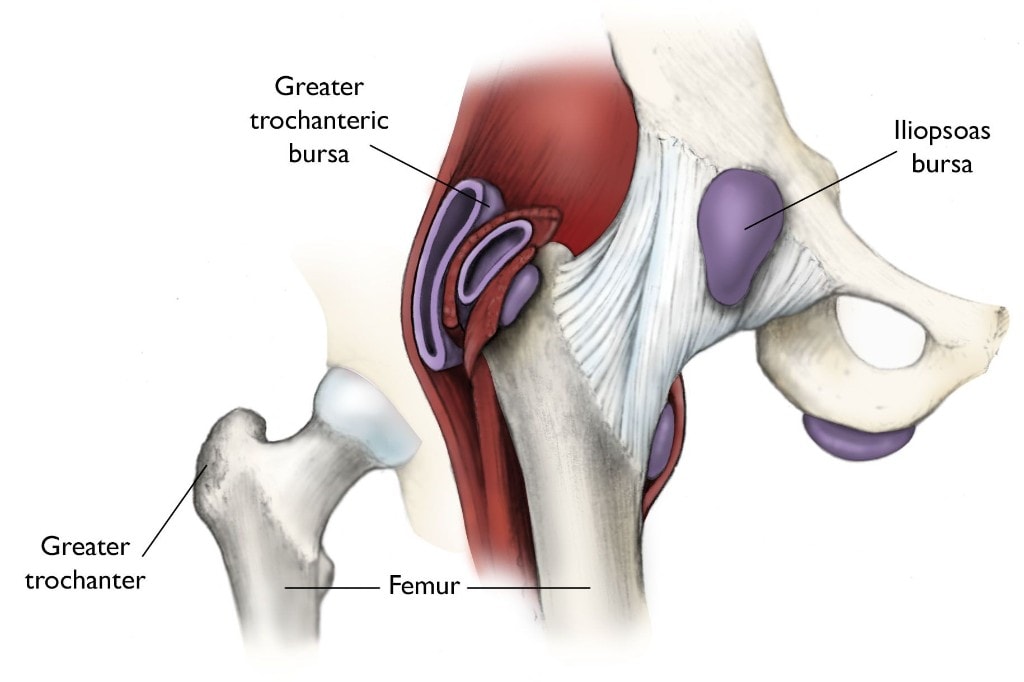
Greater trochanteric pain syndrome is the umbrella. Underneath you often have glute medius / minimus tendinopathy (plus or minus a grumpy bursa), and sometimes a contribution from referred lumbar pain or hip osteoarthritis, which we tease out in the assessment. Most people tell us: night pain on the side, a sharp spot over the bony point, and stairs, hills, or long walks in the worse column. That’s a common week for us in Cabramatta, Fairfield, and the Liverpool LGA.
What the rehab line looks like
We calm irritability, remove the worst adductor-stretching and aggressive ITB poking, then reintroduce hip abduction and external rotation loading in positions that the tendon can tolerate, followed by single-leg, squat and eventually hop progressions. Running and return-to-sport when you're an athlete is staged like our return to running work — the hip and knee are one chain, not two chapters.
Why the knee program cluster still fits
Gluteal and lateral hip control is the same 'anti–knee valgus, anti-ITB overload' work that protects the knee in sport, stairs, and return to running. You may not have knee pain, but the movement recipe overlaps. If you also want a structured, progressive home or gym line while we sort the hip, our free Knee Pain Mastery Guide and the paid ACL Comeback Program (for deeper return-to-run and return-to-court work after injury) are designed around exactly that hip–knee strength and power stack — the same glutes and calves that make the knee happy make the outer hip loadable again. View all Mastery programs.
Cluster links
Runners: ITB syndrome. More groin/football: adductor / groin. Knee: knee pain guide.
Book a lateral-hip physio session
We’re not in the 'just get a jab' camp without a long-term plan. Book at Evolve Physio & Mastery, Cabramatta — if you are sick of flaring the same point every time you do hills, we’ll get you a diagnosis-driven road map, not a guess.
Frequently Asked Questions
Is it the joint or the soft tissue on the side?
The classic 'on the bony point' night pain, pain with lying, and no deep groin joint line pain points toward trochanteric (soft-tissue) pain more than the hip joint itself, though we always screen the joint, spine and, in older adults, a fracture risk in the case of a fall.
Why does stretching the ITB not fix it forever?
The old ITB stretch story is incomplete. Most modern presentations respond to hip abductor and external rotator loading, tendon-specific exercise, and load management, not a foam roller on repeat.
Do I need an injection in the bursa?
Some people get a short window from a guided injection, especially if highly irritable, but the evidence base leans on exercise as the long-term fix — injections without load management often return to square one.
Is running or stairs bad now?
Temporarily you may need to reduce the worst aggravators while we find the entry load for the tendon; then we rebuild capacity with graded strength and, later, a return to impact.
How is this different from a labral or groin problem?
Deep groin and hip joint pain, labral and pubic-symphysis problems, and adductor strains follow different rules than lateral-hip bursa pain. If your pain is in the groin, read our adductor / football article; a physio can separate hip joint from trochanteric load on exam.