Shoulder Labral Tears (SLAP, Bankart): When Surgery Matters and When It Doesn't
The labrum — and why it matters
The labrum is a ring of thick fibrocartilage that rims your shoulder socket (glenoid). It deepens what's otherwise a fairly shallow joint, anchors the biceps tendon at the top, and creates a suction-seal effect that helps keep the humerus centred. A torn labrum can therefore show up as pain, clicking, instability, loss of power, or nothing at all — because some labral tears are clinically silent.
We see labral tears in two typical populations in our Liverpool and Cabramatta clinic: young adults after a traumatic dislocation (usually Bankart lesions), and overhead athletes — cricketers, swimmers, tennis players, weightlifters — with gradual-onset deep shoulder pain and clicking (often SLAP tears or posterior labral tears).
The two tear types you'll hear about
SLAP tear (Superior Labrum Anterior to Posterior). A tear at the top of the labrum, where the biceps tendon anchors. Typical patient: overhead thrower, heavy press-overhead gym-goer, or someone who's landed on an outstretched arm. Symptoms include deep shoulder pain with overhead activity, clicking, and loss of throwing velocity or pressing strength.
Bankart lesion. A tear at the front-lower labrum, almost always following an anterior shoulder dislocation. Typical patient: young contact athlete (rugby, AFL, soccer) after a first dislocation. Symptoms include apprehension in the overhead-throwing position, recurrent subluxations, or full dislocations.
Less commonly we see posterior labral tears (often in weightlifters and swimmers) and panlabral tears (a combination).
Why imaging alone doesn't decide treatment
Here's the nuance that surprises most people: high-quality MRI studies in overhead-throwing athletes with no symptoms routinely demonstrate labral abnormalities. Similarly, MRI changes are common in people over 40 with no shoulder history. A labral "tear" on a scan isn't automatically the cause of your pain.
The assessment that actually matters combines the story (mechanism, symptoms, instability episodes), physical examination (apprehension test, O'Brien test, relocation test, load-shift testing), imaging, and your goals and sport.
Non-surgical rehab — who it works for
For most SLAP tears in non-throwing adults, most posterior tears, and first-time anterior dislocations in lower-demand patients, a structured 12–16 week rehab program is a reasonable first line. The phases:
- Weeks 1–3 — settle. Relative rest from provocative positions, isometric rotator-cuff work, scapular setting, and education on the positions to avoid temporarily.
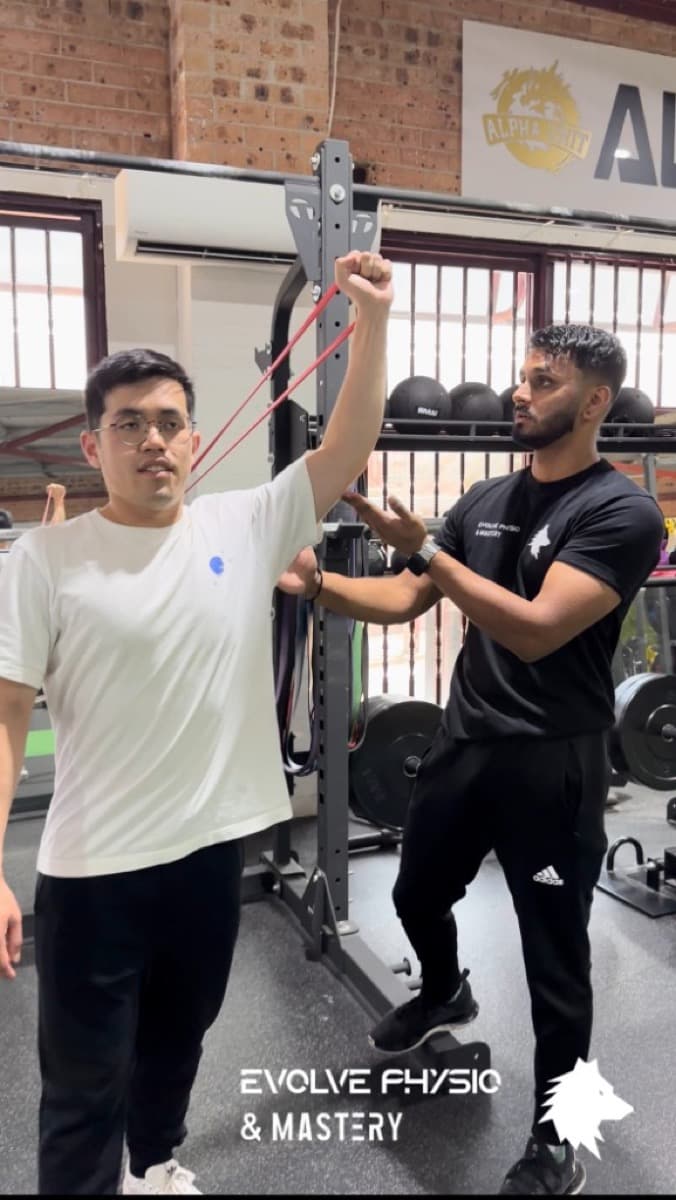
- Weeks 3–8 — build. Progressive rotator-cuff strength (external rotation, prone Ys and Ts, banded rows), scapular control, and early proprioceptive work.
- Weeks 8–12 — integrate. Heavier loaded work, controlled overhead pressing where tolerated, and sport-preparation drills.
- Weeks 12–16 — return. Sport-specific progressions (throwing program, swim volume ramp-up, contact exposure for contact athletes).
When surgery is the better call
For young contact athletes (under 25) with a Bankart lesion after a first dislocation, primary surgical repair significantly lowers recurrence rates compared with non-operative care — multiple randomised trials support this. Similarly, certain SLAP tears in elite throwing athletes, or labral tears with persistent symptoms after a full conservative trial, are better managed surgically.
We don't make this call in isolation — we coordinate with your orthopaedic surgeon. Our job is to give you an honest read on the evidence, run the conservative trial properly, and prep the shoulder (prehab) if surgery is the path.
After surgery — the long road
Labral repair is a long rehab. Expect a sling for 4–6 weeks, protected range of motion 6–12 weeks, strengthening from 3 months, and return to overhead or contact sport at 4–6 months (sometimes 9 months for elite throwers). The rehab quality matters — rushing the early protected phase puts the repair at risk.
How it connects to our broader shoulder content
For rotator-cuff and impingement-related pain (a different problem, often confused with labral tears), see our rotator cuff guide. For true shoulder instability after dislocation, our shoulder dislocation rehab guide covers the specific post-dislocation pathway. For frozen shoulder — another commonly confused condition — see frozen shoulder.
Book a shoulder labral assessment
If you've had an MRI showing a labral tear — or you're dealing with clicking, instability or deep shoulder pain that won't settle — a proper clinical assessment will clarify whether the scan finding is actually driving your symptoms and which pathway is right for you. Book a shoulder physio assessment at Evolve Physio & Mastery, and pair it with the Shoulder Mastery Guide for a structured home program. We see clients across Liverpool, Cabramatta, Fairfield, Bankstown and Southwest Sydney.
References: Kibler et al. 2013 "Current concepts: scapular dyskinesis" (Br J Sports Med); Provencher et al. 2013 consensus on shoulder instability; Connor et al. 2003 MRI findings in asymptomatic overhead athletes (Am J Sports Med); Wasserstein et al. 2016 systematic review on primary Bankart repair vs conservative care.
Frequently Asked Questions
What's the difference between SLAP and Bankart tears?
Both involve the labrum — a ring of cartilage that deepens the shoulder socket. A SLAP (Superior Labrum Anterior to Posterior) tear is a tear at the top of the labrum where the biceps tendon attaches. A Bankart lesion is a tear at the front-lower labrum, almost always caused by an anterior shoulder dislocation. They have different mechanisms, different rehab, and different surgical considerations.
If my MRI shows a labral tear, do I need surgery?
Not necessarily. MRI studies on asymptomatic overhead athletes routinely find labral abnormalities in people with zero shoulder symptoms. The decision is based on symptoms, function, age, sport demands, and instability — not the scan alone.
What symptoms make surgery more likely?
Recurrent true dislocations, persistent instability during sport, catching/locking, or a failed conservative trial of 3–4 months. For Bankart lesions in young contact athletes, early surgical repair significantly lowers recurrence rates — so the decision often lands on the sport and lifestyle side of things.
What does non-surgical rehab actually involve?
A 12–16 week progressive program focused on rotator-cuff strength, scapular control, proprioception, and progressive loading — plus modifying high-risk positions in the early phase. Most people regain excellent function; a subset later choose surgery if the shoulder remains unstable.
How long is recovery after a labral repair?
Typically 4–6 months before return to sport, sometimes longer for overhead or contact athletes. The first 6 weeks are in a sling; weeks 6–12 focus on range of motion; months 3–6 are strengthening and sport-specific progression.