Achilles Tendon Rupture
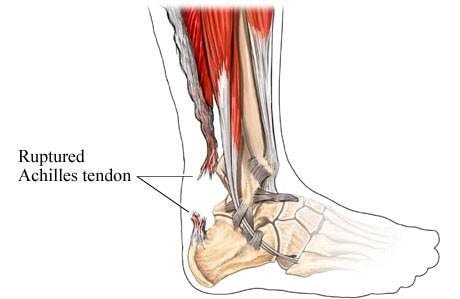
An Achilles tendon rupture is a significant and painful injury, most commonly seen in middle-aged men with active lifestyles. The Achilles tendon, connecting the calf muscles to the heel bone, is the largest and strongest tendon in the body, yet it is also the most frequently injured. It is essential for activities like walking, running, and jumping. When subjected to excessive stress or sudden force, the tendon can tear or rupture.
Causes and Symptoms
Achilles ruptures typically occur from a sudden, forceful push-off motion, such as during sprinting or jumping. However, they can also develop gradually due to chronic overuse or degeneration of the tendon, which weakens over time. People with pre-existing conditions like Achilles tendinopathy, weakened calf muscles, or those who have used corticosteroids for an extended period may be more prone to an Achilles tendon rupture.
Common symptoms include sudden pain at the back of the ankle or calf, often accompanied by a pop or snapping sound, feeling like being kicked in the back of the leg. Swelling and difficulty walking or pushing off the affected foot are also indicative of a rupture.
Diagnosis and Treatment
If an Achilles rupture is suspected, it is crucial to seek medical attention promptly. A healthcare professional, such as a physiotherapist, will assess to confirm the diagnosis and determine the injury's severity. Treatment options vary depending on the rupture's extent and can include both surgical and non-surgical approaches.
Rehabilitation
Both surgical and non-surgical treatments can yield positive functional outcomes, each with its advantages and disadvantages. Conservative management has a higher re-rupture rate compared to surgical repair, but surgery carries risks such as infections, wound healing issues, and nerve damage. Research indicates that outcomes from both treatments are generally comparable.
Regardless of the chosen treatment, rehabilitation is vital for recovery. Physiotherapy is essential for restoring the affected ankle and calf muscles' flexibility, strength, and functionality.
Conclusion
An Achilles rupture is undoubtedly challenging and painful, but with early intervention and appropriate treatment, many individuals can regain mobility and resume their normal activities. If you suspect an Achilles rupture, immediately consult a healthcare professional, such as a physiotherapist, to ensure the best possible recovery.
Leg rehab programs
Our Knee Pain Mastery Guide (free) covers the style of lower-limb and calf-anchored work we use after Achilles care; the paid ACL Comeback Program is for a structured 28-day strength block if you are rebuilding running and hopping under load. View all Mastery programs.
Book An Appointment Now
You can request a call now or book an appointment online through the website. We look forward to hearing from you soon!
If you or a loved one is suffering from Achilles pain and leg strains, get in touch with the team. You can book via call or email at admin@evolvephysioam.com or 0451 801 019.